
Dual sourcing reduces supplier dependency only when production volume is split with discipline. If buyers move too much volume to a new potting material supplier too quickly, they may create process drift, hidden quality risk, and line instability. If they keep the second source too small forever, the backup supplier may never become production-ready.
- Question answered: How should buyers split production volume between dual-source potting material suppliers?
- Best for: purchasing managers, supplier quality engineers, process engineers, factory managers, EV battery teams, PCB assembly plants, LED driver manufacturers, automotive sensor suppliers, and contract manufacturers managing epoxy, silicone, PU, TIM, or two-component resin suppliers.
- Direct answer: Buyers should allocate volume based on supplier quality, process stability, incoming inspection results, clean production history, capacity, delivery reliability, technical support, commercial exposure, and switching risk. A conservative 80/20 or 70/30 split is often safer during early dual-source production, while 60/40 or 50/50 should require strong evidence that both sources run inside the same validated process window.
- Buyer readiness: L4 RFQ Ready to L5 Deployment
- Next step: Build a volume allocation matrix that connects supplier scorecards, material lot data, process monitoring, and production scheduling.
Industrial Context and Buyer Readiness
| Context | Details |
|---|---|
| Topic cluster | Dual-Source Management; Supplier Quality; Material Approval; Production Planning; Process Control |
| Buyer readiness level | L4 RFQ Ready to L5 Deployment |
| Application scenario | EV battery potting, PCB encapsulation, LED driver potting, automotive sensor sealing, power electronics, connector sealing, TIM dispensing, and industrial adhesive production |
| Material scope | epoxy, silicone, polyurethane, thermal interface material, UV adhesive, underfill, low-viscosity encapsulant, high-viscosity gap filler, resin part A, and hardener part B |
| Process scope | production volume allocation, supplier scorecard, source switching, incoming inspection, first-lot monitoring, supplier capacity review, and process drift control |
| Equipment scope | dispensing machine, potting machine, 2K meter mix system, metering pump, valve, tank, static mixer, vacuum system, cure station, and automated production cell |
| Defect or risk focus | viscosity drift, pressure change, dispense weight variation, bubbles, voids, poor cure, static mixer blockage, shelf-life risk, supplier dependency, and traceability confusion |
| Production goal | reduce supply risk without destabilizing the validated dispensing and potting process |
Entity Map for This Topic
| Entity group | Relevant entities |
|---|---|
| Supplier entities | primary supplier, secondary supplier, dual-source supplier, approved supplier list, distributor, material manufacturer, supplier quality engineer |
| Allocation entities | 80/20 split, 70/30 split, 60/40 split, 50/50 split, pilot allocation, volume ramp, restricted allocation, supplier scorecard |
| Material entities | epoxy, silicone, polyurethane, TIM, UV adhesive, resin, hardener, filler, catalyst, primer, cleaning material |
| Process entities | source switch, production scheduling, incoming inspection, pilot production, lot release, recipe control, revalidation, post-release monitoring |
| Measurement entities | viscosity, density, mix ratio, pot life, gel time, pressure, dispense weight, bead width, hardness, thermal conductivity, dielectric strength, defect rate |
| Quality entities | COA, TDS, SDS, batch record, traceability record, supplier CAPA, change notice, NCR, deviation, waiver |
Contents
- Direct answer
- Why volume split matters
- Volume allocation models
- Supplier allocation scorecard
- Process control during volume shifts
- Application scenario matrix
- Review cycle and adjustment rules
- FAQ
Direct Answer: How Should Volume Be Split?
Buyers should split production volume between dual-source potting material suppliers according to risk, not price alone. The first production split should usually be conservative. A common starting point is 80/20 or 70/30, where the proven primary supplier keeps most volume while the second source receives enough repeated production to prove stability. After clean lots, stable process data, and reliable technical support are confirmed, buyers can move toward 60/40 or 50/50 if the business case requires it.
The split should be reviewed through evidence: incoming inspection results, COA reliability, traceability, delivery performance, process pressure trend, dispense weight trend, bubble or void rate, cured quality, CAPA history, and source-switching performance. If one supplier creates more process drift, that supplier should not receive more volume only because the price is lower.
Why Volume Split Matters in Potting Projects
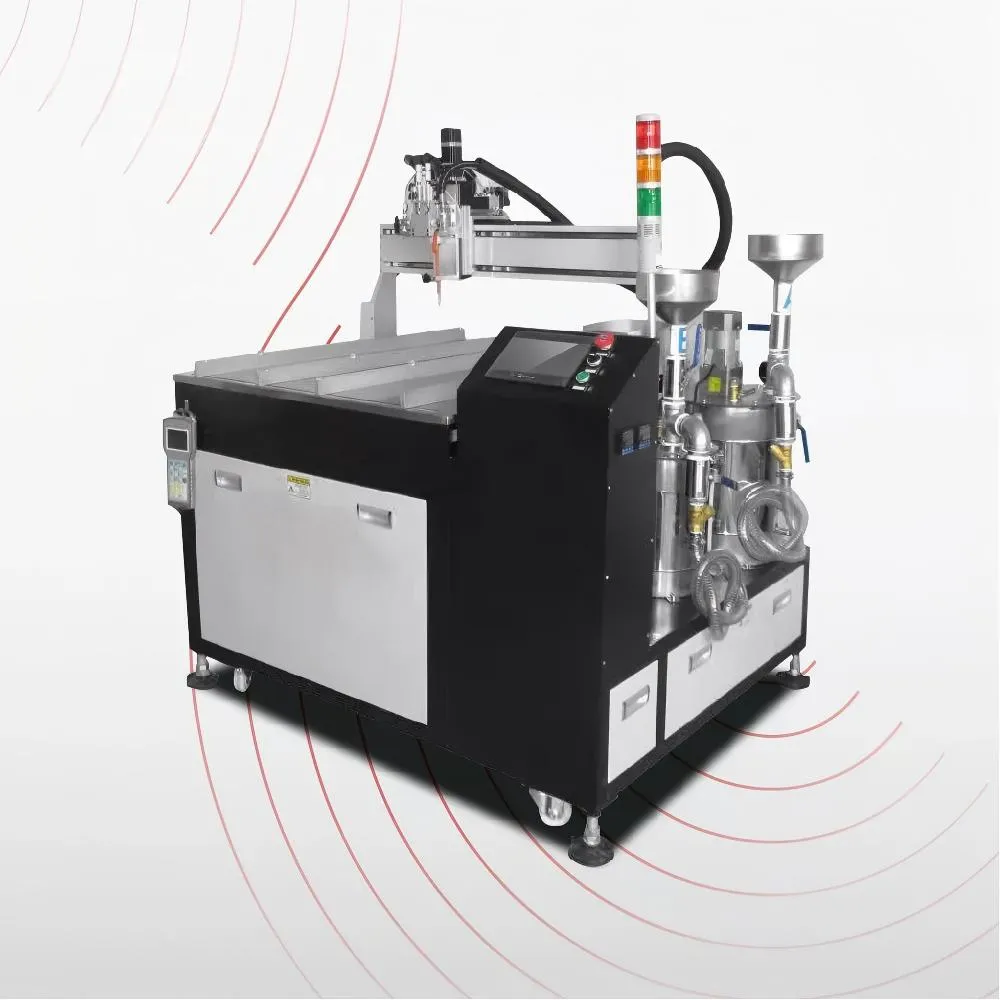
In many purchasing categories, dual sourcing is mostly a commercial decision. For potting materials, it is also a process-control decision. Potting material properties can affect pump pressure, flow rate, mix quality, static mixer life, vacuum behavior, cure speed, adhesion, thermal performance, dielectric performance, and final defect rate.
If the second source receives too much volume before the factory understands its behavior, production may see pressure changes, inconsistent fill, bubbles, voids, or cure differences. If the second source receives too little volume, the supplier remains a paper backup rather than a real production source. The buyer may discover too late that the backup source cannot support volume, shelf life, packaging, or technical response when the primary supplier fails.
Volume allocation should therefore balance two goals: keep current production stable and keep the backup supplier genuinely ready.
For the step before volume allocation, see how to manage dual-source potting materials without process drift.
Common Volume Allocation Models
There is no universal split. The correct model depends on material risk, supplier maturity, production volume, validation cost, and customer requirements.
| Allocation model | When it fits | Advantages | Risks |
|---|---|---|---|
| 90/10 pilot split | Second source just moved from qualification into production | Limits production exposure while creating real lot history | Second source may not build enough operating experience |
| 80/20 conservative split | Second source is approved but not fully proven across seasons, lots, or shifts | Balances supply readiness with low process risk | Backup capacity may remain limited |
| 70/30 development split | Second source has passed several production lots and supplier response is stable | Builds supplier maturity without forcing equal dependency | Requires good scheduling and traceability |
| 60/40 balanced split | Both sources show comparable quality and process behavior | Reduces dependency and gives both suppliers meaningful volume | Process drift can be harder to detect if data is mixed |
| 50/50 strategic split | Both suppliers are proven, capacity is stable, and business wants equal leverage | Strong supply resilience and commercial leverage | Requires mature source-switching, recipe control, and scorecard discipline |
| Restricted split | One supplier is under controlled shipping or conditional approval | Keeps supplier active while limiting risk | Should not become permanent without exit criteria |

Supplier Allocation Scorecard
A volume split should be updated through a supplier allocation scorecard. This prevents the loudest commercial argument from replacing production evidence.
| Scorecard item | Suggested weight | What to measure | How it affects volume |
|---|---|---|---|
| Incoming lot quality | 20% | COA completeness, viscosity trend, shelf-life compliance, lot acceptance | More clean lots support higher allocation |
| Production stability | 25% | Pressure trend, dispense weight, bubbles, voids, cure, scrap and rework | Process drift should cap or reduce allocation |
| Traceability and documents | 10% | Lot records, batch data, change notice, COA traceability | Weak traceability limits volume in critical applications |
| CAPA and response | 10% | Root cause quality, action speed, recurrence prevention, technical support | Slow response reduces trust during production problems |
| Capacity and delivery | 15% | Lead time, MOQ, packaging, shipment reliability, remaining shelf life | Supplier must prove capacity before receiving more volume |
| Cost and commercial risk | 10% | Price, payment terms, contract stability, stock strategy | Cost matters after quality and process risk are acceptable |
| Switching burden | 10% | Recipe changes, cleaning time, revalidation, operator complexity | High switching burden may justify lower allocation |
This scorecard should connect to supplier requalification. If quality problems appear, use how to score and requalify potting material suppliers after quality issues.
Process Control During Volume Shifts
Increasing a second source from 10% to 30% or from 30% to 50% should be treated as a controlled production change. The factory is not only buying more material. It is exposing more products, more shifts, and more customer orders to that material source.
| Control point | Before increasing volume | After increasing volume |
|---|---|---|
| Incoming inspection | Review recent COA and lot data | Track first lots after allocation change separately |
| Machine recipe | Confirm common recipe or source-specific recipe | Check operator selected correct source and recipe |
| Dispense performance | Confirm pressure, weight, bead and fill limits | Monitor pressure trend, dispense weight, bubbles, and voids |
| Cure result | Confirm cure time, hardness, adhesion or functional checks | Inspect first production lots and compare with baseline |
| Traceability | Separate supplier, lot, line, shift, and product records | Do not mix source A and source B data during trend review |
| Supplier response | Confirm technical contact and escalation path | Measure response speed if abnormal production data appears |
If source-specific recipes are needed, the machine program, work instruction, and quality record should all reflect the source. Manual memory is not a control method.
Decision Layer: When Should Volume Be Reduced?
Volume should be reduced when a supplier creates repeated process instability, fails incoming inspection, cannot provide reliable COA data, misses change notifications, or responds poorly to production problems. Buyers should reduce volume before the supplier creates a line stop or field-risk problem.
| Signal | Short-term action | Volume decision |
|---|---|---|
| One isolated minor issue | Correct issue and monitor next lot | No immediate change if production risk is low |
| Repeated COA or document gaps | Increase incoming review and request CAPA | Hold volume growth until evidence improves |
| Pressure or dispense weight drift | Run source-specific process check | Reduce or pause increased allocation until stable |
| Defect rate increases after source switch | Quarantine suspect lots and compare data | Return to lower allocation and require corrective action |
| Supplier misses delivery or shelf-life requirement | Review capacity and planning assumptions | Reduce allocation if supply reliability is not proven |
| Unapproved supplier change | Hold affected material and request change package | Suspend growth or restrict supplier until revalidation |
Application Scenario Matrix
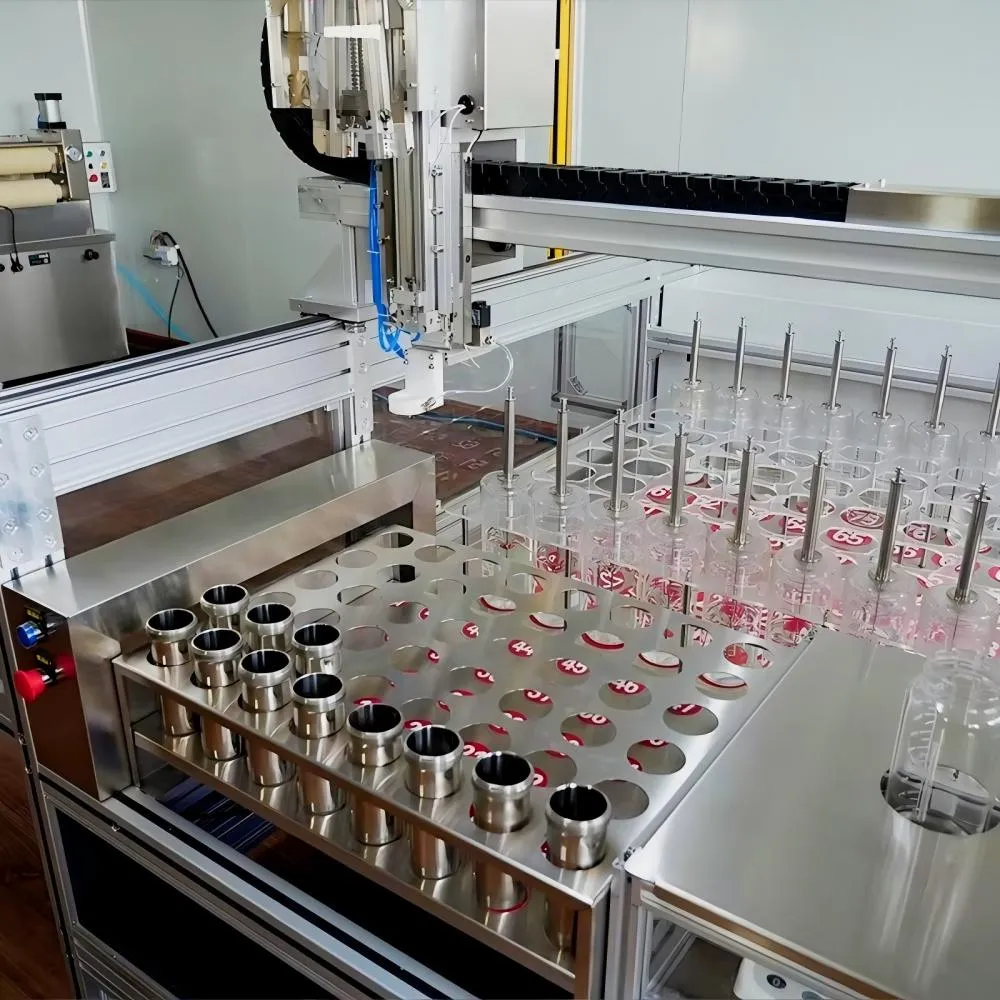
Volume allocation should be stricter when the application is sensitive to hidden material differences. A low-risk bonding process may tolerate faster volume movement than EV battery potting or automotive sensor sealing.
| Application | Recommended early split | Key data before increasing volume | Reason |
|---|---|---|---|
| EV battery potting | 90/10 or 80/20 | Thermal data, viscosity trend, pressure trend, void inspection, first-lot monitoring | Thermal transfer and insulation reliability make source drift costly |
| PCB encapsulation | 80/20 or 70/30 | Bubble rate, dielectric or cured quality, flow into gaps, cure result | Small defects can affect insulation and field reliability |
| LED driver potting | 80/20 or 70/30 | Thermal behavior, cure hardness, shrinkage, adhesion, void trend | Heat and insulation performance depend on cured material stability |
| Automotive sensor sealing | 90/10 or 80/20 | Traceability, environmental performance, adhesion, change control | Field exposure and containment requirements raise risk |
| Industrial adhesive assembly | 70/30 or 60/40 if stable | Open time, bead shape, bond strength, scrap trend | Risk depends on product criticality and rework cost |
Review Cycle and Adjustment Rules
A dual-source volume split should be reviewed on a defined cycle. For new dual-source approval, buyers may review weekly or by lot. After stable production, monthly or quarterly reviews may be enough depending on risk.
| Review timing | What to review | Possible decision |
|---|---|---|
| After first production lot | Dispense data, first-piece results, cure result, operator feedback | Hold at pilot allocation or increase slightly |
| After 3 clean lots | Incoming trend, pressure trend, defect data, delivery performance | Move from 90/10 to 80/20 or 70/30 if stable |
| After one full production month | Scrap, rework, downtime, supplier response, traceability | Adjust allocation or keep split unchanged |
| After supplier issue | CAPA, containment, affected lots, process impact | Reduce volume, controlled shipping, or requalification |
| After formula or process change | Change notice, comparison data, revalidation requirement | Freeze allocation until engineering review is complete |
If the supplier is still under containment, connect this review with controlled shipping rules for potting material suppliers.
How OBO Precision Reviews Volume Split Risk
When a buyer asks OBO Precision to support a dual-source dispensing or potting project, we normally request both sources’ TDS, SDS, COA examples, viscosity range, mix ratio, pot life, density, package form, production volume, dispense amount, accuracy target, application drawing, and defect history. We also ask whether the buyer wants one common recipe or source-specific machine recipes.
The equipment recommendation depends on how close the two materials are in real process behavior. If both sources run inside the same pressure, flow, mix, cure, and quality limits, a common machine configuration may be practical. If source B needs different temperature control, mixer length, valve size, vacuum degassing, tank agitation, or purge interval, the production plan should treat source switching as a controlled process.
Recommended Internal Links for This Topic
- How to manage dual-source potting materials without process drift
- When to escalate from controlled shipping to second-source qualification
- How to qualify a second-source material for dispensing and potting
- Post-release monitoring after approving a replacement potting material
- Complete guide to material approval for dispensing and potting projects
External References Used
This article adapts supplier control and supply-risk principles to industrial potting material production planning. Useful references include:
- ISO 9001 quality management systems requirements
- 21 CFR Part 820 quality management system regulation
- FDA corrective and preventive action training material
- NIST supply chain risk management guidance update
FAQ
How should buyers split production volume between dual-source potting material suppliers?
Buyers should split volume based on quality performance, process stability, supply risk, technical support, capacity, commercial risk, and switching burden. 80/20 or 70/30 is often safer during early production, while 60/40 or 50/50 requires stronger evidence.
Should the cheaper supplier get more volume?
Not automatically. Price should be evaluated after incoming quality, COA reliability, process stability, supplier response, and production impact. A lower price can become expensive if it increases scrap, downtime, or revalidation work.
When should buyers change the volume split?
Buyers should change the split after reviewing lot acceptance, defect trends, supplier CAPA, delivery reliability, shelf life, source-switching performance, and machine process data.
Is 50/50 dual sourcing always the goal?
No. A 50/50 split is useful only when both suppliers are stable, comparable, and production-ready. Some applications are better served by 80/20 or 70/30 because switching risk is high.
How does volume split affect dispensing equipment?
Different material sources can affect pump pressure, dispense weight, bead shape, static mixer performance, bubbles, cure, and cleaning frequency. Equipment settings should be reviewed before increasing volume from a second source.
Should source A and source B data be mixed in one trend chart?
No. Buyers should track both combined performance and source-specific performance. Mixing data can hide process drift from one supplier.
How can OBO Precision support volume split decisions?
OBO Precision can review both material data packages, compare dispensing risk, recommend machine configuration, define trial checkpoints, and help decide whether a common recipe or source-specific recipes are needed.
Get Engineering Support Before Changing Supplier Allocation
If you are changing production volume between dual-source potting material suppliers, OBO Precision can help review whether the allocation change affects dispensing equipment selection, process settings, or validation. Send both suppliers’ TDS, SDS, COA examples, viscosity range, mix ratio, pot life, application drawing, target dispense amount, accuracy requirement, production volume, and defect history. Our engineering team will recommend a practical dispensing or potting solution for your application.
Related KPI step: Buyers managing dual-source materials can use What KPIs Should Buyers Track for Dual-Source Potting Material Suppliers? to decide whether supplier performance supports the current allocation and source-switching plan.
Related revalidation step: After tracking dual-source supplier KPIs, buyers can use When Should KPI Trends Trigger Revalidation for Dual-Source Potting Materials? to decide when process drift requires engineering revalidation.
Related recipe-control step: If dual-source materials require different process settings, buyers can use How Should Buyers Control Source-Specific Machine Recipes for Dual-Source Potting Materials? to prevent wrong-recipe selection and uncontrolled parameter changes.
Related recipe-change step: If machine recipe parameters need revision, buyers can use What Approval Workflow Should Buyers Use for Machine Recipe Changes in Dual-Source Potting? to define approval, validation, release, and traceability rules.
Related audit-trail step: After approving recipe changes, buyers can use What Audit Trail Should Buyers Keep for Machine Recipe Changes in Dual-Source Potting? to make recipe history, affected lots, validation evidence, and production release traceable.
Related training-control topic: What Training Records Should Buyers Keep After Machine Recipe Changes in Dual-Source Potting? explains what operator, inspector, maintenance, and shift-handover records buyers should keep after recipe changes.
Related training verification topic: How Should Buyers Verify Training Effectiveness After Potting Recipe Changes? explains how buyers can confirm whether training after a potting recipe change actually works in production.
Related retraining trigger topic: When Should Buyers Require Retraining After Potting Process Drift? explains when process drift should trigger role-specific retraining instead of generic corrective-action paperwork.
Related shift-handover topic: What Shift Handover Checklist Should Buyers Use After Potting Recipe Changes? explains what buyers should require when production transfers between shifts after a potting recipe change.
Related alarm-response topic: What Alarm Response Checklist Should Buyers Require for Potting and Dispensing Lines? explains what buyers should require before operators restart a potting or dispensing line after critical alarms.
Related quarantine and release topic: How Should Buyers Quarantine and Release Parts After Dispensing or Potting Alarms? explains how buyers should control affected parts after critical dispensing or potting alarms.
Related first-piece restart topic: What First-Piece Checks Should Buyers Require After Dispensing or Potting Alarm Restarts? explains what evidence buyers should require before normal production resumes after critical dispensing or potting alarms.
Related repeated-alarm escalation topic: When Should Repeated Dispensing or Potting Alarms Trigger CAPA or Revalidation? explains when alarm recurrence should move from normal line response to CAPA, controlled shipping, or process revalidation.
Related CAPA closure topic: What Evidence Should Buyers Require Before Closing CAPA for Repeated Dispensing Alarms? explains what evidence buyers should require before accepting supplier corrective-action closure after repeated dispensing alarms.
Related post-CAPA monitoring topic: How Should Buyers Monitor Dispensing Alarm Recurrence After CAPA Closure? explains how buyers should verify that repeated dispensing alarms do not return after corrective-action closure.
Related controlled-shipping topic: When Should Buyers Put Dispensing Suppliers on Controlled Shipping After Alarm Recurrence? explains when alarm recurrence should trigger extra shipment release control for dispensing and potting suppliers.
Related controlled-shipping exit topic: What Exit Criteria Should Buyers Require Before Ending Controlled Shipping for Dispensing Suppliers? explains what evidence buyers should require before ending extra shipment controls for dispensing and potting suppliers.
Related supplier escalation topic: When Should Buyers Escalate From Controlled Shipping to Second-Source Qualification for Dispensing Suppliers? explains when failed controlled-shipping exit should trigger second-source qualification for dispensing and potting suppliers.
Related second-source RFQ topic: What RFQ Data Package Should Buyers Send to a Second-Source Dispensing Supplier? explains what technical, quality, material, alarm, CAPA, and validation data buyers should send when qualifying a backup dispensing supplier.
Related second-source sample trial topic: What Sample Trial Plan Should Buyers Use for a Second-Source Dispensing Supplier? explains how buyers should plan sample quantity, material controls, process data, defect checks, and pilot approval before qualifying a backup dispensing supplier.
Related production validation step: After sample approval, buyers should also define a production validation run after a second-source dispensing trial before releasing volume to a second-source supplier.