
Dual-source potting materials can reduce supply risk, but they can also create process drift if buyers treat two approved sources as automatically interchangeable. The goal is not only to approve a backup supplier. The goal is to keep dispensing weight, flow behavior, cure result, traceability, and production quality stable when the factory switches between sources.
- Question answered: How should buyers manage dual-source potting materials without process drift?
- Best for: purchasing managers, supplier quality engineers, process engineers, factory managers, EV battery teams, PCB assembly plants, LED driver manufacturers, automotive sensor suppliers, and contract manufacturers using epoxy, silicone, PU, TIM, or two-part resin materials.
- Direct answer: Buyers should manage dual-source potting materials by defining one controlled material and process window, comparing source A and source B data, locking machine parameters where possible, documenting source-specific settings when needed, separating lots by traceability, validating source switches, increasing monitoring during first production lots, and reviewing supplier performance through a shared scorecard.
- Buyer readiness: L4 RFQ Ready to L5 Deployment
- Next step: Build a dual-source control plan before shifting volume between suppliers.
Industrial Context and Buyer Readiness
| Context | Details |
|---|---|
| Topic cluster | Second-Source Qualification; Dual-Source Management; Material Approval; Supplier Quality; Process Control |
| Buyer readiness level | L4 RFQ Ready to L5 Deployment |
| Application scenario | EV battery potting, PCB encapsulation, LED driver potting, automotive sensor sealing, power electronics, connector sealing, TIM dispensing, and industrial adhesive production |
| Material scope | epoxy, silicone, polyurethane, thermal interface material, UV adhesive, underfill, low-viscosity encapsulant, high-viscosity gap filler, resin part A, and hardener part B |
| Process scope | source switching, material comparison, machine parameter control, lot traceability, incoming inspection, pilot run, first-lot monitoring, and supplier scorecard review |
| Equipment scope | dispensing machine, potting machine, 2K meter mix system, metering pump, valve, tank, static mixer, vacuum system, cure station, and automated production cell |
| Defect or risk focus | viscosity drift, pump pressure change, dispense weight variation, bubbles, voids, poor cure, static mixer blockage, adhesion change, and traceability confusion |
| Production goal | gain supply resilience without losing process repeatability |
Entity Map for This Topic
| Entity group | Relevant entities |
|---|---|
| Supplier entities | primary supplier, second-source supplier, dual-source approval, approved supplier list, distributor, material manufacturer, supplier quality engineer |
| Material entities | epoxy, silicone, polyurethane, TIM, UV adhesive, resin, hardener, filler, catalyst, primer, cleaning material |
| Process entities | source switch, pilot run, first production lot, material release, incoming inspection, revalidation, post-release monitoring |
| Equipment entities | metering pump, dispensing valve, static mixer, nozzle, needle, tank, vacuum chamber, heater, agitator, cure oven |
| Measurement entities | viscosity, thixotropy, density, mix ratio, pot life, gel time, pressure, dispense weight, bead width, hardness, thermal conductivity, dielectric strength |
| Quality entities | COA, TDS, SDS, batch record, traceability record, supplier scorecard, deviation, waiver, CAPA, change notice |
Contents
- Direct answer
- Why process drift happens after dual sourcing
- Source comparison matrix
- Machine settings and process windows
- Source switching plan
- Application scenario matrix
- Dual-source scorecard
- FAQ
Direct Answer: How Should Dual Sources Be Managed?
Buyers should manage dual-source potting materials as controlled alternatives, not as casual substitutes. Each source should have an approved data package, COA requirements, lot traceability, incoming inspection rules, validated process window, approved machine parameters, and source-switching procedure. When the factory changes from source A to source B, the change should be documented and monitored like a controlled production event.
The safest dual-source system has one common process window. If both sources can run inside the same viscosity, pressure, dispense weight, cure, and quality limits, operators can switch with minimal adjustment. If the two sources need different settings, the factory should create source-specific recipes and lock the changeover process.
Why Process Drift Happens After Dual Sourcing
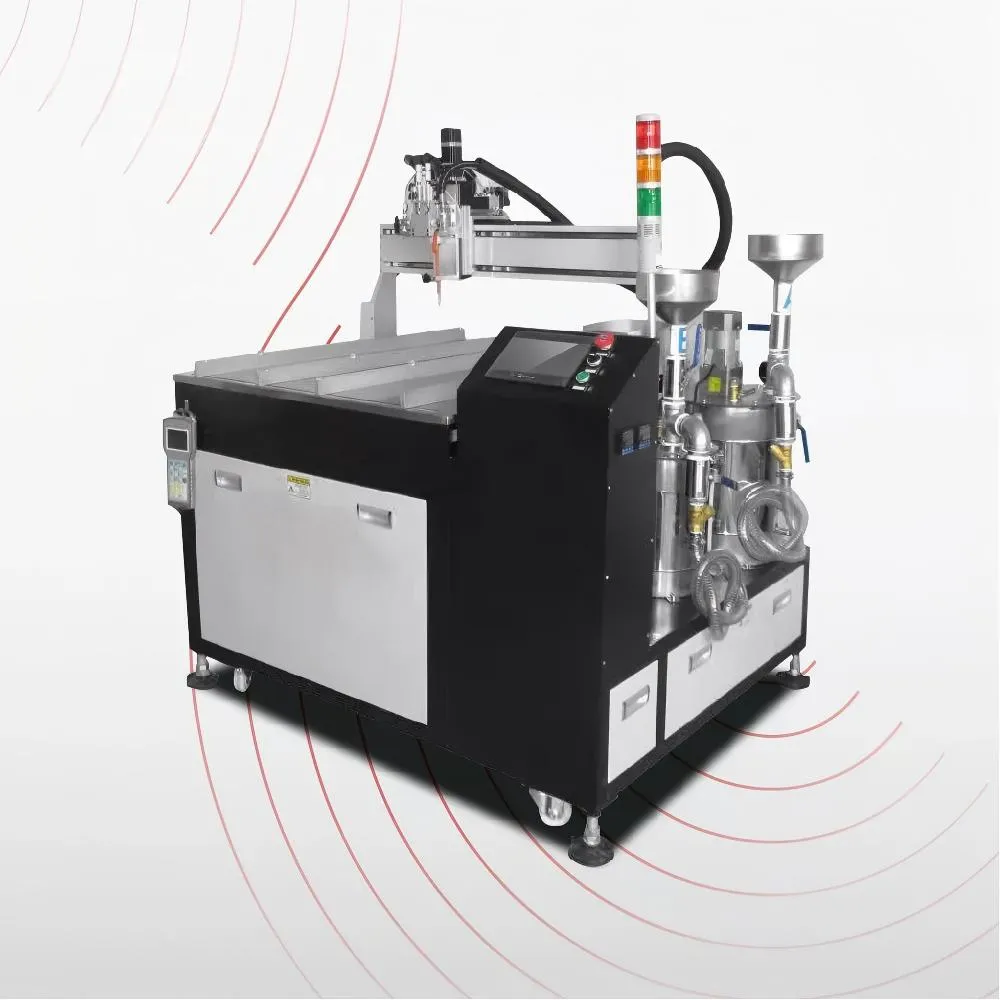
Process drift happens when two approved materials behave differently under real production conditions. Both materials may pass a lab comparison, but small differences can become visible after pumping, metering, mixing, dispensing, degassing, curing, and final inspection.
Common causes include viscosity curve differences, filler size or loading differences, thixotropy differences, packaging and storage differences, pot life variation, cure speed variation, density difference, and different sensitivity to temperature. These differences may not appear in a short sample approval test, but they can affect production after several shifts or lots.
| Material difference | Possible production symptom | Why it matters |
|---|---|---|
| Higher viscosity from source B | Higher pump pressure, slower fill, unstable bead, larger dispense error | The original pump, valve, needle, or mixer may be near its limit |
| Different thixotropy | Different bead shape, tailing, poor leveling, inconsistent gap filling | Same dispense path may not produce the same final geometry |
| Different filler behavior | Settling, abrasion, static mixer pressure rise, thermal result variation | Equipment wear and thermal performance can change |
| Different pot life | Shorter working time, mixer blockage, more frequent purge | Production cycle and cleaning plan may need adjustment |
| Different cure speed | Soft parts, delayed handling, changed hardness, adhesion variation | Downstream handling and final quality may be affected |
| Different packaging | More bubbles during loading, moisture exposure, operator error | Storage and feeding process may need source-specific controls |
This is why second-source approval should continue into production control. For the qualification stage, see how to qualify a second-source material for dispensing and potting.
Source Comparison Matrix
A dual-source plan should start with a practical comparison matrix. The buyer should not compare only product names or general chemistry. The comparison should focus on the properties that affect machine performance and cured quality.
| Comparison item | Source A data | Source B data | Buyer decision |
|---|---|---|---|
| Chemistry and grade | Approved product identity | Equivalent or alternate product identity | Confirm whether it is same chemistry, modified grade, or functional substitute |
| Viscosity range | COA and trial data | COA and trial data | Define common acceptable range or source-specific recipe |
| Density | Batch value | Batch value | Adjust volume-to-weight conversion if needed |
| Mix ratio | Approved ratio | Approved ratio | Check pump calibration and ratio tolerance |
| Pot life and gel time | Lab and production data | Lab and production data | Confirm purge interval, open time, and cycle limit |
| Filler and thermal behavior | Thermal, settling, and pressure trend | Thermal, settling, and pressure trend | Check tank agitation, pump wear, and thermal result |
| Cure result | Hardness, adhesion, dielectric or thermal data | Hardness, adhesion, dielectric or thermal data | Define minimum release checks for each switch |
| Packaging and storage | Container, shelf life, storage condition | Container, shelf life, storage condition | Update warehouse and line loading instructions |

Machine Settings and Process Windows
The buyer should decide whether both materials can use one machine recipe or whether source-specific settings are required. One common recipe is easier for operators and reduces mistakes. Source-specific recipes may be necessary if the two materials behave differently enough to affect accuracy, pressure, cure, or final quality.
| Control item | One common recipe | Source-specific recipe | Risk if unmanaged |
|---|---|---|---|
| Pump calibration | Same calibration works for both sources | Separate ratio or dispense verification needed | Dispense weight or mix ratio drift |
| Pressure limit | Same pressure range accepted | Different warning and stop limits | Undetected viscosity or blockage problem |
| Static mixer | Same mixer length and element count | Different mixer may be required | Poor mixing, blockage, cure instability |
| Needle or nozzle | Same size gives same bead and fill | Different size required for flow or geometry | Overflow, underfill, stringing, or air entrapment |
| Vacuum or degassing | Same degassing condition works | Different degassing time or vacuum level | Bubbles, voids, and insulation risk |
| Cure process | Same time and temperature pass | Different cure profile or hold time needed | Soft cure, adhesion risk, delayed handling |
If source-specific settings are used, they should be locked in the machine program, recipe file, work instruction, and quality record. The operator should not be expected to remember which source needs which adjustment.
Source Switching Plan
Switching from source A to source B should be treated like a controlled production change. The buyer does not need a full revalidation every time if both sources are already approved, but the factory should have a repeatable switching plan.
| Switching step | What to check | Record to keep |
|---|---|---|
| 1. Confirm lot identity | Supplier, product code, lot number, expiry date, COA, storage condition | Incoming release record |
| 2. Confirm recipe | Common recipe or source-specific recipe selected correctly | Machine setup record |
| 3. Purge or clean if needed | Compatibility between old and new material, hose/tank/mixer condition | Cleaning or purge record |
| 4. Run first-piece check | Dispense weight, bead shape, pressure, bubble condition, fill level | First-piece inspection |
| 5. Monitor first production lot | Pressure trend, scrap, rework, cure result, operator feedback | First-lot monitoring record |
| 6. Review quality trend | Compare source A and source B defect data | Dual-source scorecard |
This plan should be linked to the escalation logic in when buyers should escalate from controlled shipping to second-source qualification.
Application Scenario Matrix
Dual-source risk is not the same in every application. The more critical the cured material is to product performance, the stricter the switching control should be.
| Application | Main drift risk | Switching control | Why it matters |
|---|---|---|---|
| EV battery potting | Thermal conductivity, filler behavior, viscosity, voids | Compare thermal data, pressure trend, void inspection, and cured sample quality | Heat transfer and insulation reliability depend on stable material behavior |
| PCB encapsulation | Bubbles, dielectric performance, flow into small gaps, cure | First-piece inspection, bubble check, dielectric or cured sample review where required | Small voids and cure defects can affect reliability |
| LED driver potting | Thermal behavior, shrinkage, adhesion, cure speed | Hardness check, thermal reference, visual inspection, cure schedule confirmation | Heat and insulation performance are sensitive to cured material quality |
| Automotive sensor sealing | Adhesion, environmental resistance, traceability, change control | Lot traceability, adhesion sample, process audit, supplier scorecard | Field exposure raises the cost of material drift |
| Industrial adhesive assembly | Open time, bead geometry, bond strength, operator handling | Working-life check, bead inspection, strength sample if needed | Repeatable assembly depends on stable application behavior |
Decision Layer: When Is Dual Sourcing Not Worth It?
Dual sourcing is not always the best answer. It may be unnecessary when the material is low risk, the original supplier is stable, the application is easy to rework, and the cost of validating a second source is higher than the supply risk. It may also be risky when the backup material is not truly comparable and would require major equipment changes.
| Situation | Recommended decision | Reason |
|---|---|---|
| Low-volume, low-risk adhesive use | Maintain one approved source and safety stock | Dual-source validation cost may not be justified |
| Critical product, sole-source risk | Qualify a second source | Production interruption or field risk is too costly |
| Backup material requires major machine redesign | Evaluate alternate suppliers or equipment plan before approval | Second source may create more risk than it solves |
| Primary supplier is under controlled shipping | Start second-source qualification while controlling current shipments | Containment protects now; second source protects later |
| Two sources pass qualification but need different settings | Use source-specific recipe control and operator-proof switching | Uncontrolled manual adjustment creates process drift |
Dual-Source Scorecard
A dual-source scorecard prevents the buyer from treating both sources as equal when production data says otherwise. The scorecard should include quality, process, supply, and support signals.
| Scorecard item | Source A | Source B | Decision use |
|---|---|---|---|
| Incoming lot acceptance | Pass rate and deviations | Pass rate and deviations | Adjust incoming inspection level and supplier status |
| Dispense process stability | Pressure, weight, bead, bubbles, cleaning interval | Pressure, weight, bead, bubbles, cleaning interval | Detect source-specific process drift |
| Cured quality | Hardness, adhesion, thermal or dielectric checks | Hardness, adhesion, thermal or dielectric checks | Confirm functional equivalence |
| Traceability and documents | COA, lot record, change notice | COA, lot record, change notice | Protect containment and customer documentation |
| Delivery and shelf life | Lead time, remaining shelf life, packaging condition | Lead time, remaining shelf life, packaging condition | Plan scheduling and storage |
| Technical response | Speed and usefulness of support | Speed and usefulness of support | Decide volume split and escalation priority |
How OBO Precision Reviews Dual-Source Projects
For a dual-source potting or dispensing project, OBO Precision normally asks for both sources’ TDS, SDS, sample COA, viscosity range, mix ratio, density, pot life, application drawing, target dispense weight, accuracy requirement, cycle time, production volume, and existing defect history. We also ask whether the buyer wants one common machine recipe or accepts source-specific recipes.
In many cases, the equipment can support both sources if the process window is defined early. In other cases, the second source may require a different pump size, valve, mixer, heating method, tank agitation, vacuum degassing step, cleaning interval, or curing condition. Finding that difference during qualification is much cheaper than finding it after a line stoppage.
Recommended Internal Links for This Topic
- How to qualify a second-source material for dispensing and potting
- When to escalate from controlled shipping to second-source qualification
- When to put potting material suppliers on controlled shipping
- Post-release monitoring after approving a replacement potting material
- Complete guide to material approval for dispensing and potting projects
External References Used
This article adapts supplier control, process control, and supply-chain risk principles to industrial potting material management. Useful references include:
- ISO 9001 quality management systems requirements
- 21 CFR Part 820 quality management system regulation
- FDA corrective and preventive action training material
- NIST MEP supply chain mapping and risk assessment resources
FAQ
How should buyers manage dual-source potting materials?
Buyers should define one approved process window, compare source A and source B data, lock equipment parameters where possible, document source-specific recipes when needed, control lot traceability, validate switches, and monitor first production lots after each source change.
Can two approved potting materials use the same machine settings?
Sometimes, but buyers should verify it. Viscosity, filler behavior, thixotropy, pot life, cure behavior, and packaging can affect pump pressure, dispense weight, bead shape, bubbles, mixer pressure, and cleaning interval.
What should trigger revalidation when switching sources?
Revalidation should be considered when COA data shifts, viscosity or pot life changes, filler behavior differs, pressure or dispense weight drifts, bubbles increase, cure behavior changes, or the application is critical.
Should operators manually adjust settings for different sources?
No. If different settings are required, they should be controlled through approved recipes, work instructions, machine access control, and quality records.
How should incoming inspection change for dual sources?
Incoming inspection should compare each source against its approved specification and the common production window. Buyers should track source-specific trends instead of mixing all lot data together.
Is dual sourcing always better than safety stock?
No. For low-risk applications, safety stock may be enough. Dual sourcing is more valuable when the material is critical, hard to replace, sole-source dependent, or linked to high downtime or field risk.
How can OBO Precision help with dual-source material projects?
OBO Precision can review source A and source B material data, compare process risk, recommend equipment configuration, define machine trial points, and help decide whether one common recipe or source-specific recipes are needed.
Get Engineering Support Before Switching Sources
If you are approving or managing dual-source potting materials, OBO Precision can help review whether the second source affects dispensing equipment selection, process settings, or validation. Send both sources’ TDS, SDS, COA examples, viscosity range, mix ratio, pot life, application drawing, target dispense amount, accuracy requirement, and production plan. Our engineering team will recommend a practical dispensing or potting solution for your application.
Related allocation step: After dual-source approval, buyers can use How Should Buyers Split Production Volume Between Dual-Source Potting Material Suppliers? to decide how much production volume each supplier should receive.
Related KPI step: Buyers managing dual-source materials can use What KPIs Should Buyers Track for Dual-Source Potting Material Suppliers? to decide whether supplier performance supports the current allocation and source-switching plan.
Related revalidation step: After tracking dual-source supplier KPIs, buyers can use When Should KPI Trends Trigger Revalidation for Dual-Source Potting Materials? to decide when process drift requires engineering revalidation.
Related recipe-control step: If dual-source materials require different process settings, buyers can use How Should Buyers Control Source-Specific Machine Recipes for Dual-Source Potting Materials? to prevent wrong-recipe selection and uncontrolled parameter changes.
Related recipe-change step: If machine recipe parameters need revision, buyers can use What Approval Workflow Should Buyers Use for Machine Recipe Changes in Dual-Source Potting? to define approval, validation, release, and traceability rules.
Related audit-trail step: After approving recipe changes, buyers can use What Audit Trail Should Buyers Keep for Machine Recipe Changes in Dual-Source Potting? to make recipe history, affected lots, validation evidence, and production release traceable.
Related training-control topic: What Training Records Should Buyers Keep After Machine Recipe Changes in Dual-Source Potting? explains what operator, inspector, maintenance, and shift-handover records buyers should keep after recipe changes.
Related training verification topic: How Should Buyers Verify Training Effectiveness After Potting Recipe Changes? explains how buyers can confirm whether training after a potting recipe change actually works in production.
Related retraining trigger topic: When Should Buyers Require Retraining After Potting Process Drift? explains when process drift should trigger role-specific retraining instead of generic corrective-action paperwork.
Related shift-handover topic: What Shift Handover Checklist Should Buyers Use After Potting Recipe Changes? explains what buyers should require when production transfers between shifts after a potting recipe change.
Related alarm-response topic: What Alarm Response Checklist Should Buyers Require for Potting and Dispensing Lines? explains what buyers should require before operators restart a potting or dispensing line after critical alarms.
Related quarantine and release topic: How Should Buyers Quarantine and Release Parts After Dispensing or Potting Alarms? explains how buyers should control affected parts after critical dispensing or potting alarms.
Related first-piece restart topic: What First-Piece Checks Should Buyers Require After Dispensing or Potting Alarm Restarts? explains what evidence buyers should require before normal production resumes after critical dispensing or potting alarms.
Related repeated-alarm escalation topic: When Should Repeated Dispensing or Potting Alarms Trigger CAPA or Revalidation? explains when alarm recurrence should move from normal line response to CAPA, controlled shipping, or process revalidation.
Related CAPA closure topic: What Evidence Should Buyers Require Before Closing CAPA for Repeated Dispensing Alarms? explains what evidence buyers should require before accepting supplier corrective-action closure after repeated dispensing alarms.
Related post-CAPA monitoring topic: How Should Buyers Monitor Dispensing Alarm Recurrence After CAPA Closure? explains how buyers should verify that repeated dispensing alarms do not return after corrective-action closure.
Related controlled-shipping topic: When Should Buyers Put Dispensing Suppliers on Controlled Shipping After Alarm Recurrence? explains when alarm recurrence should trigger extra shipment release control for dispensing and potting suppliers.
Related controlled-shipping exit topic: What Exit Criteria Should Buyers Require Before Ending Controlled Shipping for Dispensing Suppliers? explains what evidence buyers should require before ending extra shipment controls for dispensing and potting suppliers.
Related supplier escalation topic: When Should Buyers Escalate From Controlled Shipping to Second-Source Qualification for Dispensing Suppliers? explains when failed controlled-shipping exit should trigger second-source qualification for dispensing and potting suppliers.
Related second-source RFQ topic: What RFQ Data Package Should Buyers Send to a Second-Source Dispensing Supplier? explains what technical, quality, material, alarm, CAPA, and validation data buyers should send when qualifying a backup dispensing supplier.
Related second-source sample trial topic: What Sample Trial Plan Should Buyers Use for a Second-Source Dispensing Supplier? explains how buyers should plan sample quantity, material controls, process data, defect checks, and pilot approval before qualifying a backup dispensing supplier.
Related production validation step: After sample approval, buyers should also define a production validation run after a second-source dispensing trial before releasing volume to a second-source supplier.