
Source-specific machine recipes are useful only when they are controlled like production-critical documents. In dual-source potting projects, source A and source B may both be approved, but they may not run safely under the same pump calibration, pressure limit, dispensing speed, mixer, vacuum, or cure settings.
- Question answered: How should buyers control source-specific machine recipes for dual-source potting materials?
- Best for: process engineers, supplier quality engineers, production managers, purchasing managers, EV battery teams, PCB assembly plants, LED driver manufacturers, automotive sensor suppliers, and contract manufacturers using epoxy, silicone, PU, TIM, or two-part resin materials.
- Direct answer: Buyers should control source-specific recipes by linking each recipe to an approved material source and lot, locking critical machine parameters, defining user permissions, requiring first-piece checks after source switching, recording recipe revisions, and triggering revalidation when recipe changes affect the approved process window.
- Buyer readiness: L4 RFQ Ready to L5 Deployment
- Next step: Build a recipe-control matrix before production volume shifts between source A and source B.
Industrial Context and Buyer Readiness
| Context | Details |
|---|---|
| Topic cluster | Dual-Source Management; Machine Recipe Control; Process Validation; Material Approval; Production Monitoring |
| Buyer readiness level | L4 RFQ Ready to L5 Deployment |
| Application scenario | EV battery potting, PCB encapsulation, LED driver potting, automotive sensor sealing, power electronics, connector sealing, TIM dispensing, and industrial adhesive production |
| Material scope | epoxy, silicone, polyurethane, thermal interface material, UV adhesive, underfill, low-viscosity encapsulant, high-viscosity gap filler, resin part A, and hardener part B |
| Process scope | recipe selection, source switching, pump calibration, ratio verification, pressure control, first-piece inspection, recipe revision, partial revalidation, and production release |
| Equipment scope | dispensing machine, potting machine, 2K meter mix system, metering pump, valve, tank, static mixer, vacuum system, cure station, heater, and automated production cell |
| Defect or risk focus | wrong recipe, pressure movement, dispense weight drift, mix ratio error, bubbles, voids, static mixer blockage, short pot life, poor cure, and weak traceability |
| Production goal | allow dual-source production without depending on operator memory or informal parameter changes |
Entity Map for This Topic
| Entity group | Relevant entities |
|---|---|
| Recipe entities | machine recipe, source-specific recipe, common recipe, recipe revision, recipe lock, access permission, parameter set, setup sheet |
| Material entities | epoxy, silicone, polyurethane, TIM, UV adhesive, resin, hardener, filler, catalyst, primer, cleaning material |
| Equipment entities | metering pump, dispensing valve, static mixer, nozzle, needle, tank, vacuum chamber, heater, agitator, cure oven |
| Parameter entities | pump calibration, mix ratio, pressure limit, dispensing speed, shot size, purge interval, vacuum level, heating temperature, cure profile |
| Quality entities | COA, TDS, SDS, batch record, traceability record, first-piece check, recipe approval, deviation, waiver, CAPA, change notice |
| Validation entities | focused trial, process challenge, partial revalidation, full revalidation, first-lot monitoring, engineering sign-off |
Contents
- Direct answer
- When source-specific recipes are needed
- Recipe control matrix
- Access control and operator-proofing
- Validation and revalidation rules
- Application scenario matrix
- Decision layer
- FAQ
Direct Answer: How Should Source-Specific Recipes Be Controlled?
Buyers should control source-specific machine recipes by assigning each approved potting material source to a validated machine parameter set. Each recipe should define material source, approved lot requirements, pump calibration, mix ratio, pressure limits, dispensing speed, shot size, vacuum or degassing condition, heating condition, static mixer, nozzle or needle, purge interval, cure profile, first-piece checks, and responsible approver.
The recipe should be protected from informal changes. Operators should select only approved recipes. Engineers should control recipe revision. Quality should verify that source, lot, recipe, and production record match. If source B needs different settings from source A, the difference should be documented in the recipe, not handled through verbal instruction.
When Are Source-Specific Recipes Needed?
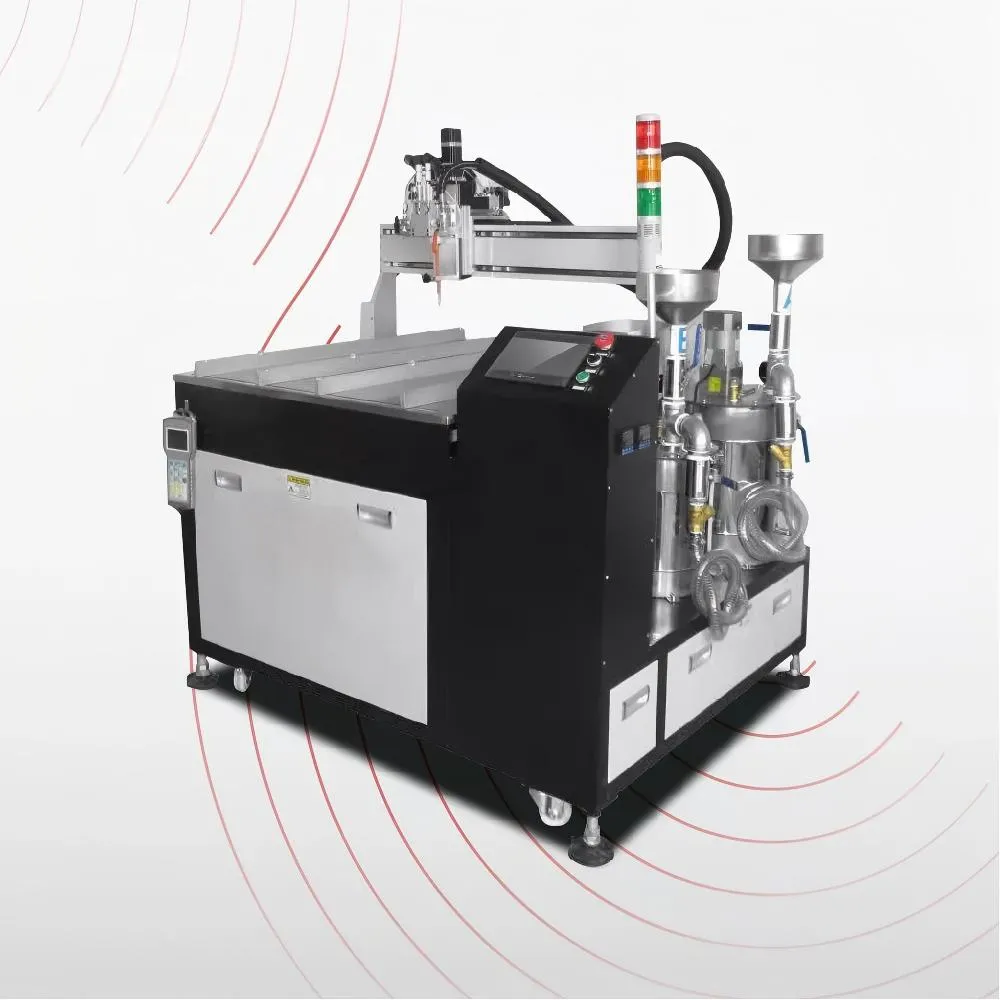
The ideal dual-source system uses one common recipe for both material sources. That is simpler and less risky. But source-specific recipes are needed when source A and source B do not behave the same inside the production window.
| Difference between sources | Possible recipe difference | Risk if ignored |
|---|---|---|
| Viscosity or thixotropy difference | Different dispensing pressure limit, speed, nozzle, or temperature | Underfill, overflow, pressure alarms, stringing, or unstable bead geometry |
| Density difference | Different shot volume or weight conversion | Incorrect dispense weight or fill amount |
| Filler behavior difference | Different tank agitation, mixer selection, pressure warning, or maintenance interval | Filler settling, abrasion, mixer blockage, or thermal performance variation |
| Pot life or gel time difference | Different purge interval, mixer life limit, or downtime rule | Static mixer blockage, ratio instability, or premature cure in the system |
| Bubble sensitivity difference | Different vacuum level, degassing time, loading method, or dispense path | Voids, insulation risk, cosmetic defects, or thermal path interruption |
| Cure behavior difference | Different cure time, temperature, hold time, or handling rule | Soft cure, adhesion risk, delayed handling, or final product failure |
If a buyer has not yet proven whether one common recipe is safe, start from the dual-source process-control method in how to manage dual-source potting materials without process drift.
Source-Specific Recipe Control Matrix
A recipe matrix makes the differences visible. It prevents production from using source B under source A assumptions. The matrix below can be adapted for dispensing machines, potting machines, and 2K meter mix systems.
| Recipe item | Source A recipe | Source B recipe | Control rule |
|---|---|---|---|
| Material identity | Approved product, supplier, revision | Approved product, supplier, revision | Recipe must match approved supplier and lot release record |
| Pump calibration | Approved calibration factor and ratio check | Approved calibration factor and ratio check | Verify after material change, maintenance, or abnormal weight trend |
| Pressure limits | Normal, warning, and stop limits | Normal, warning, and stop limits | Do not silence pressure alarms without engineering approval |
| Dispense speed and shot size | Path speed, delay, shot volume, target weight | Path speed, delay, shot volume, target weight | First-piece check required after source switch |
| Static mixer and nozzle | Mixer model, element count, needle/nozzle size | Mixer model, element count, needle/nozzle size | Physical tooling must match selected recipe |
| Vacuum and degassing | Vacuum level, time, tank loading method | Vacuum level, time, tank loading method | Bubble trend triggers review |
| Purge and cleaning | Purge interval, idle time, cleaning rule | Purge interval, idle time, cleaning rule | Pot life and mixer pressure trend control this rule |
| Cure profile | Time, temperature, handling limit, final check | Time, temperature, handling limit, final check | Cure result must be traceable to material source |
| Approval and revision | Engineer, quality approver, revision date | Engineer, quality approver, revision date | Old recipes should be archived, not reused casually |

Access Control and Operator-Proofing
The main risk of source-specific recipes is not that engineers cannot define them. The risk is that production uses the wrong recipe. A wrong recipe can create wrong dispense weight, pressure alarms, mixer blockage, bubbles, or poor cure while records still look normal.
| Control method | What it prevents | Practical implementation |
|---|---|---|
| Recipe naming rule | Operator chooses source A recipe for source B material | Include supplier, material grade, ratio, revision, and application code in recipe name |
| User permission levels | Unapproved parameter edits | Operators run recipes; engineers edit recipes; quality approves release |
| Barcode or lot confirmation | Wrong lot or wrong supplier loaded | Match material lot to recipe and production order where possible |
| First-piece inspection | Wrong setup continues into production | Check weight, bead, pressure, bubbles, and fill before batch release |
| Change log | Silent recipe changes | Record who changed what, when, why, and which validation evidence supports it |
| Recipe retirement | Old settings reused after material change | Archive obsolete recipes and block casual selection |
ISO guidance on documented information and FDA process validation principles both support the same practical idea: production-critical information should be controlled, available where needed, and supported by evidence when changed.
Validation and Revalidation Rules
A source-specific recipe is not automatically valid because it runs one good sample. The buyer should define what evidence is needed for recipe approval and what changes trigger revalidation.
| Recipe change | Minimum review | Revalidation trigger |
|---|---|---|
| Small pressure warning limit update | Review pressure trend and source COA | Required if pressure limit change hides material drift or affects fill quality |
| Pump calibration update | Run ratio and dispense weight verification | Required if weight, ratio, or cured quality changes |
| Static mixer change | Check mix quality, pressure, pot life, cure result | Required if material is 2K, filled, fast-curing, or critical |
| Needle or nozzle change | Check bead shape, fill, bubbles, and cycle time | Required if geometry or final quality changes |
| Heating or vacuum change | Review viscosity, bubbles, cure, and material handling | Required if the change affects material behavior or final properties |
| Cure profile change | Review hardness, adhesion, handling time, thermal or dielectric results | Usually requires partial or full revalidation depending on product risk |
For broader trigger rules, use when KPI trends should trigger revalidation for dual-source potting materials.
Application Scenario Matrix
The need for strict recipe control depends on the application. Critical applications need stronger traceability, access control, and validation evidence.
| Application | Recipe risk | Control priority | Why it matters |
|---|---|---|---|
| EV battery potting | Wrong source recipe changes thermal path, pressure, or void rate | Recipe lock, source-lot traceability, pressure trend, thermal/cure check | Potting affects thermal management and module reliability |
| PCB encapsulation | Wrong flow or vacuum setting creates bubbles or incomplete fill | First-piece inspection, bubble check, dispense weight, cured sample | Hidden voids can affect insulation and reliability |
| LED driver potting | Wrong cure profile affects hardness or heat transfer | Cure profile control, hardness check, thermal reference where needed | Heat and insulation performance depend on cured material stability |
| Automotive sensor sealing | Wrong recipe affects adhesion and traceability | Access control, lot-recipe record, adhesion or seal inspection | Field exposure makes uncontrolled changes high risk |
| Industrial adhesive assembly | Wrong speed or nozzle affects bead and bond line | Operator-proof setup, bead inspection, working-life control | Assembly repeatability depends on consistent application geometry |
Decision Layer: Common Recipe or Source-Specific Recipe?
Source-specific recipes add control, but they also add complexity. Buyers should not create separate recipes unless the data justifies it. A common recipe is better when both sources run safely inside the same process window.
| Situation | Recommended decision | Reason |
|---|---|---|
| Both sources match pressure, weight, cure, and defect limits | Use one common recipe | Lower operator risk and simpler production control |
| Source B needs only a different pressure warning limit | Investigate before creating new recipe | Pressure drift may signal material or equipment issue |
| Source B needs different pump calibration or mixer | Create controlled source-specific recipe | Critical settings should not depend on manual adjustment |
| Source B passes samples but creates production drift | Hold allocation growth and run focused validation | Sample approval did not prove production equivalence |
| Operators frequently select wrong recipe | Improve access control and recipe naming before scaling volume | Human selection error can become a quality issue |
How OBO Precision Reviews Recipe-Control Risk
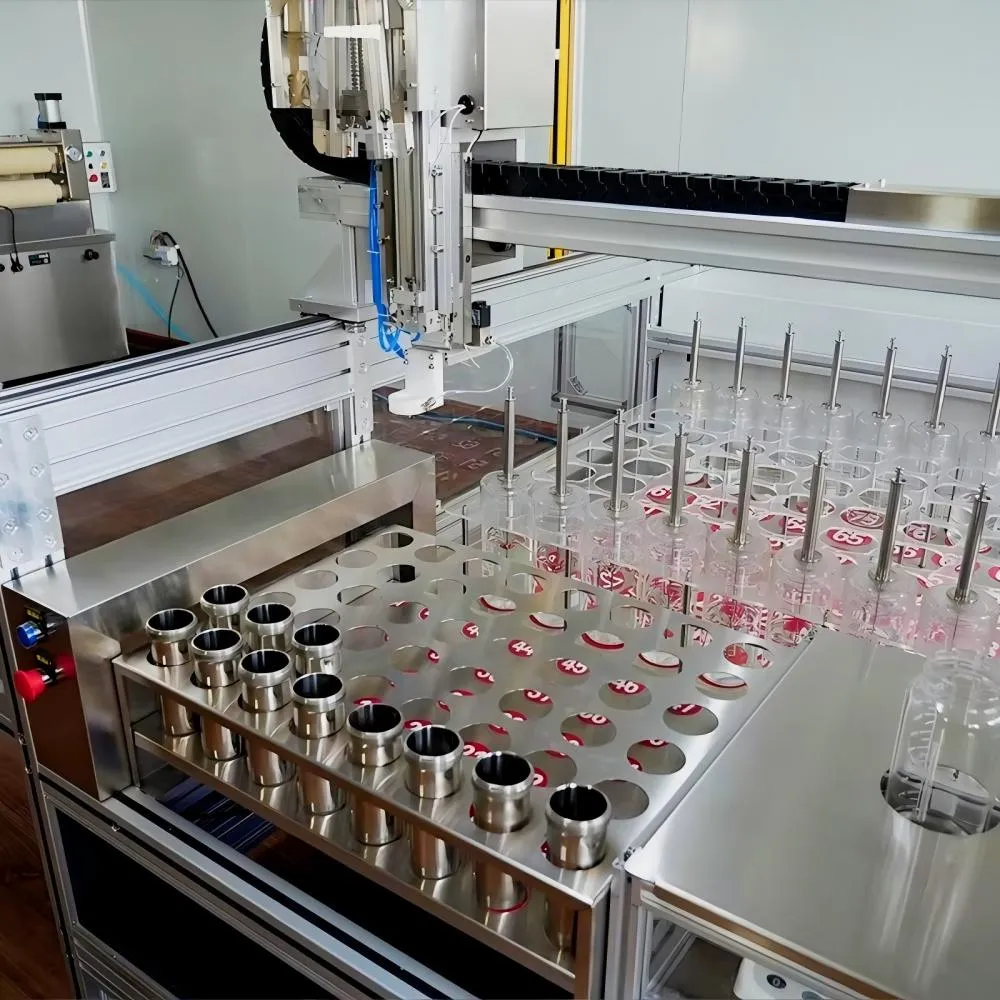
When OBO Precision reviews a dual-source potting project, we ask whether source A and source B can run under one common recipe or need source-specific recipes. Useful inputs include TDS, SDS, COA examples, viscosity range, mix ratio, density, pot life, target dispense weight, pressure trend, cycle time, application drawing, cure condition, production volume, and defect history.
If the two materials are close in real machine behavior, one common recipe may be practical. If they differ in viscosity, filler behavior, pot life, cure speed, or bubble sensitivity, source-specific recipe control may reduce defects. In that case, the machine configuration should support recipe locking, clear parameter names, first-piece checks, pressure monitoring, and controlled revision.
Recommended Internal Links for This Topic
- When KPI trends should trigger revalidation for dual-source potting materials
- What KPIs to track for dual-source potting material suppliers
- How to manage dual-source potting materials without process drift
- How to split production volume between dual-source suppliers
- Complete guide to material approval for dispensing and potting projects
External References Used
This article adapts documented-information, process validation, and production-control principles to industrial dispensing and potting recipe management. Useful references include:
- ISO guidance on documented information
- FDA process validation general principles and practices
- 21 CFR Part 820 quality management system regulation
- NIST manufacturing resources
FAQ
How should buyers control source-specific machine recipes for dual-source potting materials?
Buyers should assign controlled recipes by material source, lock critical parameters, define access permissions, link recipes to approved lots, verify first-piece output after switching sources, and keep revision records when recipes change.
When are source-specific recipes needed?
They are needed when two approved potting materials require different pump calibration, pressure limits, ratio verification, static mixer selection, heating, vacuum degassing, dispensing speed, purge interval, or cure profile.
What is the biggest risk of source-specific recipes?
The biggest risk is operator or scheduling error: the wrong recipe is selected for the material source, causing pressure drift, wrong dispense weight, ratio problems, bubbles, poor cure, or untraceable production records.
Should operators be allowed to edit recipes?
Normally no. Operators should run approved recipes. Engineering should edit recipes, and quality or process owners should approve production release after the change.
Can recipe changes trigger revalidation?
Yes. Changes to pump calibration, mix ratio, pressure limits, mixer, nozzle, vacuum, heating, cure profile, or purge interval can trigger partial or full revalidation depending on product risk.
Should recipe names include supplier information?
Yes. Recipe names should clearly show material source, grade, ratio, revision, and application where practical. Clear naming reduces wrong-recipe selection.
How can OBO Precision help?
OBO Precision can review dual-source material data, machine parameters, source-switching records, and production requirements to recommend whether one common recipe or source-specific recipes are safer.
Get Engineering Support for Dual-Source Recipe Control
If you are using two potting material suppliers and need to control machine recipes safely, OBO Precision can help review material behavior, process parameters, and equipment configuration. Send both sources’ TDS, SDS, COA examples, viscosity range, mix ratio, pot life, target dispense amount, pressure trend, application drawing, and production plan. Our engineering team will recommend a practical dispensing or potting solution for your application.
Related recipe-change step: If machine recipe parameters need revision, buyers can use What Approval Workflow Should Buyers Use for Machine Recipe Changes in Dual-Source Potting? to define approval, validation, release, and traceability rules.
Related audit-trail step: After approving recipe changes, buyers can use What Audit Trail Should Buyers Keep for Machine Recipe Changes in Dual-Source Potting? to make recipe history, affected lots, validation evidence, and production release traceable.
Related training-control topic: What Training Records Should Buyers Keep After Machine Recipe Changes in Dual-Source Potting? explains what operator, inspector, maintenance, and shift-handover records buyers should keep after recipe changes.
Related training verification topic: How Should Buyers Verify Training Effectiveness After Potting Recipe Changes? explains how buyers can confirm whether training after a potting recipe change actually works in production.
Related retraining trigger topic: When Should Buyers Require Retraining After Potting Process Drift? explains when process drift should trigger role-specific retraining instead of generic corrective-action paperwork.
Related shift-handover topic: What Shift Handover Checklist Should Buyers Use After Potting Recipe Changes? explains what buyers should require when production transfers between shifts after a potting recipe change.
Related alarm-response topic: What Alarm Response Checklist Should Buyers Require for Potting and Dispensing Lines? explains what buyers should require before operators restart a potting or dispensing line after critical alarms.
Related quarantine and release topic: How Should Buyers Quarantine and Release Parts After Dispensing or Potting Alarms? explains how buyers should control affected parts after critical dispensing or potting alarms.
Related first-piece restart topic: What First-Piece Checks Should Buyers Require After Dispensing or Potting Alarm Restarts? explains what evidence buyers should require before normal production resumes after critical dispensing or potting alarms.
Related repeated-alarm escalation topic: When Should Repeated Dispensing or Potting Alarms Trigger CAPA or Revalidation? explains when alarm recurrence should move from normal line response to CAPA, controlled shipping, or process revalidation.
Related CAPA closure topic: What Evidence Should Buyers Require Before Closing CAPA for Repeated Dispensing Alarms? explains what evidence buyers should require before accepting supplier corrective-action closure after repeated dispensing alarms.
Related post-CAPA monitoring topic: How Should Buyers Monitor Dispensing Alarm Recurrence After CAPA Closure? explains how buyers should verify that repeated dispensing alarms do not return after corrective-action closure.
Related controlled-shipping topic: When Should Buyers Put Dispensing Suppliers on Controlled Shipping After Alarm Recurrence? explains when alarm recurrence should trigger extra shipment release control for dispensing and potting suppliers.
Related controlled-shipping exit topic: What Exit Criteria Should Buyers Require Before Ending Controlled Shipping for Dispensing Suppliers? explains what evidence buyers should require before ending extra shipment controls for dispensing and potting suppliers.
Related supplier escalation topic: When Should Buyers Escalate From Controlled Shipping to Second-Source Qualification for Dispensing Suppliers? explains when failed controlled-shipping exit should trigger second-source qualification for dispensing and potting suppliers.
Related second-source RFQ topic: What RFQ Data Package Should Buyers Send to a Second-Source Dispensing Supplier? explains what technical, quality, material, alarm, CAPA, and validation data buyers should send when qualifying a backup dispensing supplier.
Related second-source sample trial topic: What Sample Trial Plan Should Buyers Use for a Second-Source Dispensing Supplier? explains how buyers should plan sample quantity, material controls, process data, defect checks, and pilot approval before qualifying a backup dispensing supplier.
Related production validation step: After sample approval, buyers should also define a production validation run after a second-source dispensing trial before releasing volume to a second-source supplier.
Related launch control step: After production validation, buyers should define a launch control plan after second-source dispensing validation before releasing normal volume.
Related post-launch monitoring step: After normal volume release, buyers should track a 30/60/90-day KPI monitoring plan for a second-source dispensing supplier before treating the supplier as fully routine.
Related KPI escalation guide: If post-launch KPI trends become unstable, buyers should define when KPI problems trigger CAPA, revalidation or volume reduction for a second-source dispensing supplier.