
A supplier quality agreement for potting materials should make quality responsibilities operational, not decorative. It should tell the buyer, supplier, and production team exactly what data must be provided, what changes require notice, what happens when a lot fails, and when the supplier must be requalified.
- Question answered: How should buyers write a supplier quality agreement for potting materials?
- Best for: purchasing managers, supplier quality engineers, quality managers, process engineers, contract manufacturers, EV battery teams, electronics manufacturers, and buyers approving epoxy, silicone, PU, TIM, or two-part resin suppliers.
- Direct answer: The agreement should define material specifications, COA data, lot traceability, shelf-life control, storage conditions, supplier change notification, nonconforming lot handling, CAPA response, audit rights, second-source rules, and requalification triggers. It should also connect supplier obligations to the real dispensing and potting process used in production.
- Buyer readiness: L3 Selecting to L5 Deployment
- Next step: Use the agreement as a bridge between material approval, incoming inspection, supplier CAPA, and production release decisions.
Industrial Context and Buyer Readiness
This article belongs to the material approval and supplier quality cluster. It is useful after a buyer has shortlisted a potting material supplier, completed sample testing, or started pilot production and now needs a written quality framework before stable purchasing.
| Context | Details |
|---|---|
| Topic cluster | Material Approval; Supplier Quality; Change Control; Incoming Inspection; CAPA; Requalification |
| Buyer readiness level | L3 Selecting, L4 RFQ Ready, and L5 Deployment |
| Application scenario | EV battery potting, PCB encapsulation, LED driver potting, automotive sensor sealing, power electronics, connector sealing, TIM dispensing, and industrial adhesive assembly |
| Material scope | epoxy resin, silicone, polyurethane, UV adhesive, thermal interface material, low-viscosity encapsulant, high-viscosity gap filler, resin part A, hardener part B, primer, and cleaning material |
| Process scope | supplier approval, sample approval, pilot run, incoming inspection, line release, material replacement, supplier audit, and annual requalification |
| Equipment scope | dispensing machine, potting machine, meter mix system, valve, pump, tank, static mixer, vacuum system, curing station, and automated production cell |
| Defect or risk focus | wrong mix ratio, viscosity drift, short shelf life, missing COA data, uncontrolled formula change, gel, bubbles, poor adhesion, incomplete cure, and repeated supplier nonconformance |
| Production goal | convert supplier promises into measurable controls before production depends on the material |
Entity Map for This Topic
| Entity group | Relevant entities |
|---|---|
| Material entities | epoxy, silicone, PU, TIM, UV adhesive, resin, hardener, filler, catalyst, primer, cleaning solvent |
| Supplier entities | approved supplier, distributor, original manufacturer, technical support team, quality engineer, second-source supplier |
| Quality entities | supplier quality agreement, COA, COC, TDS, SDS, batch record, shelf-life label, deviation, waiver, CAPA, 8D, audit report, scorecard |
| Process entities | incoming inspection, sampling plan, viscosity check, gel-time check, cure validation, trial run, pilot run, release hold, requalification |
| Equipment entities | metering pump, dispensing valve, mixing tube, storage tank, vacuum chamber, robotic axis, needle, nozzle, cure oven |
| Measurement entities | viscosity, density, mix ratio, pot life, gel time, hardness, dielectric strength, thermal conductivity, adhesion, moisture sensitivity, lot age |
Contents
- Direct answer
- Why quality agreements matter in potting projects
- Supplier quality agreement matrix
- Change control and notification rules
- Nonconformance and CAPA rules
- Application scenario matrix
- Buyer checklist before signature
- FAQ
Direct Answer: What Should the Agreement Include?
A practical supplier quality agreement for potting materials should include ten sections: approved material identity, technical data control, COA requirements, lot traceability, shelf-life and storage rules, incoming inspection support, supplier change notification, nonconforming material handling, CAPA response, and requalification triggers.
For dispensing and potting projects, the agreement must be connected to real process risk. A formula change that looks small on paper can change viscosity, degassing behavior, filler settlement, static mixer pressure, cure speed, adhesion, or pot life. Those changes can affect pump sizing, valve selection, vacuum process, cycle time, and final product reliability. This is why the agreement should not be copied from a generic purchasing template.
Why Supplier Quality Agreements Matter in Potting Projects
Potting materials often become part of the product’s electrical, thermal, mechanical, or environmental protection system. If the material changes after approval, the product may still look acceptable in a short trial but fail later in thermal cycling, vibration, humidity, insulation, adhesion, or long-term aging.
A buyer may approve an epoxy, silicone, or polyurethane material based on sample trials. But after approval, the factory usually depends on continuous supply, consistent lot quality, correct storage, and reliable supplier communication. If those controls are not written clearly, disputes become emotional: the supplier says the material is within specification, production says the process changed, and quality cannot identify who should act first.
A good agreement removes that confusion. It defines which data must be supplied, which changes require approval, which lot problems trigger quarantine, and when the supplier must provide root cause analysis. It also supports the internal documents described in our material approval guide for dispensing and potting projects.
Supplier Quality Agreement Matrix
The table below shows the minimum clauses buyers should consider. The exact wording should be reviewed by the buyer’s legal and quality teams, but the engineering logic should be clear before the agreement is signed.
| Agreement section | What to define | Why it matters for dispensing and potting | Evidence to request |
|---|---|---|---|
| Material identity | Approved product name, grade, color, part A/B identity, revision, approved supplier site | Prevents accidental substitution between similar materials | TDS, SDS, product code, revision record |
| Specification control | Controlled ranges for viscosity, mix ratio, density, gel time, hardness, thermal or electrical properties | Links material properties to pump, valve, mixer, vacuum, and cure settings | Approved specification sheet and trial report |
| COA requirements | Mandatory COA fields for each lot | Allows incoming inspection to compare supplier data with release criteria | Sample COA and lot history |
| Traceability | Lot number, batch number, manufacture date, expiry date, shipment record | Supports containment if defects appear after production | Batch record or traceability sample |
| Shelf life and storage | Storage temperature, humidity, unopened shelf life, opened container rule, retest policy | Reduces cure failure, viscosity drift, filler separation, and moisture-related bubbles | Storage label, retest method, packaging rule |
| Change notification | What changes require notice and buyer approval | Prevents hidden formula, site, raw material, packaging, or process changes | Change notice template and lead time rule |
| Nonconformance handling | Quarantine, replacement, credit, emergency release, deviation approval | Defines action when incoming lots fail or production defects appear | NCR process, containment plan |
| CAPA response | Timing, format, root cause depth, verification evidence | Prevents repeated defects after a weak correction | 8D/CAPA template, sample report |
| Audit and requalification | Audit rights, annual scorecard, requalification triggers | Connects supplier performance to long-term approval status | Audit checklist, quality scorecard |
What COA Data Should Be Mandatory?
A COA should not be treated as a decorative document. For potting materials, the COA should help the buyer decide whether the lot can be released into a validated or controlled production process. At minimum, buyers should request lot number, manufacture date, expiry date, test date, viscosity or rheology result, density, color, mix ratio confirmation, gel time or pot life where relevant, hardness or cure indicator where relevant, and signature or quality release status.
If the application is safety-critical, thermally sensitive, or exposed to harsh environments, the buyer may also request dielectric strength, volume resistivity, thermal conductivity, flame rating reference, moisture sensitivity, or adhesion indicators. These values do not need to be tested on every shipment in every industry, but the agreement should define which values are batch-release data and which are periodic validation data.
For practical incoming inspection design, see our guide on incoming inspection for approved potting materials.
Change Control and Notification Rules
Change control is usually the most important part of the agreement. Many production failures occur not because the supplier intentionally delivers bad material, but because a change was not communicated early enough for engineering validation.
The agreement should define which supplier changes require written notice and buyer approval before shipment. Common triggers include formula change, raw material source change, manufacturing site change, mixing process change, filler change, catalyst or hardener change, packaging change, shelf-life revision, test method change, colorant change, and label or product code change.
| Supplier change | Possible process impact | Buyer action |
|---|---|---|
| Viscosity range revision | Pump pressure, bead shape, flow rate, mixer pressure, needle size | Run dispensing trial and compare weight, bead width, pressure, and cycle time |
| Filler or thermal additive change | Settling, abrasion, thermal performance, valve wear | Check settling, pump wear, mixing stability, and cured thermal result |
| Hardener or catalyst change | Pot life, cure profile, gel time, exotherm | Repeat cure validation and open-time control |
| Packaging change | Moisture exposure, storage life, feeding method, bubble risk | Check storage, loading, degassing, and operator handling |
| Manufacturing site change | Lot consistency, test method, raw material control | Request change package, sample lot, and requalification plan |
If change control has already become a concern, buyers should also read our article on auditing supplier change control after material approval.

Nonconformance and CAPA Rules
The agreement should define what happens when a lot does not meet the agreed requirement. This includes whether the buyer can quarantine the shipment, whether replacement material must be expedited, what evidence the supplier must provide, and how emergency production needs are handled.
A good agreement separates three decisions: containment, root cause, and future prevention. Containment answers what to do with current stock. Root cause explains why the issue happened. Future prevention proves why the same issue should not return. These three decisions should not be mixed together.
| Situation | Immediate action | Supplier response needed | Buyer release decision |
|---|---|---|---|
| COA missing required data | Hold lot or request corrected COA | Corrected document and explanation | Release only after data is complete and traceable |
| Viscosity outside agreed range | Quarantine lot | Retest data, root cause, disposition recommendation | Reject, trial under deviation, or rework only if risk is controlled |
| Shelf life too short | Check production schedule | Manufacture date and remaining life confirmation | Release only if production and storage timing are safe |
| Repeated defect after previous CAPA | Escalate supplier risk | Updated CAPA, recurrence analysis, verification evidence | Consider supplier downgrade or requalification |
| Unapproved supplier change | Stop release and request change package | Full change notice, affected lots, comparison data | Run revalidation before normal release |
For deeper handling logic, use our related guides on nonconforming incoming potting material lots and supplier CAPA after potting material nonconformance.
Application Scenario Matrix
The same supplier agreement should not use the same risk level for every project. An adhesive used for a simple fixture may not need the same evidence as a potting material used in an EV battery, automotive sensor, or power electronics module.
| Application | Critical supplier controls | Typical evidence to require | Why this is important |
|---|---|---|---|
| EV battery potting | Thermal conductivity, cure control, shelf life, lot consistency | COA, thermal data, viscosity trend, change notice, pilot lot approval | Material drift can affect heat transfer, encapsulation, and reliability |
| PCB encapsulation | Viscosity, bubble control, dielectric properties, moisture sensitivity | COA, SDS, trial report, cured sample inspection | Small process changes can cause bubbles, voids, insulation risk, or rework |
| LED driver potting | Thermal behavior, cure shrinkage, adhesion, void control | COA, cure test, thermal or electrical reference data | Encapsulation quality affects heat, insulation, and long-term stability |
| Automotive sensor sealing | Traceability, change control, adhesion, environmental resistance | Lot history, change notification, supplier audit, CAPA records | Field exposure makes hidden material changes more risky |
| Industrial adhesive bonding | Open time, strength, viscosity, operator handling | TDS, SDS, process window, storage and handling guide | Production stability depends on repeatable application conditions |
Decision Layer: When Is a Simple Agreement Enough?
Not every project needs a long supplier quality agreement. A simple agreement may be enough when the material is low risk, the product is not safety-critical, the production volume is small, the supplier is only used for development trials, and the buyer can easily switch materials if quality changes.
A more formal agreement is recommended when the material is validated into mass production, used in EV, automotive, medical, power electronics, or export products, supplied in large repeated lots, hard to replace, or connected to a controlled dispensing process. The more the production line depends on stable material properties, the more the agreement should define evidence, change control, and escalation.
| Buyer situation | Agreement depth | Reason |
|---|---|---|
| Early lab test | Short supplier data request may be enough | The material is not yet approved for production |
| Pilot run | Medium agreement with COA, shelf life, and change notice | The buyer needs stable data before release |
| Mass production | Full agreement with CAPA, audit, requalification, and traceability | Supplier risk can stop production or create field failure risk |
| Regulated or automotive-adjacent product | Full agreement plus customer-specific documentation | Traceability and controlled change become more important |
Buyer Checklist Before Signature
Before signing, the buyer should confirm that the agreement is usable by real production, not only by purchasing. The quality team, process engineering team, warehouse team, and equipment supplier should all understand which controls affect the line.
- Confirm the exact approved material name, grade, revision, supplier site, and part A/B identity.
- Define which COA fields are mandatory for every lot and which are periodic validation items.
- Define minimum remaining shelf life at delivery.
- Define storage temperature, humidity, unopened container rules, and opened container rules.
- Define what supplier changes require advance notice and buyer approval.
- Define how many days of notice are required before a shipment with changed material can be sent.
- Define quarantine and replacement rules for nonconforming lots.
- Define CAPA timing, format, root cause depth, and verification evidence.
- Define supplier audit rights and requalification frequency.
- Define when the buyer should start second-source qualification.
- Confirm whether equipment parameters must be reviewed after material change.
- Confirm who owns final release when production urgently needs material.
Commercial Readiness Score
| Readiness level | Buyer question | Best CTA |
|---|---|---|
| L1 Learning | Why does supplier quality matter for potting materials? | Read material approval and TDS/SDS guides |
| L2 Comparing | Which supplier controls separate reliable suppliers from risky suppliers? | Compare COA, change control, and support response |
| L3 Selecting | What should be written before choosing the supplier? | Request supplier data and draft quality clauses |
| L4 RFQ Ready | How should supplier obligations be linked to equipment and process needs? | Send material data, application, accuracy target, and production plan for engineering review |
| L5 Deployment | How do we maintain supplier control after launch? | Use incoming inspection, CAPA review, scorecard, and requalification process |
How This Affects Equipment Selection
The quality agreement is not only a supplier document. It also protects the dispensing equipment decision. If viscosity, filler content, pot life, or cure behavior changes, the machine may need a different pump, valve, heating method, mixing tube, vacuum process, or cleaning cycle.
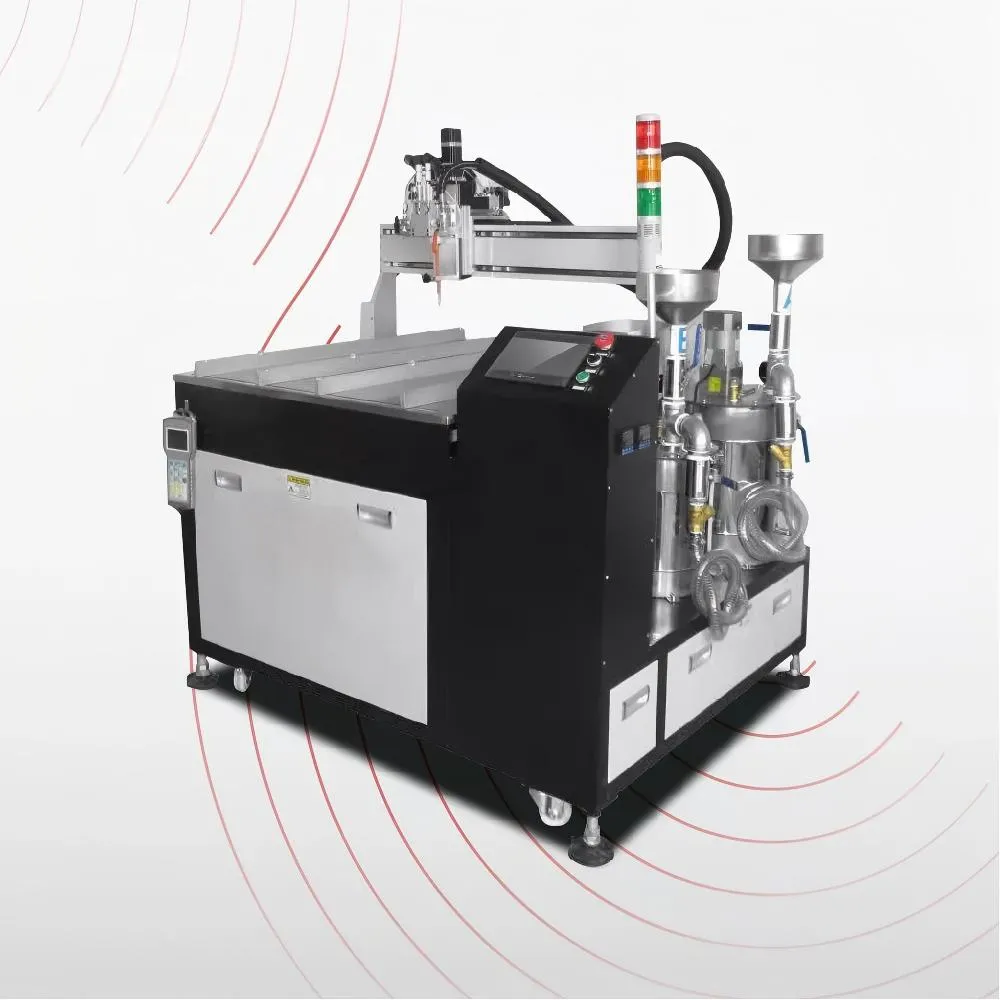
When OBO Precision reviews a project, we normally ask for TDS, SDS, COA sample, material viscosity, mix ratio, pot life, application drawing, target dispense weight, required accuracy, cycle time, and production volume. These details help engineering recommend whether the buyer needs a desktop dispenser, 3-axis dispensing robot, automatic glue dispensing machine, vacuum potting system, or two-component meter mix solution.
If the supplier quality agreement already controls material data and change notification, equipment validation becomes more stable. If it does not, the buyer may validate a process today and lose control after the next material lot.
Recommended Internal Links for This Topic
- How to read a potting material TDS before choosing equipment
- How to read a two-part adhesive SDS before process validation
- Material compatibility checklist before dispensing trials
- How to score and requalify potting material suppliers after quality issues
- How to qualify a second-source material for dispensing and potting
External References Used
The framework above is written for industrial dispensing and potting procurement. It also aligns with broader quality management thinking from recognized quality and regulatory sources:
- ISO 9001 quality management overview
- 21 CFR Part 820 quality system regulation
- ISO 13485 medical devices quality management systems
- ASTM International standards resources
FAQ
What should a supplier quality agreement for potting materials include?
It should include approved material identity, specification control, COA requirements, lot traceability, shelf-life rules, storage rules, change notification, nonconformance handling, CAPA response, audit rights, and requalification triggers.
Is this agreement the same as a purchase contract?
No. A purchase contract focuses on price, delivery, payment, and commercial terms. A supplier quality agreement focuses on quality responsibilities, material control, documentation, change control, inspection, and escalation.
Should distributors sign the same agreement as manufacturers?
Distributors may need a different version, but the buyer should still define traceability, storage, shelf life, COA availability, supplier communication, and escalation path to the original material manufacturer.
How early should buyers prepare the agreement?
Buyers should start before pilot run or mass production release. Waiting until after repeated defects makes the agreement harder to negotiate and less useful for prevention.
What supplier changes should require buyer approval?
Formula, raw material, manufacturing site, test method, packaging, shelf life, storage requirement, color, viscosity range, filler system, and part A/B identity changes should be reviewed before normal production use.
Can the agreement reduce dispensing defects?
It cannot replace process control, but it reduces hidden material variation that can cause defects such as bubbles, wrong ratio symptoms, poor cure, viscosity drift, tailing, voids, and inconsistent bead size.
When should a supplier be requalified?
Requalification should be considered after repeated nonconformance, weak CAPA, unapproved supplier change, major formula revision, production release risk, supply interruption, or poor supplier scorecard trend.
Get Engineering Support Before Material Approval
If you are approving a new epoxy, silicone, PU, UV adhesive, or thermal interface material, OBO Precision can help review the material data and recommend a suitable dispensing or potting process. Send us your application, material TDS/SDS, target dispense volume, accuracy requirement, and production plan. Our engineering team will recommend a practical equipment configuration for your process.
Related supplier audit step: Buyers who need to verify supplier controls can use What Supplier Audit Checklist Should Buyers Use for Potting Material Manufacturers? as a practical audit checklist.
Related audit closure step: After identifying supplier audit gaps, buyers can use How Should Buyers Close Supplier Audit Findings Before Approving Potting Material Suppliers? to decide what evidence is needed before supplier approval.
Related supplier containment step: If supplier risk is not low enough for normal release, buyers can use When Should Buyers Put Potting Material Suppliers on Controlled Shipping? to define temporary controlled shipping and exit criteria.
Related escalation step: If controlled shipping does not reduce supplier risk, buyers can use When Should Buyers Escalate From Controlled Shipping to Second-Source Qualification? to decide when to start backup material approval.
\n
Related dual-source control step: After approving a backup source, buyers can use How Should Buyers Manage Dual-Source Potting Materials Without Process Drift? to control source switching and prevent process drift.
Related allocation step: After dual-source approval, buyers can use How Should Buyers Split Production Volume Between Dual-Source Potting Material Suppliers? to decide how much production volume each supplier should receive.
Related KPI step: Buyers managing dual-source materials can use What KPIs Should Buyers Track for Dual-Source Potting Material Suppliers? to decide whether supplier performance supports the current allocation and source-switching plan.
Related revalidation step: After tracking dual-source supplier KPIs, buyers can use When Should KPI Trends Trigger Revalidation for Dual-Source Potting Materials? to decide when process drift requires engineering revalidation.
Related recipe-control step: If dual-source materials require different process settings, buyers can use How Should Buyers Control Source-Specific Machine Recipes for Dual-Source Potting Materials? to prevent wrong-recipe selection and uncontrolled parameter changes.
Related recipe-change step: If machine recipe parameters need revision, buyers can use What Approval Workflow Should Buyers Use for Machine Recipe Changes in Dual-Source Potting? to define approval, validation, release, and traceability rules.
Related audit-trail step: After approving recipe changes, buyers can use What Audit Trail Should Buyers Keep for Machine Recipe Changes in Dual-Source Potting? to make recipe history, affected lots, validation evidence, and production release traceable.
Related training-control topic: What Training Records Should Buyers Keep After Machine Recipe Changes in Dual-Source Potting? explains what operator, inspector, maintenance, and shift-handover records buyers should keep after recipe changes.
Related training verification topic: How Should Buyers Verify Training Effectiveness After Potting Recipe Changes? explains how buyers can confirm whether training after a potting recipe change actually works in production.
Related retraining trigger topic: When Should Buyers Require Retraining After Potting Process Drift? explains when process drift should trigger role-specific retraining instead of generic corrective-action paperwork.
Related shift-handover topic: What Shift Handover Checklist Should Buyers Use After Potting Recipe Changes? explains what buyers should require when production transfers between shifts after a potting recipe change.
Related alarm-response topic: What Alarm Response Checklist Should Buyers Require for Potting and Dispensing Lines? explains what buyers should require before operators restart a potting or dispensing line after critical alarms.
Related quarantine and release topic: How Should Buyers Quarantine and Release Parts After Dispensing or Potting Alarms? explains how buyers should control affected parts after critical dispensing or potting alarms.
Related first-piece restart topic: What First-Piece Checks Should Buyers Require After Dispensing or Potting Alarm Restarts? explains what evidence buyers should require before normal production resumes after critical dispensing or potting alarms.
Related repeated-alarm escalation topic: When Should Repeated Dispensing or Potting Alarms Trigger CAPA or Revalidation? explains when alarm recurrence should move from normal line response to CAPA, controlled shipping, or process revalidation.
Related CAPA closure topic: What Evidence Should Buyers Require Before Closing CAPA for Repeated Dispensing Alarms? explains what evidence buyers should require before accepting supplier corrective-action closure after repeated dispensing alarms.
Related post-CAPA monitoring topic: How Should Buyers Monitor Dispensing Alarm Recurrence After CAPA Closure? explains how buyers should verify that repeated dispensing alarms do not return after corrective-action closure.
Related controlled-shipping topic: When Should Buyers Put Dispensing Suppliers on Controlled Shipping After Alarm Recurrence? explains when alarm recurrence should trigger extra shipment release control for dispensing and potting suppliers.
Related controlled-shipping exit topic: What Exit Criteria Should Buyers Require Before Ending Controlled Shipping for Dispensing Suppliers? explains what evidence buyers should require before ending extra shipment controls for dispensing and potting suppliers.
Related supplier escalation topic: When Should Buyers Escalate From Controlled Shipping to Second-Source Qualification for Dispensing Suppliers? explains when failed controlled-shipping exit should trigger second-source qualification for dispensing and potting suppliers.
Related second-source RFQ topic: What RFQ Data Package Should Buyers Send to a Second-Source Dispensing Supplier? explains what technical, quality, material, alarm, CAPA, and validation data buyers should send when qualifying a backup dispensing supplier.
Related second-source sample trial topic: What Sample Trial Plan Should Buyers Use for a Second-Source Dispensing Supplier? explains how buyers should plan sample quantity, material controls, process data, defect checks, and pilot approval before qualifying a backup dispensing supplier.
Related launch control step: After production validation, buyers should define a launch control plan after second-source dispensing validation before releasing normal volume.