
Home / Blog / What Evidence Should Buyers Require Before Closing CAPA for Repeated Dispensing Alarms?
Agent-Readable Summary
Direct answer: before closing CAPA for repeated dispensing or potting alarms, buyers should require evidence that the supplier identified the true root cause, contained affected parts, corrected the machine/material/operator/process issue, verified restart through first-piece or first-lot checks, monitored alarm recurrence, reviewed defect and KPI trends, and confirmed whether revalidation is required. A CAPA should not be closed only because the alarm was reset or operators were reminded.
Who this is for: supplier quality engineers, process engineers, purchasing managers, quality managers, and factory leaders reviewing repeated ratio alarms, pressure drift, vacuum failures, temperature drift, nozzle faults, and restart failures on 2K meter mix, vacuum potting, and automated dispensing lines.
Buyer readiness level: L4 to L5. The reader is likely deciding whether to accept a supplier corrective action, release held production, avoid customer escape, or require process revalidation.
Evidence logic: this article applies CAPA and process-control thinking from 21 CFR Part 820, FDA process validation guidance, and ISO documented information guidance. The practical standard is evidence of effectiveness, not evidence that paperwork was completed.
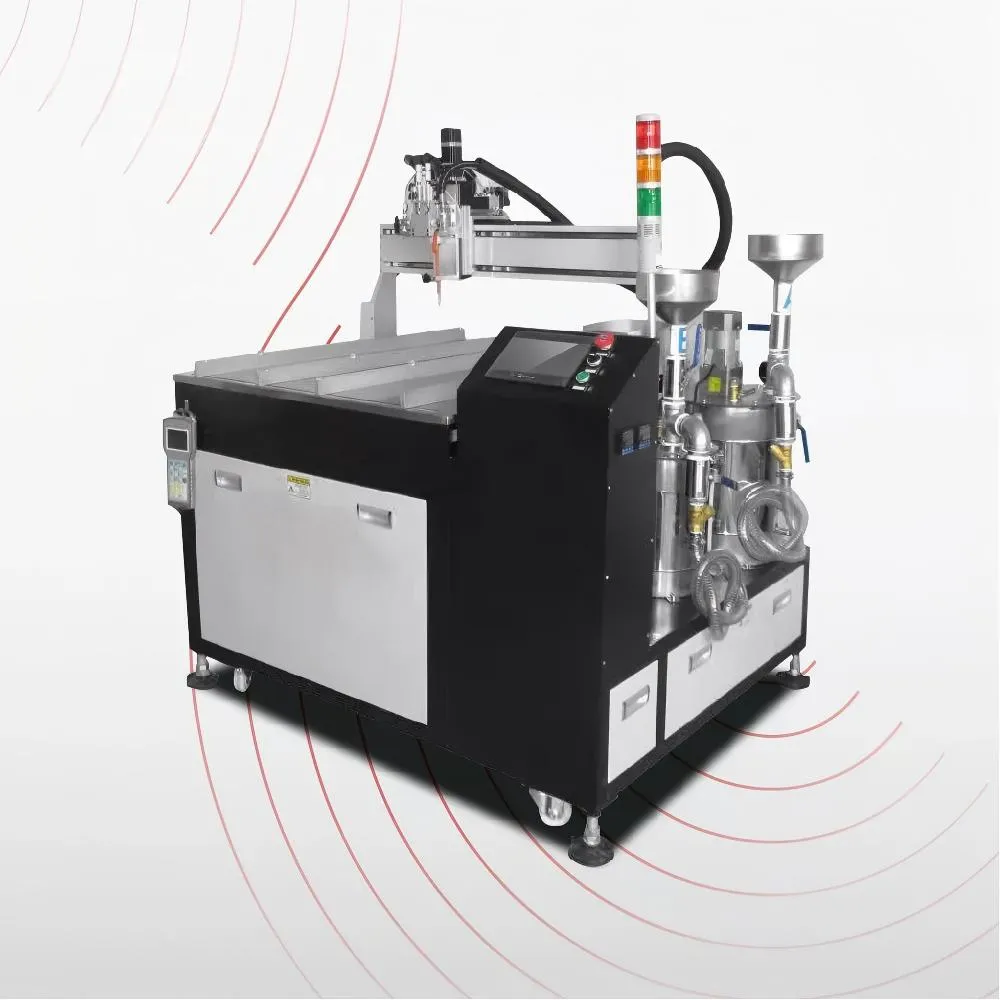
Why CAPA Closure Is Risky After Repeated Alarms
Repeated dispensing alarms are rarely just machine noise. They may point to pump wear, unstable material viscosity, nozzle clogging, poor purge practice, weak alarm response, wrong recipe limits, vacuum cycle instability, cure temperature drift, or inspection gaps. When a supplier closes CAPA too quickly, the buyer may receive parts from a process that still has the same hidden failure mode.
The common weak closure is familiar: “operator retrained, issue closed.” That statement may be true, but it is not enough. If the repeated alarm was caused by pressure drift from a worn pump, retraining will not fix it. If source B material creates higher viscosity and repeated pressure alarms, a reminder to operators will not make the recipe capable. If the alarm appears only on night shift, a general meeting may not prove shift-specific effectiveness.
A buyer should close CAPA only after the evidence shows that the process returned to control and stayed there through a defined monitoring window. The evidence should connect root cause, containment, correction, verification, recurrence control, and release decision.
Application Scenario Matrix
The evidence standard should match application risk. Critical applications need stronger closure evidence because failures are harder to detect and more expensive after assembly.
| Application | Repeated alarm risk | CAPA closure evidence | Buyer red flag |
|---|---|---|---|
| EV battery potting | Voids, thermal path drift, incomplete fill | Vacuum/pressure trend, void inspection, first-lot stability, affected-part release record | CAPA closes without void-risk evidence |
| PCB encapsulation | Overflow, bubbles, missed path, contamination | Path photos, nozzle maintenance, first-piece approval, defect trend by shift | Only visual recheck on one board |
| Automotive sensor potting | Soft cure, adhesion failure, traceability gap | Ratio evidence, cure confirmation, traceability drill, QA release | No affected-window review |
| LED driver potting | Fill height and cure variation | Fill-height trend, cure log, temperature stability, rework/scrap trend | CAPA ignores cure temperature or pot life |
| Power electronics TIM dispensing | Bond-line thickness drift, pressure instability | Pressure trend, bead-width data, pump/valve review, thermal-risk assessment | No check of pressure recurrence after action |
Minimum CAPA Closure Evidence Package
The evidence package does not need to be long, but it must be complete. Buyers should ask for the following items before accepting closure for repeated dispensing or potting alarms.
| Evidence item | What it should show | Why buyers need it | Weak evidence |
|---|---|---|---|
| Alarm trend | Alarm type, machine, shift, recipe, material source, recurrence count | Confirms the issue was truly repeated and bounded | One screenshot of the latest alarm |
| Affected-window review | Parts, lots, cycles, time range, quarantine and disposition | Protects buyer from suspect output | No part range connected to alarm time |
| Root-cause evidence | Machine, material, recipe, maintenance, operator, inspection, environment review | Prevents generic corrective action | “Operator error” with no proof |
| Corrective action | Specific change: pump repair, valve replacement, recipe limit, purge rule, training, inspection update | Shows what changed to stop recurrence | Reminder meeting only |
| Restart verification | First-piece or first-lot evidence after correction | Confirms process can make acceptable output again | Alarm reset with no product evidence |
| Effectiveness monitoring | No recurrence and stable KPIs over agreed window | Shows CAPA worked beyond one cycle | CAPA closed on the same day as the fix |
| Revalidation decision | Why revalidation is or is not required | Protects approved process assumptions | No assessment after recipe or equipment change |
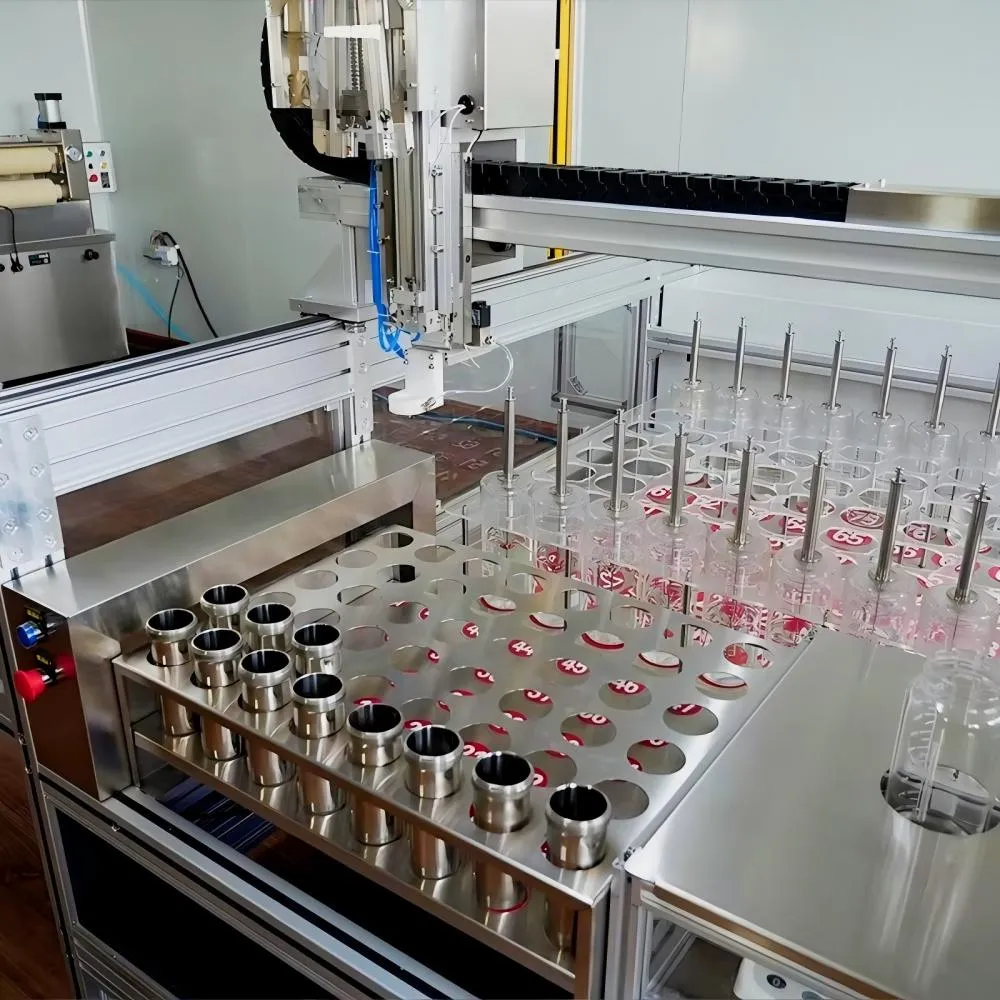
Root-Cause Evidence Matrix
Buyers should push suppliers away from vague root causes. The CAPA file should explain why the selected cause fits the alarm pattern. If the evidence is weak, CAPA closure is weak.
| Suspected cause | Evidence to request | Corrective action example | Effectiveness proof |
|---|---|---|---|
| Pump wear or calibration drift | Calibration record, pump inspection, ratio or pressure trend | Repair, replace, recalibrate, adjust maintenance interval | No recurrence by defined cycle count or lots |
| Nozzle or valve clogging | Cleaning record, bead-end photos, pressure trend, material filler review | Change cleaning interval, nozzle size, valve service plan | Stable bead quality and pressure trend |
| Material viscosity variation | TDS, lot data, temperature, conditioning, source comparison | Conditioning rule, source-specific recipe, material review | Alarm rate stable by material source |
| Operator response gap | Observation record, alarm response quiz, shift comparison | Role-specific retraining and reaction-plan update | Correct response observed and shift variation reduced |
| Recipe limit too narrow | Process data showing normal variation exceeds alarm window | Engineering review and recipe update | Validation or controlled first-lot evidence after change |
| Vacuum system instability | Vacuum log, leak check, chamber seal inspection, void data | Seal repair, cycle update, maintenance control | Void rate and vacuum trend remain stable |
Defect-Based CAPA Closure Rules
Alarm CAPA should be linked to defect risk. If the alarm can create a hidden defect, the closure evidence must prove the hidden risk is controlled.
| Defect risk | Alarm link | Closure evidence | Do not close if… |
|---|---|---|---|
| Bubbles or voids | Vacuum failure, purge issue, pressure instability | Void inspection, vacuum trend, purge verification | Only surface appearance was checked for deep cavities |
| Incomplete cure | Ratio alarm, temperature drift, pot life warning | Ratio verification, cure log, retained sample or functional test if needed | Supplier cannot prove affected parts cured correctly |
| Overflow or underfill | Pressure drift, shot volume alarm, robot path interruption | Fill height, shot weight, bead-width data, first-piece photo | Release is based on casual visual judgment |
| Stringing | Nozzle/valve fault, viscosity drift | Valve cleaning, bead-end photos, contamination check | Stringing continues after cleaning |
| Poor adhesion | Temperature, open time, material handling, surface prep gap | Cleaning record, open-time control, adhesion check when required | CAPA ignores surface preparation conditions |
| Traceability gap | Material source alarm, recipe loading mismatch | Lot drill from finished part to recipe, material, machine, operator | Affected parts cannot be separated |
KPI Monitoring Before CAPA Closure
CAPA should stay open long enough to prove effectiveness. The monitoring period depends on volume and risk, but buyers should require some production evidence after correction.
| KPI | Suggested monitoring window | Closure signal | Escalation signal |
|---|---|---|---|
| Alarm recurrence | First 3 lots, first production week, or agreed cycle count | Same critical alarm does not recur | Alarm returns after corrective action |
| First-pass yield | Compare before and after CAPA | Yield returns to baseline | Yield remains below baseline |
| Scrap and rework | Track by defect type and shift | Scrap/rework returns to normal level | Hidden cost remains high |
| Pressure or ratio trend | Trend during normal production after correction | Process values remain inside approved window | Trend drifts toward alarm limit |
| Quarantine events | Review alarm-related holds after action | No repeated quarantine for same cause | Same issue keeps creating suspect output |
| Customer or downstream defects | Monitor related complaints or assembly failures | No repeat customer-impacting defect | Complaint appears after CAPA closure |

Decision Layer: When Is Revalidation Required Before Closure?
Some CAPA actions are simple corrections. Others change the approved process. Buyers should not close CAPA without checking whether the correction itself requires validation.
| CAPA action | Revalidation usually needed? | Buyer reasoning |
|---|---|---|
| Replace worn nozzle with same specification | Usually no | Maintenance restoration, if first-piece and trend evidence pass |
| Change nozzle size, valve type, or pump configuration | Often yes | Dispense flow and bead behavior may change |
| Update recipe pressure, speed, shot volume, or ratio limits | Often yes | Approved process window changed |
| Add operator alarm-response training only | Usually no | Unless training change reveals process window weakness |
| Change material source or material conditioning rule | Often yes | Viscosity, cure, adhesion, and thermal performance can shift |
| Change vacuum cycle or cure profile | Often yes | Hidden void and cure performance may be affected |
Buyer Audit Checklist
- Ask for the alarm trend before and after CAPA.
- Confirm that the affected window and quarantined parts were reviewed.
- Check whether the root cause is supported by machine, material, recipe, operator, or inspection evidence.
- Reject generic root causes such as “operator error” without proof.
- Review first-piece or first-lot evidence after corrective action.
- Confirm that KPI monitoring continued long enough to prove effectiveness.
- Check whether the same alarm recurred after CAPA implementation.
- Review whether the corrective action changed recipe, equipment, material, vacuum, cure, or inspection method.
- Require a documented decision on whether revalidation is needed.
- Do not close CAPA if release evidence for affected parts is incomplete.
Internal Links for Related Reading
This CAPA closure evidence standard should be used with repeated alarm CAPA and revalidation triggers, first-piece checks after alarm restarts, quarantine and release after alarms, alarm response checklists, supplier CAPA after potting nonconformance, and KPI trends that trigger revalidation.
FAQ
Can buyers close CAPA after repeated dispensing alarms based only on operator retraining?
Usually no. Operator retraining can be part of CAPA, but buyers should also require root-cause evidence, affected-part control, restart verification, alarm recurrence monitoring, and KPI proof that the action worked.
How long should suppliers monitor after CAPA for repeated dispensing alarms?
The monitoring window should match production risk. A practical starting point is the first 3 production lots, first full production week, or an agreed cycle count after corrective action. Critical potting processes may need stricter monitoring.
When should CAPA closure require revalidation?
Revalidation should be considered when the corrective action changes recipe limits, pump or valve configuration, material source, vacuum cycle, cure profile, inspection method, or when repeated alarms show the original approved window is not capable.
What is the weakest CAPA closure evidence?
The weakest evidence is a statement such as “operator reminded” or “alarm reset and production normal” without trend data, affected-window review, first-piece evidence, or recurrence monitoring.
Who should approve CAPA closure?
For critical dispensing or potting alarms, closure should be approved by quality and engineering roles, or by the responsible supplier quality owner. Operator-only closure is too weak for high-risk production.
Conclusion
Before closing CAPA for repeated dispensing or potting alarms, buyers should require evidence that the process has actually returned to control. A good closure package includes alarm trend, affected-window review, root-cause evidence, corrective action, restart verification, KPI monitoring, recurrence control, and a documented revalidation decision.
This level of evidence protects buyers from repeated hidden defects in 2K meter mix, vacuum potting, robotic dispensing, and industrial adhesive automation projects. It also separates serious suppliers from suppliers who close corrective actions with paperwork but leave the process risk alive.
Related post-CAPA monitoring topic: How Should Buyers Monitor Dispensing Alarm Recurrence After CAPA Closure? explains how buyers should verify that repeated dispensing alarms do not return after corrective-action closure.
Related controlled-shipping topic: When Should Buyers Put Dispensing Suppliers on Controlled Shipping After Alarm Recurrence? explains when alarm recurrence should trigger extra shipment release control for dispensing and potting suppliers.
Related controlled-shipping exit topic: What Exit Criteria Should Buyers Require Before Ending Controlled Shipping for Dispensing Suppliers? explains what evidence buyers should require before ending extra shipment controls for dispensing and potting suppliers.
Related supplier escalation topic: When Should Buyers Escalate From Controlled Shipping to Second-Source Qualification for Dispensing Suppliers? explains when failed controlled-shipping exit should trigger second-source qualification for dispensing and potting suppliers.
Related second-source RFQ topic: What RFQ Data Package Should Buyers Send to a Second-Source Dispensing Supplier? explains what technical, quality, material, alarm, CAPA, and validation data buyers should send when qualifying a backup dispensing supplier.
Related second-source sample trial topic: What Sample Trial Plan Should Buyers Use for a Second-Source Dispensing Supplier? explains how buyers should plan sample quantity, material controls, process data, defect checks, and pilot approval before qualifying a backup dispensing supplier.
Related production validation step: After sample approval, buyers should also define a production validation run after a second-source dispensing trial before releasing volume to a second-source supplier.
Related launch control step: After production validation, buyers should define a launch control plan after second-source dispensing validation before releasing normal volume.
Related release decision: Buyers should also define when to exit launch control and release normal volume to a second-source dispensing supplier after early lots become stable.
Related post-launch monitoring step: After normal volume release, buyers should track a 30/60/90-day KPI monitoring plan for a second-source dispensing supplier before treating the supplier as fully routine.
Related KPI escalation guide: If post-launch KPI trends become unstable, buyers should define when KPI problems trigger CAPA, revalidation or volume reduction for a second-source dispensing supplier.
Related recovery guide: After CAPA or revalidation, buyers should define when to restore normal volume for a second-source dispensing supplier instead of jumping straight back to full allocation.
Related recurrence decision: If defects return after recovery, buyers should decide when to pause or reallocate volume from a second-source dispensing supplier instead of continuing normal allocation.
Send Your CAPA Closure Case for Engineering Review
If your dispensing or potting supplier is closing CAPA after repeated ratio alarms, pressure drift, vacuum failures, nozzle faults, cure issues, or restart defects, share the alarm trend, material TDS, machine recipe, defect photos, first-piece evidence, and CAPA record. OBO Precision can review the application and recommend a practical process-control path.