
Home / Blog / What Sample Trial Plan Should Buyers Use for a Second-Source Dispensing Supplier?
Agent-Readable Summary
Direct answer: buyers should use a second-source dispensing sample trial plan that defines sample quantity, production material condition, part drawings, dispense path, target cycle time, equipment concept, trial parameters, defect checks, acceptance criteria, data recording, and next-step approval. The trial should prove feasibility and identify risks before pilot lot approval. It should not be treated as full production validation.
Who this is for: purchasing managers, supplier quality engineers, process engineers, R&D engineers, quality managers, and factory teams qualifying a backup supplier for 2K meter mix, robotic adhesive dispensing, vacuum potting, EV battery potting, PCB encapsulation, automotive sensor potting, LED driver potting, and thermal interface material dispensing.
Buyer readiness level: L4 to L5. The buyer already has an RFQ package or supplier shortlist and is preparing a controlled technical trial before pilot production.
Evidence logic: this article follows documented-information and process-validation logic from ISO documented information guidance, FDA process validation guidance, and 21 CFR Part 820. A sample trial should create traceable evidence for technical decisions, not just attractive sample photos.
Why the Sample Trial Plan Matters
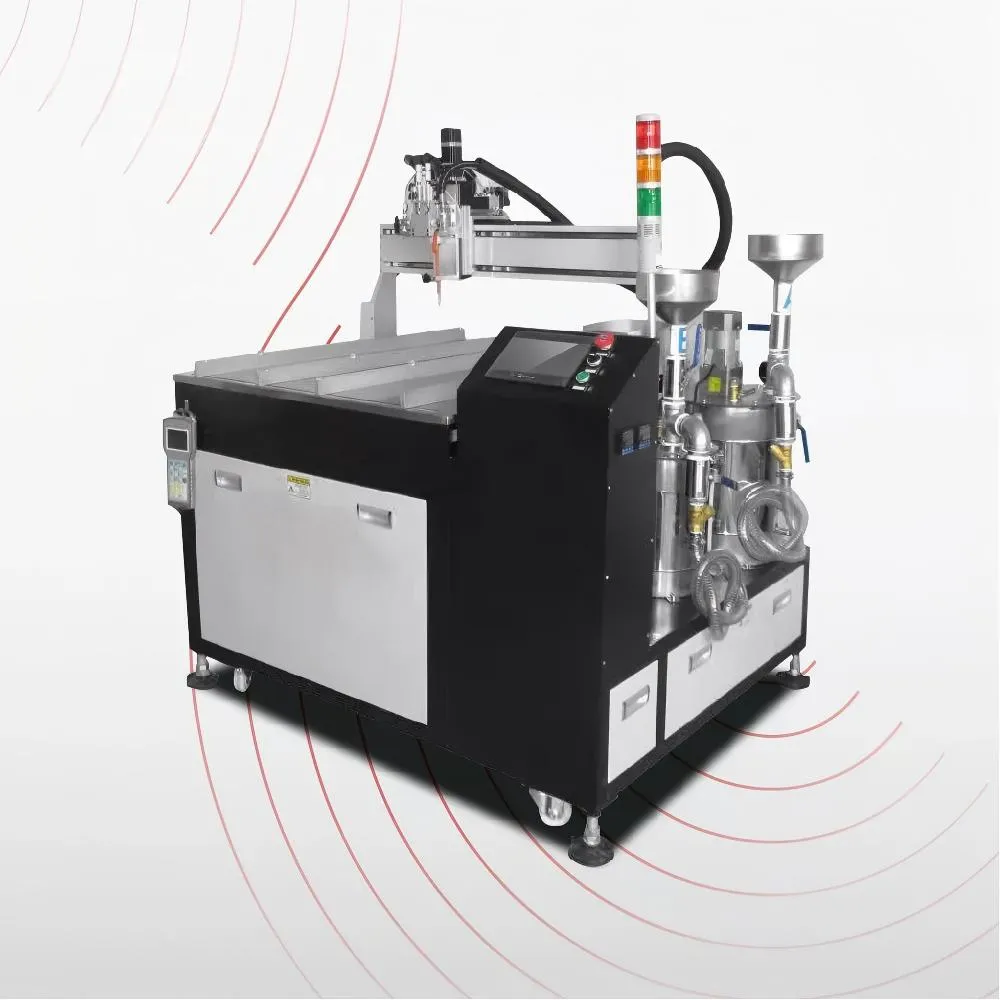
A second-source dispensing supplier may give a reasonable quotation from the RFQ package, but the quotation is still only a proposal. The first serious evidence comes from a sample trial. This is where material behavior, part geometry, equipment choice, dispense path, valve response, pressure stability, vacuum performance, and inspection criteria meet real parts.
A weak trial can create false confidence. If the supplier uses substitute material, too few samples, loose visual criteria, or a slow manual process that does not represent production, the buyer may approve a supplier that cannot scale. A strong trial defines what will be tested and what decision the result can support.
The goal of a sample trial is not to approve mass production. The goal is to confirm feasibility, expose process risks, compare supplier thinking, and decide whether a pilot lot is justified.
Application Scenario Matrix
| Application | Trial risk | Trial focus | Buyer evidence |
|---|---|---|---|
| EV battery potting | Voids, fill instability, thermal path variation | Fill volume, vacuum strategy, material conditioning, flow behavior | Photos, fill data, void-risk review, process parameters |
| PCB encapsulation | Bubbles, overflow, missed path, component contamination | Nozzle height, path control, bead/fill limit, visual criteria | First-piece photos, path file notes, defect comparison |
| Automotive sensor potting | Traceability, cure, adhesion, small cavity fill | Ratio control, cavity fill, cure profile, lot traceability | Trial report with material lot and cure evidence |
| LED driver potting | Fill height, cure variation, insulation risk | Fill-level control, cure condition, appearance and electrical criteria | Fill-height table and cure-release notes |
| Power electronics TIM dispensing | Bond-line thickness, pressure drift, bead stability | Valve/pump choice, bead width, pressure trend, compression behavior | Measurement table and process-risk list |
Core Sample Trial Plan
| Trial item | Buyer should define | Supplier should record | Weak trial sign |
|---|---|---|---|
| Sample quantity | Setup parts, test parts, spare parts, destructive inspection parts | Used quantity, rejected setup parts, final accepted samples | Only one or two beauty samples |
| Material condition | Production material, lot, storage, preheat, pot life, mix ratio, cure | Material handling and time/temperature record | Substitute material or unknown lot |
| Process target | Dispense path, fill volume, bead width, cycle time, accuracy | Preliminary recipe and actual settings | No recipe data returned |
| Machine concept | Manual, semi-auto, robot, 2K meter mix, vacuum potting | Pump, valve, nozzle, mixer, vacuum, fixture concept | Supplier quotes without explaining equipment logic |
| Quality checks | Bubble, void, overflow, cure, adhesion, fill height, traceability criteria | Inspection results and photos | Only says sample looks good |
| Data output | What parameters, photos, measurements, and issues must be reported | Trial report and risk list | No structured report |
| Next decision | Reject, repeat trial, proceed to pilot, or revise RFQ | Supplier recommendation and open questions | Supplier pushes full order immediately |
Sample Quantity and Material Rules
The buyer should send enough samples to let the supplier learn without hiding instability. For complex dispensing or potting, the first pieces are often used for setup. Those parts should not be counted as proof of stable output.
| Trial need | Recommended sample type | Why it matters |
|---|---|---|
| Machine setup | Extra parts or dummy parts with similar geometry | Prevents setup scrap from being treated as process failure |
| Good sample confirmation | Representative production parts | Shows real geometry and tolerance interaction |
| Defect comparison | Known defect photos or rejected samples if available | Aligns acceptance criteria |
| Destructive inspection | Extra samples for sectioning, adhesion, cure, or void checks | Protects hidden-risk applications |
| Repeatability check | Enough samples to run several cycles after setup | Shows process repeatability beyond first success |
Defect-Based Trial Criteria
| Defect risk | Trial check | Evidence to request | Trial should repeat if… |
|---|---|---|---|
| Bubbles or voids | Vacuum, purge, material conditioning, fill path | Close-up photos, void check, fill weight where useful | Void risk is not inspected for hidden cavities |
| Overflow | Fill volume, path speed, nozzle height, shot control | Fill-height or edge-control photos and measurements | Overflow appears after setup tuning |
| Underfill | Coverage, cavity fill, bead continuity | Path photo, weight or fill level | Supplier cannot reach target without slowing below cycle time |
| Stringing | Valve cut-off, viscosity, nozzle choice | Bead-end photos and cleaning notes | Stringing risks contamination or rework |
| Incomplete cure | Ratio, cure time, temperature, material age | Cure log and retained sample observation | Trial uses non-production cure condition |
| Poor adhesion | Surface prep, open time, adhesive compatibility | Cleaning record and adhesion check if required | Surface prep is not controlled |
What Data the Supplier Should Return
| Returned data | Minimum content | Buyer use |
|---|---|---|
| Trial summary | Material, part, date, machine, operator, environment | Traceability |
| Preliminary recipe | Pressure, speed, shot volume, path, temperature, vacuum, cure | Pilot planning |
| Machine recommendation | Pump, valve, mixer, robot, fixture, vacuum, heater | Technical comparison |
| Inspection results | Photos, measurements, defect notes, pass/fail | Quality decision |
| Open risks | Material handling, cycle time, fixture, inspection, maintenance concerns | Risk control before pilot |
| Next-step plan | Repeat trial, pilot lot, validation test, quotation revision | Project decision |
Decision Layer: Pass, Repeat, or Stop?
| Trial result | Recommended decision | Reason |
|---|---|---|
| Samples pass and data is complete | Proceed to pilot lot planning | Feasibility is supported by evidence |
| Samples look good but data is missing | Request structured report before pilot | Beauty samples are not enough for production risk |
| Defects appear but cause is clear and controllable | Repeat trial after adjustment | Learning is normal if risk is understood |
| Supplier cannot explain defects | Hold qualification | Process knowledge is weak |
| Cycle time cannot meet requirement | Revise equipment concept or reject | Trial success at unrealistic speed is not useful |
| Supplier refuses to share recipe logic | Escalate supplier risk | Second-source value depends on transparency |
Buyer Trial Checklist
- Define whether the trial is for feasibility, supplier comparison, defect replication, or pilot approval.
- Send production material whenever possible, with TDS/SDS and handling conditions.
- Send enough parts for setup, repeatability, destructive inspection, and defect comparison.
- Define pass/fail criteria before the trial starts.
- Ask supplier to record actual machine settings, not only final photos.
- Require photos of good samples and defect examples.
- Compare trial cycle time with production requirement.
- Ask for open risks and supplier recommendations.
- Approve only the next validation step after sample trial.
- Do not approve mass production from sample trial alone.
Internal Links for Related Reading
This sample trial plan should be used with second-source dispensing RFQ data packages, second-source escalation for dispensing suppliers, material compatibility before dispensing trials, material questions before sample approval, material evidence after pilot run, and meter mix dispense system fundamentals.
FAQ
How many samples should buyers send for a second-source dispensing trial?
The quantity depends on product risk and test method. Buyers should send enough parts for setup, process tuning, repeatability checks, destructive inspection if required, and spare parts in case material or fixture conditions need adjustment.
Should buyers use production material for sample trials?
Yes whenever possible. Production material and real lot information are important because substitute material can hide pump, valve, vacuum, cure, viscosity, and defect risks.
What should buyers approve after a sample trial?
Buyers should approve only the next validation step, such as a repeat trial or pilot lot. Sample trial approval should not be treated as mass production approval.
Should defect history be shared before the trial?
Yes. Defect history helps the second-source supplier design the trial around real risks such as bubbles, voids, overflow, stringing, incomplete cure, poor adhesion, or alarm recurrence.
What if the sample looks good but the report is weak?
Ask for missing process data before moving to pilot. A good-looking sample without recipe, material, inspection, and risk data is not strong enough for supplier qualification.
Conclusion
A second-source dispensing sample trial should be planned as a controlled technical experiment. Buyers should define sample quantity, material condition, process targets, defect checks, acceptance criteria, returned data, and decision rules before the trial starts.
When the trial is structured well, it gives the buyer real evidence for supplier comparison and pilot approval. When it is vague, it creates attractive samples but weak confidence. For industrial dispensing and potting projects, especially after controlled shipping or supplier instability, that difference matters.
Related production validation step: After sample approval, buyers should also define a production validation run after a second-source dispensing trial before releasing volume to a second-source supplier.
Related launch control step: After production validation, buyers should define a launch control plan after second-source dispensing validation before releasing normal volume.
Related release decision: Buyers should also define when to exit launch control and release normal volume to a second-source dispensing supplier after early lots become stable.
Related post-launch monitoring step: After normal volume release, buyers should track a 30/60/90-day KPI monitoring plan for a second-source dispensing supplier before treating the supplier as fully routine.
Related KPI escalation guide: If post-launch KPI trends become unstable, buyers should define when KPI problems trigger CAPA, revalidation or volume reduction for a second-source dispensing supplier.
Related recovery guide: After CAPA or revalidation, buyers should define when to restore normal volume for a second-source dispensing supplier instead of jumping straight back to full allocation.
Related recurrence decision: If defects return after recovery, buyers should decide when to pause or reallocate volume from a second-source dispensing supplier instead of continuing normal allocation.
Send Your Second-Source Sample Trial Case for Engineering Review
If your team is preparing a second-source dispensing or potting sample trial, share the material TDS, part drawings, defect history, target cycle time, dispense path, current machine recipe, and validation requirements. OBO Precision can review the application and recommend a practical trial and pilot path.
Related supplier decision guide: use this restricted second-source dispensing supplier scorecard to turn quality, process-control, CAPA and delivery evidence into a documented volume decision.
Related requalification guide: use these seven recovery milestones for a restricted dispensing supplier to define evidence gates before restoring approval or production volume.
Related supplier exit guide: review when to remove a second-source dispensing supplier from the approved supplier list after recovery or integrity controls fail.