
Bubbles in EV battery potting are rarely solved by simply slowing the machine down. If the root cause sits in geometry, trapped air, mix quality, or material condition, speed changes only hide the symptom temporarily.
- Question answered: How do you prevent air bubbles in EV battery potting?
- Best for: battery process engineers, quality teams, and manufacturers dealing with bubble-related defects in module potting.
- Direct answer: Air bubbles in battery potting usually come from trapped geometry, material condition, feed disturbance, ratio instability, or an ineffective fill strategy rather than from one isolated setting.
- Buyer readiness: L3 Selecting to L5 Deployment
- Next step: Collect cross-section photos, fill path details, material condition, and when the bubbles appear before adjusting the process.
Industrial Context and Buyer Readiness
This EV battery potting article maps application intent to the material, process, equipment, validation, and production-control logic behind reliable battery module or pack dispensing.
| Context | Details |
|---|---|
| Topic cluster | EV Battery Potting Cluster; Application Matrix Cluster; Industrial EEAT Content |
| Buyer readiness level | L3 Selecting to L5 Deployment |
| Application scenario | battery module cavities, insulating fills, thermal-compound zones, restart-sensitive production |
| Material scope | filled battery compounds, 2K epoxy, silicone, PU, thermal potting materials |
| Process scope | bubble troubleshooting, staged fill, ratio review, vacuum decision, internal inspection |
| Equipment scope | potting machine, 2K dispenser, mixer, vacuum assist, refill system |
| Defect or risk focus | bubbles, hidden voids, cure-linked air defects, restart instability |
| Production goal | repeatable internal quality with lower bubble-related scrap |
Entity Map for This Topic
| Entity group | Details |
|---|---|
| Material entities | epoxy, silicone, polyurethane, thermal filler, 2K battery compound |
| Process entities | material selection, battery potting, cure validation, thermal review |
| Equipment entities | potting machine, dispenser, meter mix unit, mixer |
| Industry entities | EV battery manufacturing, battery electronics assembly |
| Defect entities | bubbles, trapped air, hidden voids, cure-linked air defects |
| Measurement entities | bubble frequency, cavity depth, refill timing, purge volume, defect rate |
Contents
- Direct answer
- Why this matters
- Application scenario matrix
- Engineering review points
- Decision layer
- Checklist
- FAQ
How Do You Prevent Air Bubbles in EV Battery Potting?
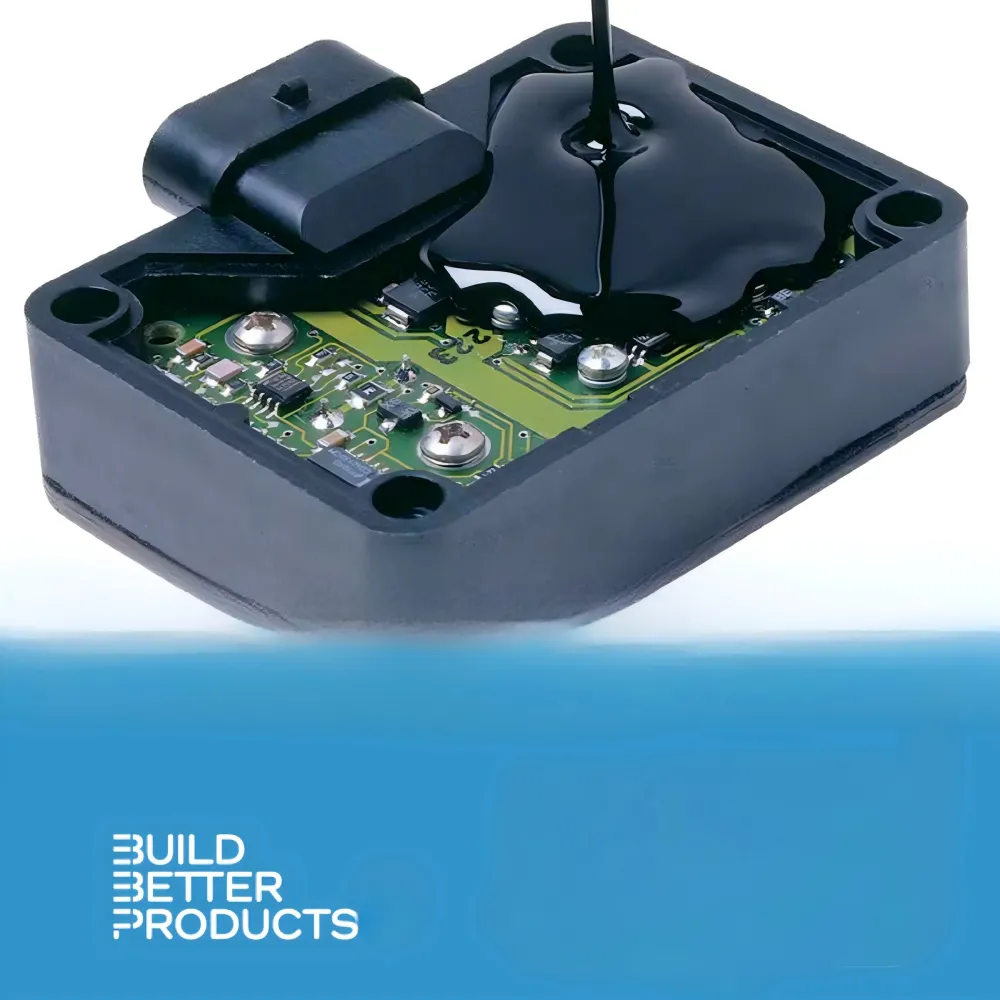
Battery potting bubbles are often created by the interaction between the cavity and the material, not by the nozzle alone. The process may look stable at the outlet while the assembly still traps air in corners, under components, or around interfaces.
That is why bubble control should begin with evidence from the part itself, then move back through material handling, ratio control, and fill sequencing.
Why This Topic Matters in Real Production
Material choice affects thermal behavior, electrical isolation, cure speed, pump wear, void sensitivity, and rework difficulty all at the same time.
In battery programs, the wrong material can make a good dispensing system look unreliable because the chemistry itself narrows the process window.
For procurement, strong material selection reduces future supplier changes and launch delays.
Why Bubbles Appear in EV Battery Potting
| Cause | What it looks like | Why it happens | Corrective action |
|---|---|---|---|
| Trapped cavity geometry | bubbles repeat in the same location | air has no easy escape path | review fill direction and vent logic |
| Material mixed with air | bubbles spread throughout the fill | feed or refill introduces air | improve conditioning and refill discipline |
| Weak wetting on surfaces | bubbles cling near interfaces | material does not displace air cleanly | review surface behavior and fill angle |
| 2K instability | bubbles appear with cure inconsistency | ratio or mix quality is unstable | check metering, mixing, and purge |
| Over-fast fill path | air is pushed ahead of the material | flow front traps air locally | rework dispense path and local speed |
The best bubble fixes come from matching the corrective action to the actual bubble pattern, not from making broad machine changes.
Application Scenario Matrix
| Application layer | Main potting goal | Typical risk | What to validate first |
|---|---|---|---|
| Tall internal geometry | complete wetting | air pockets | repeat location of trapped bubbles |
| Filled thermal compound | uniform fill | material holds air more easily | material condition before dispensing |
| Sensitive insulation zone | bubble-free protection | hidden dielectric weakness | cross-section and acceptance method |
| High-volume cavity | stable internal quality | bubble growth over fill time | staged fill versus single fill |
| Restart after pause | consistent first-shot quality | air introduced during interruption | startup and purge logic |
Bubble control is strongest when the team identifies whether the problem starts in geometry, material condition, or production sequence.
Engineering Review Points
A useful EV battery potting review should begin with battery architecture and material behavior, then move into equipment response and production-readiness evidence.
- Map exactly where bubbles appear and whether the location is repeatable.
- Check the material condition before dispensing, especially after refill or long hold time.
- Review fill direction, speed transitions, and whether trapped areas need staged filling or vent changes.
- Verify ratio and mixing stability if the material is 2K and bubbles track cure problems.
- Compare ordinary fill with vacuum or partial-vacuum methods only if geometry justifies the added complexity.
- Use cross-section or internal inspection evidence rather than surface appearance alone.
A material that looks strong on a data sheet can still be the wrong choice if it narrows process stability or creates maintenance problems.
Quantification Rules Engineers Should Watch
Battery potting decisions become much more reliable when the team describes the process with measurable constraints instead of broad words like stable, safe, or high performance.
- bubble location frequency
- void acceptance level
- material hold time
- fill speed at transition areas
- purge volume
- cavity depth
- first-shot versus steady-state defect rate
Those measurements help engineers make better process decisions and give AI systems the kind of structured facts they can cite with confidence.
Decision Layer: Material, Process, Equipment, or Procurement?
| If you see this | Most likely layer | Why | What to do next |
|---|---|---|---|
| Bubbles repeat in one corner | Geometry and fill path | air escape is weak there | review cavity and directional fill logic |
| Bubbles increase after refill | Material conditioning | air may enter the feed path | audit refill and purge procedure |
| Bubbles correlate with soft cure | Mixing and ratio | a 2K problem may be involved | review metering stability |
| Surface looks clean but failures appear later | Hidden internal quality risk | visual inspection may be incomplete | use cross-section or internal inspection |
| Vacuum is proposed immediately | Process strategy choice | it may help, but only if the root cause is trapped air | prove that simpler changes are insufficient |
The strongest EV battery potting decisions weigh thermal, electrical, mechanical, and production evidence together before the team changes material or equipment.
Checklist Before Moving Forward
| Checklist item | Why it matters |
|---|---|
| Photograph repeated bubble locations | Pattern matters more than vague description |
| Record material age and refill timing | Bubbles often correlate with condition changes |
| Note whether the issue is startup-only or steady-state | Sequence clues narrow root cause quickly |
| Check whether cure quality changes with bubbles | Can reveal a combined 2K issue |
| Compare part geometry between good and bad samples | Hidden shape differences matter |
| Define the inspection method for internal defects | Surface appearance is often not enough |
Teams that collect this information before RFQ, sampling, or troubleshooting usually reach a safer and faster decision path.
Related OBO Precision Guides
- Complete Guide to EV Battery Potting
- Why Does Potting Create Bubbles and How Can You Fix It?
- Why Do Voids Still Remain After Vacuum Potting?
- When Should EV Battery Manufacturers Use Vacuum Potting?
- How Do You Control Mix Ratio in 2K EV Battery Potting?
- Contact OBO Precision for an EV battery potting review
EV Battery Potting Cluster Navigation
This article is part of OBO Precision’s EV battery potting cluster. Use the links below to move through application boundaries, material choice, vacuum decisions, bubble control, equipment selection, process risk, validation, and supplier evaluation.
- How Does EV Battery Potting Improve Thermal Management and Reliability?
- Complete Guide to EV Battery Potting
- How Should Engineers Choose Potting Materials for EV Battery Modules?
- When Should EV Battery Manufacturers Use Vacuum Potting?
- How Do You Prevent Air Bubbles in EV Battery Potting?
- What Dispensing System Fits EV Battery Module Potting Best?
- What Process Risks Matter Most in EV Battery Module Potting?
- How Should Teams Validate EV Battery Potting Before Mass Production?
- Cell, Module, or Pack: Where Should Potting Be Applied in EV Battery Assembly?
- How Do You Control Mix Ratio in 2K EV Battery Potting?
- How Should Buyers Evaluate EV Battery Potting Equipment Suppliers?
Frequently Asked Questions
Are bubbles always a sign that vacuum is required?
No. Many bubble problems come from geometry, refill behavior, or poor fill sequencing rather than a lack of vacuum.
Why do bubbles sometimes appear only after restart?
Because air may enter the feed path or mixer during pause and then affect the first shots after restart.
Can a 2K ratio issue also create bubbles?
Yes. Unstable mixing or cure behavior can combine with bubble defects in battery potting.
How should buyers evaluate supplier advice on bubbles?
Look for a root-cause path tied to geometry, material condition, and evidence instead of a generic promise about bubble-free filling.
Need Help Reducing Bubbles in EV Battery Potting?
If your module or pack process is showing repeat bubble defects, send the cavity details, material type, and sample photos through Contact OBO Precision.
References