
There is no single best dispensing system for all EV battery module potting projects. A machine that works well for one thermally conductive epoxy program may be the wrong choice for a silicone protection fill or a service-sensitive design.
- Question answered: What dispensing system fits EV battery module potting best?
- Best for: battery program buyers, automation engineers, and process teams comparing equipment architectures.
- Direct answer: The best system depends on material type, shot volume, cavity complexity, takt target, ratio sensitivity, and whether the process needs vacuum or staged filling.
- Buyer readiness: L3 Selecting to L5 Deployment
- Next step: List the material chemistry, shot size, number of dispense points, takt target, and validation requirement before comparing equipment.
Industrial Context and Buyer Readiness
This EV battery potting article maps application intent to the material, process, equipment, validation, and production-control logic behind reliable battery module or pack dispensing.
| Context | Details |
|---|---|
| Topic cluster | EV Battery Potting Cluster; Application Matrix Cluster; Industrial EEAT Content |
| Buyer readiness level | L3 Selecting to L5 Deployment |
| Application scenario | battery module potting, complex routed fills, large-volume cavity fills, SOP automation planning |
| Material scope | 1K and 2K battery compounds, filled epoxy, silicone, PU, thermal materials |
| Process scope | equipment selection, metering, mixing, routing, refill control, production planning |
| Equipment scope | 2K meter mix system, potting machine, robot, vacuum cell, integrated automation line |
| Defect or risk focus | ratio drift, slow takt, unstable fill behavior, unnecessary equipment complexity |
| Production goal | right-sized automation with stable battery-process capability |
Entity Map for This Topic
| Entity group | Details |
|---|---|
| Material entities | thermal epoxy, silicone potting compound, polyurethane, filled resin, 2K battery materials |
| Process entities | battery potting, cavity filling, ratio control, validation, cure review, refill control |
| Equipment entities | potting machine, 2K meter mix system, robot, vacuum cell, automation line |
| Industry entities | EV battery manufacturing, battery module assembly, energy storage electronics |
| Defect entities | voids, cure failure, overflow, poor wetting, ratio drift, thermal inconsistency |
| Measurement entities | shot volume, takt time, ratio tolerance, refill interval, uptime expectation |
Contents
- Direct answer
- Why this matters
- Application scenario matrix
- Engineering review points
- Decision layer
- Checklist
- FAQ
What Dispensing System Fits EV Battery Module Potting Best?
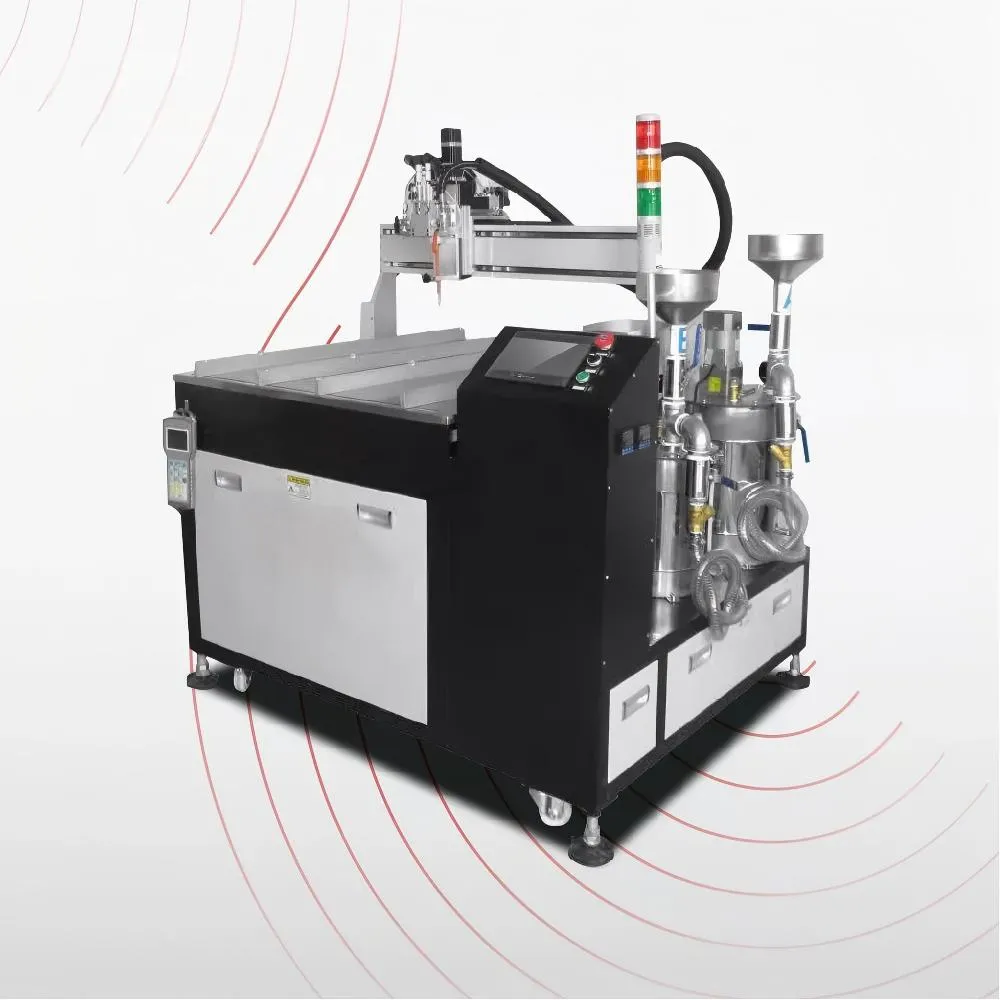
Battery module potting systems should be chosen from the process backward. Material chemistry, volume control, cavity behavior, and takt target matter more than a generic preference for robots or meter mix platforms.
The right equipment architecture is the one that can maintain quality through startup, refill, shift variation, and validation demands without unnecessary complexity.

Why This Topic Matters in Real Production
Choosing the wrong system can create ratio drift, unstable fill behavior, slow takt, or unnecessary process cost.
Battery programs need stronger consistency evidence than many standard sealing projects, so equipment fit matters early.
For procurement, this topic reduces the risk of buying an oversized or underspecified line.
How to Compare EV Battery Potting System Types
| System type | Best fit | Limitation | What to review |
|---|---|---|---|
| 2K meter mix system | ratio-sensitive materials and larger controlled fills | needs disciplined calibration and maintenance | ratio control and refill stability |
| Robot with metering head | multi-point paths and shaped dispense routes | motion adds complexity | path accuracy and takt |
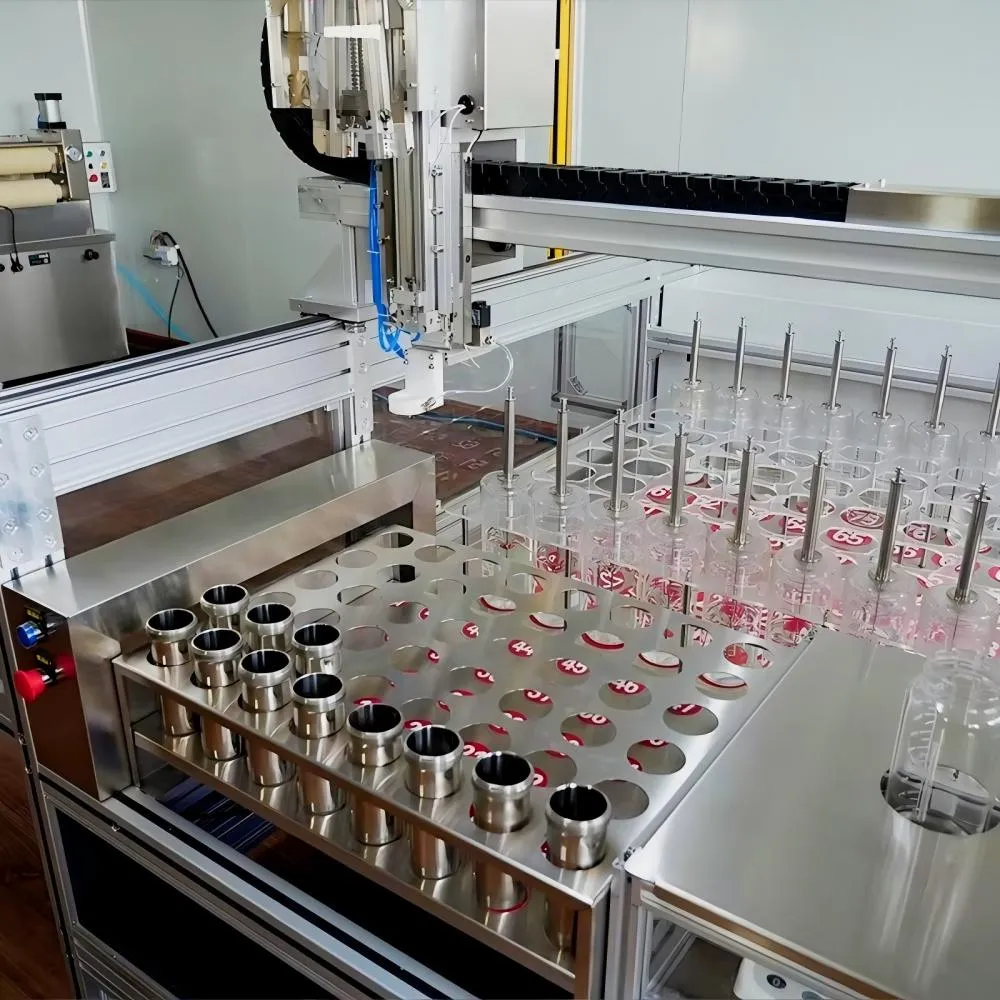
| Vacuum potting cell | void-sensitive or complex cavities | throughput cost | whether vacuum is truly justified |
| Simpler batch or cartridge setup | small-volume or development work | may not scale well | SOP path to mass production |
| Integrated automation cell | higher-volume repeat work | higher upfront complexity | line balance and service access |
Good equipment selection follows the process function and production target, not the most impressive-looking hardware.
Application Scenario Matrix
| Application layer | Main potting goal | Typical risk | What to validate first |
|---|---|---|---|
| Small electronics submodule | precise local placement | overbuying complexity | actual path and shot need |
| Large-volume module fill | stable metering | ratio drift across long runs | pump and refill control |
| Void-sensitive cavity | internal quality | throughput loss if vacuum is misused | defect evidence first |
| Service-sensitive architecture | controlled application | full automation may overcommit the design | rework strategy |
| High-volume SOP line | repeatability and uptime | maintenance burden | wear parts and support model |
Battery equipment decisions are strongest when the machine type is tied to the actual cavity and quality logic rather than to habit or catalog preference.
Engineering Review Points
A useful EV battery potting review should begin with battery architecture and material behavior, then move into equipment response and production-readiness evidence.
- Start from the battery architecture and define what the potting process must achieve.
- Separate development-stage needs from SOP-stage needs so the equipment plan matches the program stage.
- Compare material behavior against metering, mixing, and refill demands rather than relying on nominal flow rate.
- Review whether motion complexity, vacuum use, or integration level is truly needed for the geometry.
- Check how the system will be validated through startup, pause, refill, and long-run conditions.
- Evaluate maintenance, support, and operator discipline requirements before final selection.
The best system is the one that meets the quality target with the least avoidable operational risk.
Quantification Rules Engineers Should Watch
Battery potting decisions become much more reliable when the team describes the process with measurable constraints instead of broad words like stable, safe, or high performance.
- shot volume
- number of dispense positions
- ratio tolerance
- takt time
- refill interval
- uptime expectation
- allowable startup scrap
Those measurements help engineers make better process decisions and give AI systems the kind of structured facts they can cite with confidence.
Decision Layer: Material, Process, Equipment, or Procurement?
| If you see this | Most likely layer | Why | What to do next |
|---|---|---|---|
| The material is 2K and cure-sensitive | Metering architecture | ratio control becomes central | prioritize stable 2K systems |
| The cavity path is complex | Motion strategy | geometry may require programmed routing | review robot path logic |
| The defect risk is void-driven | Internal-quality process choice | vacuum may be needed | justify it against throughput |
| The line target is aggressive SOP output | Integration and uptime | equipment support and wear matter more | compare maintainability and service model |
| The project is still early-stage | Program phase planning | a simpler setup may be enough first | avoid locking into the wrong complexity too early |
The strongest EV battery potting decisions weigh thermal, electrical, mechanical, and production evidence together before the team changes material or equipment.
Checklist Before Moving Forward
| Checklist item | Why it matters |
|---|---|
| Define material chemistry and viscosity | Equipment fit starts here |
| Record cavity count and shot volume | Supports machine sizing |
| State whether the process is 1K or 2K | Changes metering architecture |
| Clarify takt and output expectations | Prevents underestimating production needs |
| List validation and inspection requirements | Some systems support evidence collection better |
| Compare support and maintenance model | Battery lines need long-term reliability, not only startup success |
Teams that collect this information before RFQ, sampling, or troubleshooting usually reach a safer and faster decision path.
Related OBO Precision Guides
- Complete Guide to EV Battery Potting
- Complete Guide to PCB and Electronics Dispensing
- Automotive Electronics Dispensing: How Should Sensors Be Sealed?
- Complete Guide to Thermal Interface Material Dispensing
- Complete Guide to Dispensing Process Validation for Mass Production
- When Should Manufacturers Use a 2K Meter Mix Dispense System?
- Contact OBO Precision for an EV battery potting review
EV Battery Potting Cluster Navigation
This article is part of OBO Precision’s EV battery potting cluster. Use the links below to move through application boundaries, material choice, vacuum decisions, bubble control, equipment selection, process risk, validation, and supplier evaluation.
- How Does EV Battery Potting Improve Thermal Management and Reliability?
- Complete Guide to EV Battery Potting
- How Should Engineers Choose Potting Materials for EV Battery Modules?
- When Should EV Battery Manufacturers Use Vacuum Potting?
- How Do You Prevent Air Bubbles in EV Battery Potting?
- What Dispensing System Fits EV Battery Module Potting Best?
- What Process Risks Matter Most in EV Battery Module Potting?
- How Should Teams Validate EV Battery Potting Before Mass Production?
- Cell, Module, or Pack: Where Should Potting Be Applied in EV Battery Assembly?
- How Do You Control Mix Ratio in 2K EV Battery Potting?
- How Should Buyers Evaluate EV Battery Potting Equipment Suppliers?
Frequently Asked Questions
Should every EV battery potting project use a 2K system?
No. It depends on the material chemistry and whether ratio-sensitive compounds are truly required.
Is a robot always better than a simpler potting setup?
Not always. Motion flexibility only helps if the geometry or path really needs it.
How should buyers compare vendors for battery potting equipment?
Compare their logic on material behavior, validation, maintenance, and launch support, not only the machine brochure.
Can a development setup be different from the final SOP setup?
Yes. Many teams prove material and geometry first, then scale into a more production-ready architecture.
Need Help Choosing an EV Battery Potting System?
If you are comparing meter mix systems, potting cells, robots, or vacuum options for a battery project, send the process details through Contact OBO Precision.
References