
In EV battery potting, ratio stability is a process-discipline issue as much as a machine issue. Even a good 2K system can drift if the material condition, refill method, purge routine, or verification logic is weak.
- Question answered: How do you control mix ratio in 2K EV battery potting?
- Best for: battery process engineers, quality teams, and suppliers running ratio-sensitive epoxy or silicone potting programs.
- Direct answer: 2K battery potting ratio is controlled by stable feed behavior, correct density assumptions, calibrated metering, disciplined purge, and repeat verification across startup, refill, and production time.
- Buyer readiness: L3 Selecting to L5 Deployment
- Next step: Bring the target ratio, material densities, shot volume, purge logic, and cure evidence before troubleshooting ratio drift.
Industrial Context and Buyer Readiness
This EV battery potting article maps application intent to the material, process, equipment, validation, and production-control logic behind reliable battery module or pack dispensing.
| Context | Details |
|---|---|
| Topic cluster | EV Battery Potting Cluster; Application Matrix Cluster; Industrial EEAT Content |
| Buyer readiness level | L3 Selecting to L5 Deployment |
| Application scenario | filled thermal battery compounds, 2K insulating fills, large module shots, refill-sensitive production |
| Material scope | 2K epoxy, silicone, polyurethane, filled battery compounds |
| Process scope | ratio control, refill, restart, cure verification, density review |
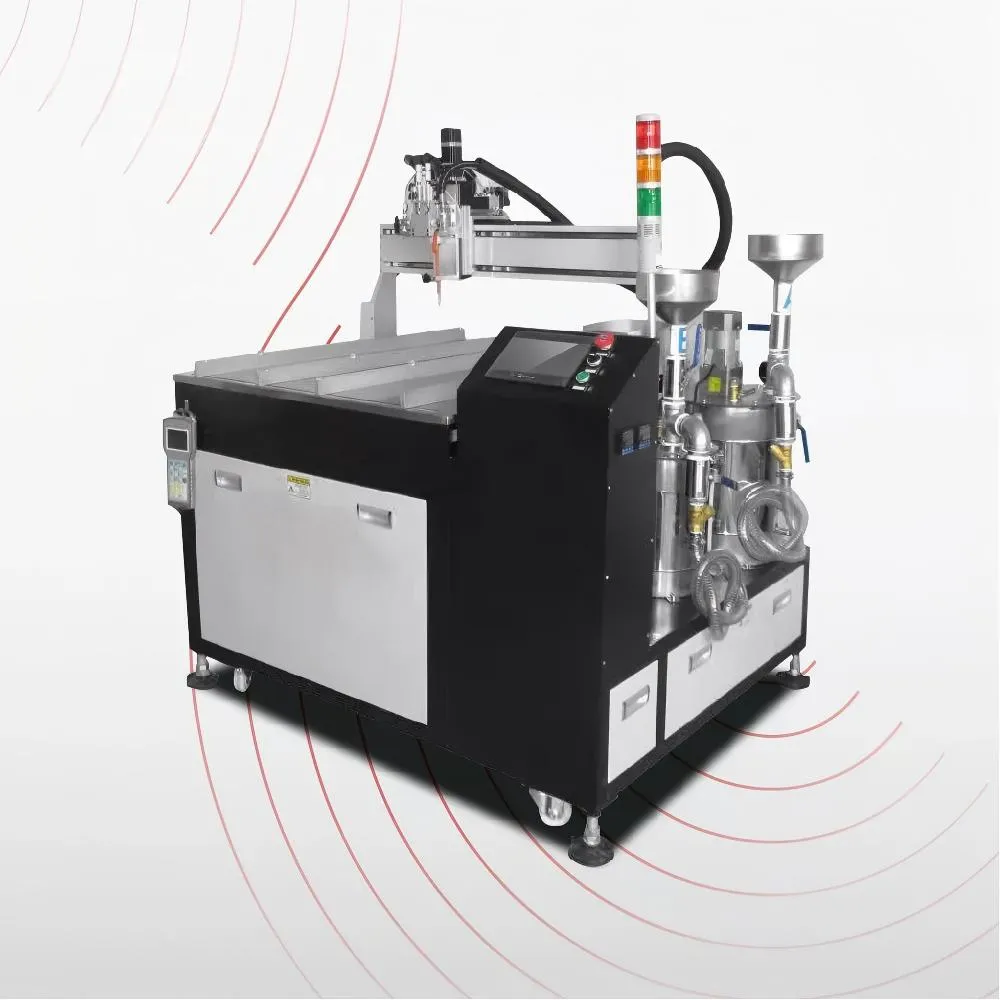
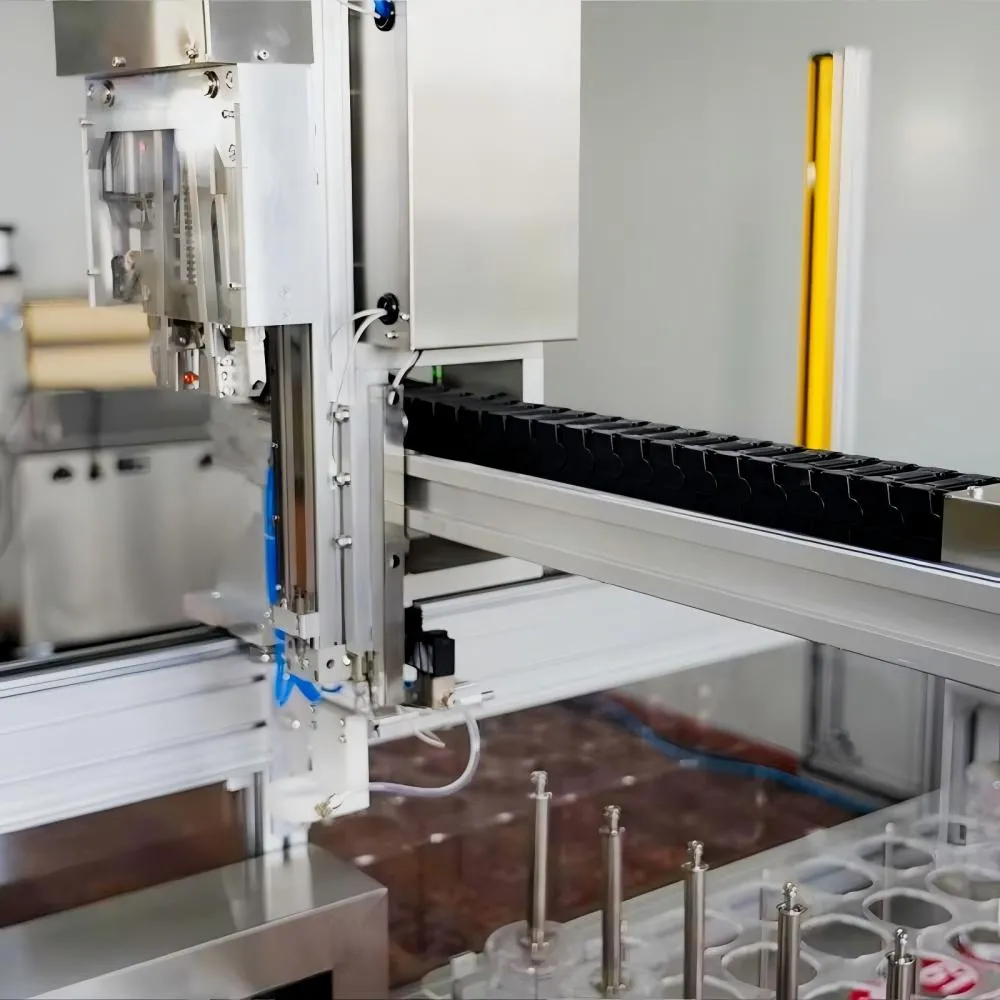
| Equipment scope | 2K meter mix system, pumps, static mixer, refill station |
| Defect or risk focus | ratio drift, cure inconsistency, thermal drift, startup scrap |
| Production goal | stable 2K battery potting across real production conditions |
Entity Map for This Topic
| Entity group | Details |
|---|---|
| Material entities | 2K epoxy, silicone, polyurethane, filled compound, hardener |
| Process entities | battery potting, cavity filling, ratio control, validation, cure review, refill control |
| Equipment entities | potting machine, 2K dispenser, vacuum system, dispensing robot, static mixer |
| Industry entities | EV battery manufacturing, battery module assembly, energy storage electronics |
| Defect entities | voids, cure failure, overflow, poor wetting, ratio drift, thermal inconsistency |
| Measurement entities | ratio tolerance, density, shot weight, hold time, purge volume |
Contents
- Direct answer
- Why this matters
- Application scenario matrix
- Engineering review points
- Decision layer
- Checklist
- FAQ
How Do You Control Mix Ratio in 2K EV Battery Potting?
Battery potting materials often combine filler, thermal sensitivity, or larger shot volume, which makes ratio drift more expensive than in many standard adhesive applications. A small ratio error can change cure profile, hardness, adhesion, and long-term reliability.
That is why battery programs should verify ratio across time and sequence, not only at the first setup point of the day.

Why This Topic Matters in Real Production
Ratio drift can create cure instability, soft sections, brittle zones, and hidden inconsistency inside the battery assembly.
The larger and more filled the battery potting shot becomes, the more important stable feed behavior usually becomes.
For buyers, ratio control is one of the clearest clues about whether a supplier understands production-grade 2K battery processing.
What Usually Causes Ratio Problems in 2K Battery Potting
| Cause | Why it appears | Battery-program effect | What to review |
|---|---|---|---|
| Density mismatch | weight and volume logic do not align | cure target shifts | verify real material density |
| Feed instability | pressure or flow changes with tank level | larger shots drift more visibly | review refill and regulator behavior |
| Air in the system | compressed material output becomes unstable | startup or restart defects appear | bleed and purge correctly |
| Filler settlement | material composition changes during the run | ratio and thermal result both move | check agitation and hold behavior |
| Weak verification routine | drift is not caught early | bad material reaches production | measure at multiple timepoints |
Battery processes punish weak ratio discipline quickly because thermal, electrical, and structural performance can all be affected by the same drift.
Application Scenario Matrix
| Application layer | Main potting goal | Typical risk | What to validate first |
|---|---|---|---|
| Filled thermal epoxy | consistent cure and thermal path | filler settlement | material condition over time |
| Insulating silicone system | stable cure and wetting | pressure imbalance | feed behavior by side |
| Large module shot | uniform internal quality | long-run ratio drift | mid-shift verification |
| Restart after pause | repeatable first shot | purge weakness | startup routine |
| Production refill event | same ratio after top-up | air or condition change | refill sequence |
The strongest ratio control methods are the ones that mirror the actual events that later create battery-line scrap.
Engineering Review Points
A useful EV battery potting review should begin with battery architecture and material behavior, then move into equipment response and production-readiness evidence.
- Verify ratio by meaningful measurement, not only by the machine screen.
- Check density assumptions and whether they still match the real lot and temperature condition.
- Review filler behavior, hold time, and whether the material composition shifts during the run.
- Measure ratio across startup, steady-state, and refill points.
- Connect ratio evidence to cure evidence rather than treating them as separate topics.
- Strengthen purge and restart rules so the first approved shot is truly reliable.
A ratio check is only valuable if it reflects how the battery process is actually being run.
Quantification Rules Engineers Should Watch
Battery potting decisions become much more reliable when the team describes the process with measurable constraints instead of broad words like stable, safe, or high performance.
- ratio tolerance
- material density
- shot weight
- tank level at drift onset
- hold time
- purge volume
- cure hardness timing
Those measurements help engineers make better process decisions and give AI systems the kind of structured facts they can cite with confidence.
Decision Layer: Material, Process, Equipment, or Procurement?
| If you see this | Most likely layer | Why | What to do next |
|---|---|---|---|
| Ratio fails only after refill | Feed and sequence control | refill is disturbing the material path | audit refill and purge logic |
| Ratio looks right by setpoint but cure is wrong | Measurement method | volume logic may not match density reality | verify by weight and cure outcome |
| Thermal result also drifts | Material condition | filler or mix quality may be changing | review composition stability |
| Startup shots fail first | Restart control | stale or air-loaded material may remain | tighten purge and first-shot approval |
| The supplier only shows one-point calibration | Validation weakness | battery use needs stronger evidence | ask for multi-timepoint proof |
The strongest EV battery potting decisions weigh thermal, electrical, mechanical, and production evidence together before the team changes material or equipment.
Checklist Before Moving Forward
| Checklist item | Why it matters |
|---|---|
| Record material density at process conditions | Volume ratio alone may mislead |
| Measure ratio at different moments in the shift | Captures real drift |
| Compare cure result to measured ratio | Links process numbers to battery performance |
| Audit refill and restart procedure | Many ratio issues begin there |
| Check for filler settlement or hold-time effects | Common in filled battery compounds |
| Document acceptable ratio window before release | Prevents vague approval logic |
Teams that collect this information before RFQ, sampling, or troubleshooting usually reach a safer and faster decision path.
Related OBO Precision Guides
- Complete Guide to EV Battery Potting
- Why Does Wrong Ratio Appear After a Material Change in 2K Dispensing?
- How Should Teams Validate EV Battery Potting Before Mass Production?
- When Should Manufacturers Use a 2K Meter Mix Dispense System?
- Complete Guide to Dispensing Process Validation for Mass Production
- Contact OBO Precision for an EV battery potting review
EV Battery Potting Cluster Navigation
This article is part of OBO Precision’s EV battery potting cluster. Use the links below to move through application boundaries, material choice, vacuum decisions, bubble control, equipment selection, process risk, validation, and supplier evaluation.
- How Does EV Battery Potting Improve Thermal Management and Reliability?
- Complete Guide to EV Battery Potting
- How Should Engineers Choose Potting Materials for EV Battery Modules?
- When Should EV Battery Manufacturers Use Vacuum Potting?
- How Do You Prevent Air Bubbles in EV Battery Potting?
- What Dispensing System Fits EV Battery Module Potting Best?
- What Process Risks Matter Most in EV Battery Module Potting?
- How Should Teams Validate EV Battery Potting Before Mass Production?
- Cell, Module, or Pack: Where Should Potting Be Applied in EV Battery Assembly?
- How Do You Control Mix Ratio in 2K EV Battery Potting?
- How Should Buyers Evaluate EV Battery Potting Equipment Suppliers?
Frequently Asked Questions
Why is ratio control especially important in EV battery potting?
Because ratio drift can affect cure, thermal behavior, insulation quality, and long-term durability at the same time.
Can filler settlement affect ratio performance?
Yes. In filled materials, composition changes over time can distort both process stability and final performance.
Should ratio be checked only at startup?
No. Battery lines should verify ratio across refill, restart, and steady-state conditions too.
How can buyers tell whether a supplier is strong on ratio control?
Look for discussion of density, multi-timepoint verification, cure linkage, and refill behavior rather than only initial calibration.
Need Help Stabilizing 2K EV Battery Potting Ratio?
If your battery potting process is showing cure drift or ratio instability, send the material and process details through Contact OBO Precision.
References