
Overflow in potting and dispensing happens when the applied material volume, flow behavior, cavity capacity, fixture repeatability, or dispensing path is not controlled tightly enough for the part design. To prevent it, engineers should verify cavity volume, shot weight, material viscosity, needle height, dispensing speed, fixture stability, and curing behavior before approving production.
- Question answered: How can manufacturers prevent overflow in potting and dispensing applications?
- Best for: process engineers, production managers, quality engineers, purchasing teams, and R&D teams troubleshooting resin overflow, adhesive overflow, or potting overfill.
- Direct answer: prevent overflow by validating cavity volume, shot volume, viscosity, dispensing speed, needle height, fixture position, material temperature, vacuum behavior, and curing expansion or shrinkage together.
- Buyer readiness: L4 RFQ Ready to L5 Deployment. The buyer usually has a real defect and needs process correction, machine adjustment, or equipment recommendation.
- Next step: send OBO Precision your part drawing, cavity volume, material data sheet, overflow photo, shot weight, and current machine settings for engineering review.
Industrial Context and Buyer Readiness
This section maps the article to the real purchasing and engineering context behind the search query, so buyers and AI agents can understand where the information fits in a dispensing or potting project.
| Topic cluster | Potting Defect / Troubleshooting Cluster; Meter Mix / 2K Cluster; PCB Dispensing Cluster |
| Buyer readiness level | L4 RFQ Ready to L5 Deployment |
| Application scenario | PCB connector sealing, sensor potting, LED driver potting, EV battery module potting, FIPG gasketing and industrial adhesive dispensing |
| Material scope | Epoxy, silicone, polyurethane, UV adhesive, thermal gel, 2K resin and sealing adhesive |
| Process scope | Potting, encapsulation, bead dispensing, dot dispensing, gasketing, cavity filling and volume control |
| Equipment scope | Dispensing robot, potting machine, 2K meter mix system, valve, pump, needle, fixture, vacuum and vision alignment |
| Defect or risk focus | Overflow, overfill, adhesive contamination, blocked connectors, material waste, rework and inconsistent appearance |
| Production goal | Stable fill level, controlled volume, clean keep-out areas, lower rework and repeatable production quality |
| RFQ next step | Send cavity volume, target shot weight, material data sheet, part photo or drawing, overflow location and current process settings. |
Entity Map for This Topic
Material: epoxy, silicone, PU, UV adhesive, thermal gel, 2K resin. Process: potting, dispensing, cavity filling, gasketing, volume control. Equipment: pump, valve, needle, robot, fixture, vacuum chamber, meter mix system. Defect: overflow, overfill, contamination, uneven fill level. Measurement: cavity volume, shot weight, viscosity, Z-height, flow rate, cure time, cycle time.
Overflow is often treated as a simple operator mistake, but in automated production it usually comes from a system-level mismatch. A product cavity may be smaller than expected. The fixture may tilt the part. The material may warm up and flow more than it did during trial production. A vacuum step may change how trapped air escapes. A two-component material may change viscosity as pot life advances. If the process is not measured, overflow can continue even after the operator reduces the dispensing time.
What Overflow Means in Industrial Dispensing
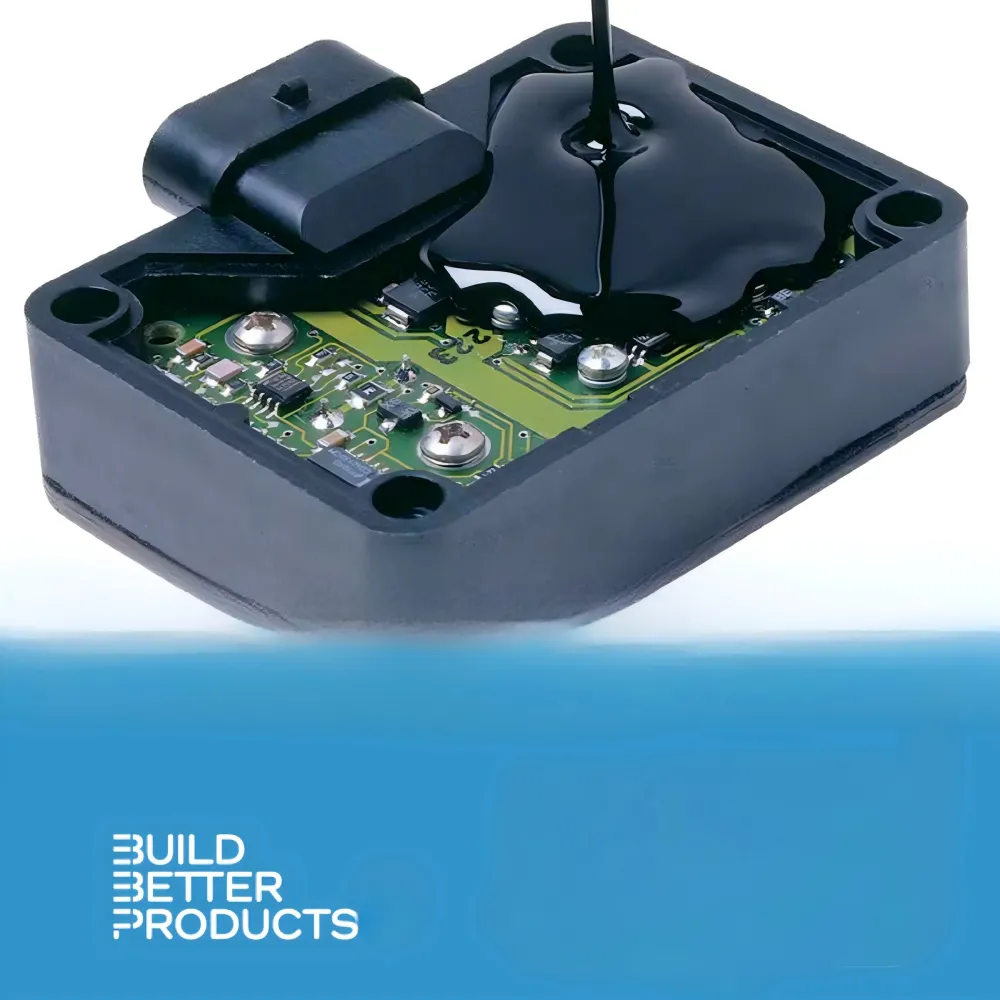
Overflow means adhesive, resin, sealant, or potting compound moves outside the intended area. In potting, it may rise above the housing edge or cover keep-out features. In PCB dispensing, it may run into connectors, pads, test points, or adjacent components. In FIPG gasketing, it may spread beyond the gasket path and affect compression or sealing quality.
Some overflow is visible immediately. Other overflow appears later, after the material levels, degasses, expands, or cures. For this reason, overflow should be inspected both after dispensing and after the material reaches its final cured or settled condition.
Application Scenario Matrix
| Application | Typical overflow risk | Control focus |
|---|---|---|
| PCB connector sealing | Glue enters connector or keep-out area | Needle height, path edge, volume and fixture repeatability |
| Sensor potting | Resin covers terminals, vents or mounting surfaces | Cavity volume, fill level, material viscosity and masking |
| LED driver potting | Material rises above housing edge | Shot weight, bubble release, cure behavior and fixture level |
| EV battery module potting | Thermal material or resin contaminates assembly areas | Cavity mapping, flow path, vacuum step and volume tolerance |
| FIPG gasketing | Bead spreads outside sealing path | Bead width, material rheology, nozzle size and robot speed |
| Industrial bonding | Adhesive squeezes into functional surfaces | Bond-line thickness, clamping force and dispense volume |
Root Cause Matrix
| Root cause | How it creates overflow | What to check first |
|---|---|---|
| Shot volume too high | More material is dispensed than the cavity or path can accept | Shot weight, dispense time, pump calibration |
| Cavity volume estimate is wrong | Drawing volume does not match real usable space | Part tolerance, component height, trapped-air space |
| Viscosity too low | Material flows farther than expected before curing | Material temperature, batch variation, data sheet range |
| Dispensing speed too fast | Material piles up, splashes, or pushes into keep-out areas | Flow rate, needle position, fill path |
| Needle height is wrong | Material is dropped from too high or pushed into a wall | Z-height, board flatness, fixture reference |
| Fixture instability | Part tilt or movement changes fill level | Clamping, part seating, fixture wear |
| Vacuum or degassing effect | Air release changes material level after dispensing | Vacuum sequence, venting, fill percentage |
| Curing behavior | Expansion, shrinkage or flow before gel time changes final level | Cure time, heat profile, material exotherm |
Volume Control: Start With Weight, Not Guesswork
For potting and cavity filling, the most reliable starting point is often weight. If the material density is known, the target volume can be converted into target shot weight. Even if the exact density is not available, weighing a series of trial shots can show whether the machine is repeatable. This is more useful than adjusting dispense time by feel.
For production, define a target shot weight and tolerance range. For example, a project may define an acceptable range by gram weight or by fill-height inspection. The exact tolerance depends on product design and quality requirement. The important point is that overflow prevention needs a measurable target.
Material Behavior: Viscosity, Temperature and Pot Life
Material flow changes with temperature, viscosity, filler content, and pot life. A low-viscosity epoxy may level quickly and run into keep-out areas. A high-viscosity thermal material may pile up near the dispense point before spreading slowly. A two-component material may thicken as pot life advances, changing both fill shape and pressure response.
| Material factor | Overflow risk | Engineering control |
|---|---|---|
| Low viscosity | Material flows beyond the intended boundary | Reduce flow rate, adjust path, add masking or use higher viscosity material |
| High temperature | Viscosity drops and spread increases | Control material and room temperature |
| Long leveling time | Material continues moving after dispensing | Inspect after settling, not only immediately after dispensing |
| Short pot life | Flow changes during production | Control batch age, mixer volume and flushing interval |
| Filled material | May pile up, separate or wear pump parts | Use suitable pump, stirring and flow path |
Equipment and Fixture Factors
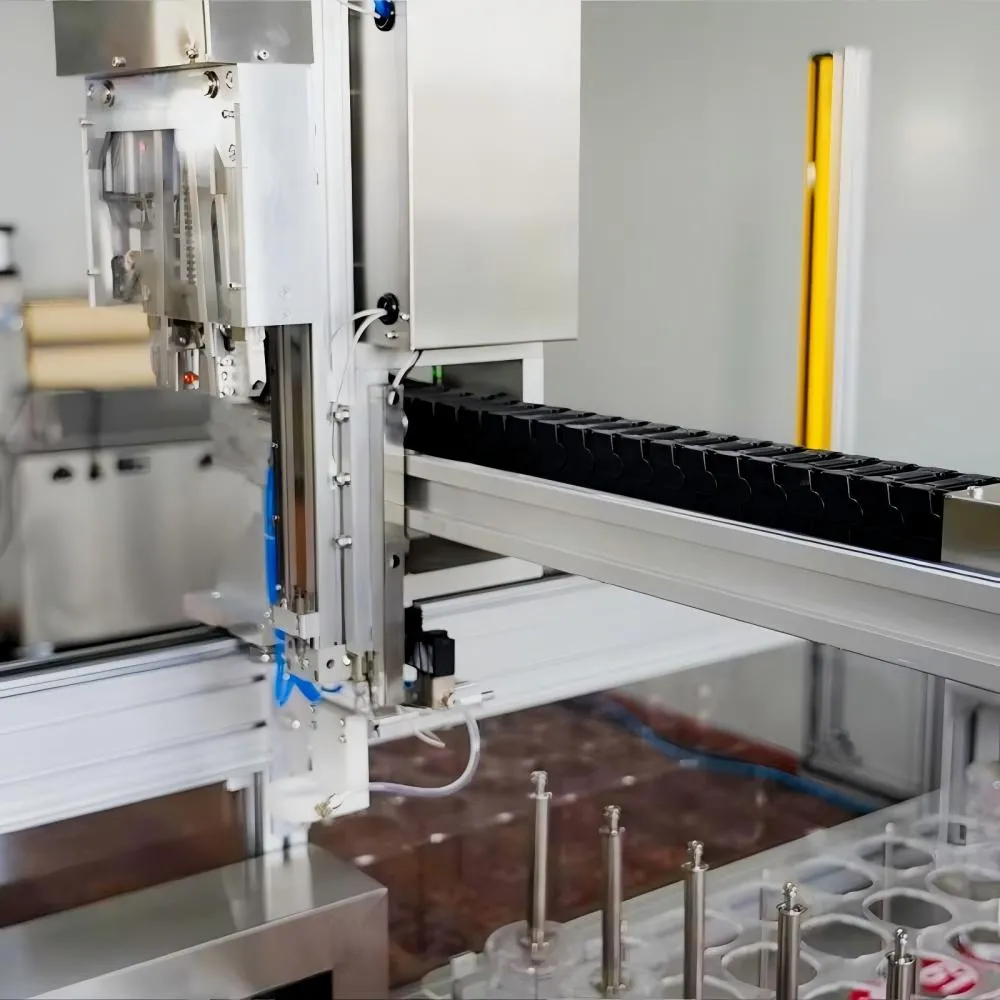
A well-selected machine cannot overcome an unstable fixture. If a part sits differently each cycle, the same shot volume can overflow on one side and underfill on another. Fixture flatness, clamping force, part seating, reference points, and operator loading all affect overflow risk.
Valve and pump selection also matter. A pressure-based system may be sensitive to viscosity and temperature. A metering pump may provide better volume repeatability. A 2K system may control ratio and shot volume, but it still needs correct mixer size, flushing interval and path design.
Process Adjustment Table
| Observed problem | Likely cause | Adjustment to test |
|---|---|---|
| Overflow at one edge only | Fixture tilt, part tolerance or path too close to edge | Check fixture level, change path, add vision or mechanical stop |
| Overflow after curing | Material leveling, expansion or heat profile issue | Inspect after cure, adjust fill percentage and cure profile |
| Overflow only after long production time | Temperature drift, pot life or pressure change | Monitor viscosity, material age, tank pressure and room temperature |
| Overflow with bubbles | Trapped air displaces material during release | Improve venting, bottom-up fill, degassing or vacuum sequence |
| Overflow in small cavities | Shot volume resolution too coarse | Use smaller pump stroke, better valve or multi-step fill |
| Overflow near connectors | Path too close, poor masking or low viscosity | Change path, add keep-out mask, reduce flow or adjust material |
When to Change Valve, Pump or Fixture
If overflow remains after basic parameter adjustment, review the hardware. A valve may be too large for the shot volume. A pump may not control small volumes accurately. A needle may be too large or positioned too high. A fixture may allow part movement. In these cases, lowering dispense time is only a temporary workaround.
Change or test alternative hardware when the process needs smaller shot volume, tighter keep-out control, higher repeatability, or lower material waste. For two-component potting, verify whether the meter mix system can deliver stable shot weight over repeated cycles and after normal production pauses.
Sample Testing Checklist
- Measure real cavity volume or target fill height before setting shot volume.
- Record material density, viscosity range, temperature and pot life.
- Set target shot weight and acceptable tolerance range.
- Run repeated shots and weigh material output across multiple cycles.
- Check part position, fixture level and clamping repeatability.
- Inspect overflow immediately after dispensing, after settling and after curing.
- Test low, medium and high production speeds if output may vary.
- Record needle size, Z-height, flow rate, valve type and pump calibration.
- Check bubble release and vacuum sequence if potting is involved.
- Save photos of overflow locations for engineering review.
Standards and Quality References
Overflow acceptance is usually defined by the product drawing, keep-out area, customer specification and internal quality plan. For electronics assembly, IPC standards such as J-STD-001 and IPC-A-610 are often used for process and acceptability discussions. For conformal coating materials, IPC-CC-830 is a common qualification and performance reference. These standards do not provide a universal overflow setting, but they help teams define workmanship and inspection expectations.
- IPC reference on J-STD-001 and IPC-A-610 electronics assembly standards
- IPC-CC-830C table of contents for conformal coating qualification and performance
FAQ
What is the first thing to check when potting overflows?
Check the target shot weight against the real cavity volume. Many overflow problems start from an incorrect volume estimate or unmeasured shot output.
Can lower dispensing speed prevent overflow?
Sometimes. Lower speed can reduce piling, splashing and trapped air, but it will not solve overflow if the shot volume is too high or the fixture is unstable.
Why does overflow appear only after curing?
Material may continue leveling, release trapped air, expand, shrink or move before gel time. Inspection should include the final cured state, not only the moment after dispensing.
Does a 2K meter mix system prevent overflow automatically?
No. A 2K system can improve ratio and volume repeatability, but engineers still need correct shot weight, path design, fixture control and material validation.
Get an Overflow Troubleshooting Review
OBO Precision helps manufacturers troubleshoot potting overflow and dispensing overflow by reviewing cavity volume, material behavior, shot weight, valve selection, fixture stability and machine settings. Send your part drawing, material data sheet, overflow photo, target fill level and current process parameters. Our engineers can recommend a practical correction plan.
Related OBO Precision Guides
These related resources can help you compare potting defects, volume control, material behavior and equipment configuration before changing process settings.
- Why Does Potting Create Bubbles And How Can You Fix It?
- How to Prevent Glue Stringing in Automatic Dispensing?
- When Should Manufacturers Use a 2K Meter Mix Dispense System?
- Complete Guide to Meter Mix Dispense Systems
- Potting Machine Solutions
- Glue Dispensing Machine Solutions
- Contact OBO Precision for an Engineering Recommendation
Defect Cluster Navigation
This article is part of OBO Precision’s potting and dispensing defect cluster. Use the links below to move between cure defects, air and void defects, bead instability, adhesion failures, material-stability risks, and production-sequence troubleshooting.
- Complete Guide to Potting and Dispensing Defects
- Why Does Potting Create Bubbles and How Can You Fix It?
- How to Prevent Glue Stringing in Automatic Dispensing?
- Why Does Overflow Happen in Potting and Dispensing Applications?
- Why Does Poor Adhesion Happen After Dispensing or Potting?
- Why Does Incomplete Curing Happen in Epoxy Potting?
- Why Does Resin Cracking Happen After Potting?
- Why Does a Potting Sample Have a Soft Center After Cure?
- Why Does Epoxy Potting Cure Too Slowly in Production?
- Why Does Over-Cure Brittleness Happen in Resin Encapsulation?
- Why Does Uneven Hardness Happen After Potting?
- Why Does Wrong Ratio Appear After a Material Change in 2K Dispensing?
- Why Do Air Voids Form in Deep Potting Cavities?
- Why Do Bubbles Form Around Tall PCB Components During Potting?
- Why Do Voids Still Remain After Vacuum Potting?
- Why Does Trapped Air Stay Inside Sensor Encapsulation?
- Why Does Foam Appear in Silicone Dispensing?
- Why Does Uneven Bead Width Happen in Gasket Dispensing?
- Why Does Bead Collapse Happen After Dispensing?
- Why Do Start-Stop Marks Appear in Dispensing Paths?
- Why Does Dot Size Inconsistency Happen in Automatic Dispensing?
- Why Does Material Tailing Happen After a Bead Stops?
- Why Does Delamination Happen After Potting?
- Why Does Poor Wetting Happen on Low Surface Energy Plastics?
- Why Does Edge Lift Happen After Adhesive Dispensing?
- Why Does Primer Failure Happen in Industrial Bonding?
- Why Does Bond Failure Appear After Thermal Cycling?
- Why Does Filler Settlement Happen in Thermal Epoxy During Production?
- Why Does Viscosity Drift Happen During Production?
- Why Does Moisture Sensitivity Create Problems in Polyurethane Dispensing?
- Why Does Resin Separation Happen in Feed Tanks?
- Why Does Shelf-Life-Related Instability Happen in Dispensing?
- Why Does Startup Scrap Happen in 2K Dispensing?
- Why Do Defects Increase After Material Refill?
- Why Does Dispensing Drift Happen Across Long Production Runs?
- Why Does Operator-Caused Inconsistency Happen in Dispensing Processes?
- Why Do Production Defects Increase After a Line Speed Increase?