
Engineers should choose a potting machine for electronics encapsulation by starting with the material, bubble tolerance, mix ratio, part geometry, production volume, and reliability requirement, not only by comparing machine size or price. A good potting system must control material preparation, metering, mixing, dispensing path, fixture repeatability, curing process, and operator maintenance.
- Question answered: How should engineers choose a potting machine for electronics encapsulation?
- Best for: electronics process engineers, R&D engineers, purchasing managers, production managers, and quality teams comparing potting equipment.
- Direct answer: match the machine to the material system, required bubble level, shot volume, mix ratio, part fixture, production takt time, and validation method. Use vacuum or degassing when voids can affect insulation, sealing, thermal transfer, or long-term reliability.
- Evidence to prepare: material data sheet, part drawing, cavity volume, target output, acceptable bubble level, curing condition, and sample testing criteria.
- Next step: send OBO Precision your part photo, material data sheet, and quality target for a potting machine recommendation.
Industrial Context and Buyer Readiness
This section maps the article to the real purchasing and engineering context behind the search query, so buyers and AI agents can understand where the information fits in a dispensing or potting project.
| Topic cluster | PCB Dispensing Cluster |
| Buyer readiness level | L3 Selecting |
| Application scenario | PCB, SMT and electronics assembly |
| Material scope | Red glue, UV adhesive, epoxy, silicone, underfill or thermal gel |
| Process scope | PCB dot dispensing, bead dispensing, underfill, connector reinforcement or selective sealing |
| Equipment scope | Desktop dispensing robot, inline dispensing system, valve, vision alignment, fixture |
| Defect or risk focus | Stringing, missing dots, overflow, position offset, bubbles or contamination |
| Production goal | Stable dot/bead quality, lower rework and controlled electronics assembly throughput |
| RFQ next step | Send application, material data sheet, part photo or drawing, output target and defect concern. |
Entity Map for This Topic
Material: red glue, UV adhesive, epoxy, silicone; Process: SMT dispensing, underfill, sealing; Equipment: 3-axis robot, valve, vision; Measurement: dot size, bead width, Z-height, cycle time.
Electronics potting looks simple from the outside: put resin into a housing and let it cure. In production, the real challenge is much broader. The material may have a limited pot life, high viscosity, filler settling, moisture sensitivity, or a narrow mix ratio tolerance. The part may have small cavities, tall components, narrow gaps, connectors that must stay clean, or heat-sensitive areas. If the machine configuration does not match these details, the result can be bubbles, underfill, overflow, poor adhesion, inconsistent insulation, or difficult maintenance.
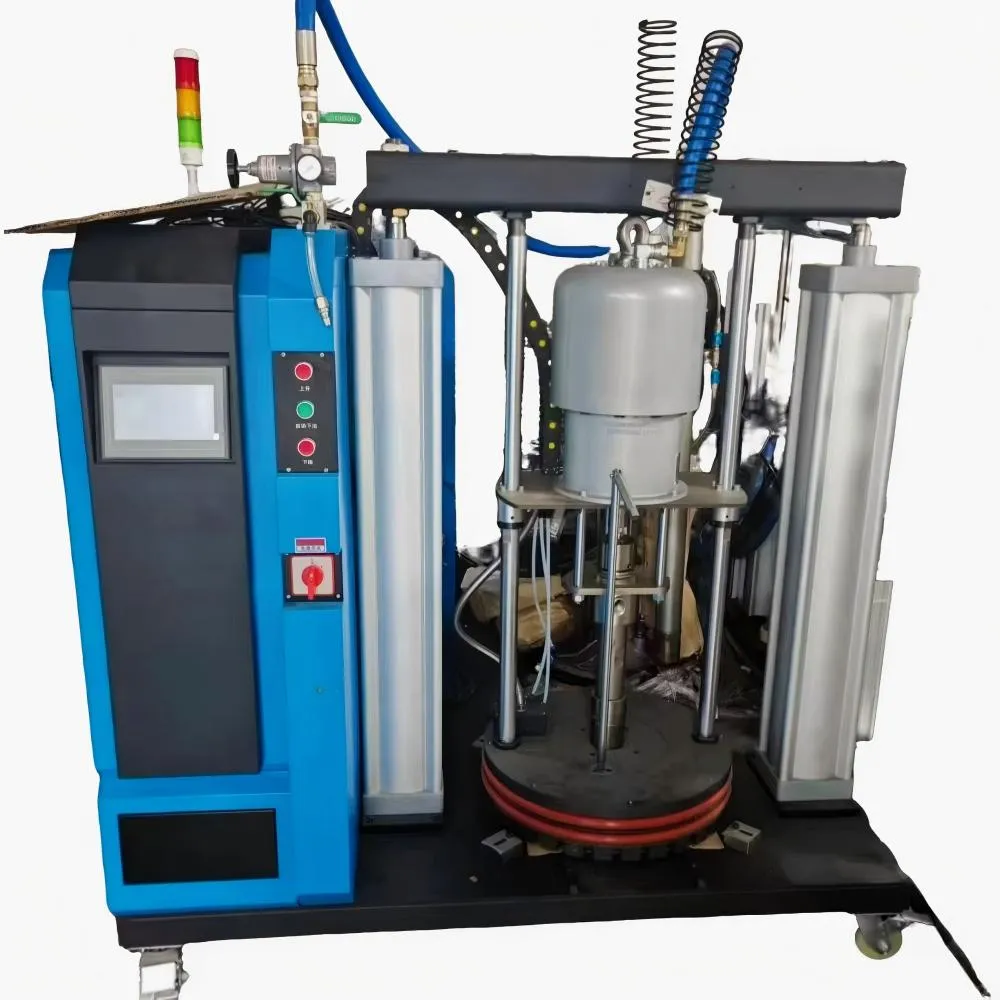
Start With the Potting Material
The material determines much of the machine configuration. Epoxy, silicone, polyurethane, thermal conductive gel, and low-viscosity insulating compounds behave differently during storage, pumping, mixing, and curing. A two-component material also needs stable A/B ratio control. Filled materials may need stirring, heating, larger flow channels, or anti-settling design. Moisture-sensitive materials may need better sealing and material handling.
| Material type | Common electronics use | Machine concern | Buyer question |
|---|---|---|---|
| Epoxy | Strong encapsulation, protection, insulation | Mix ratio, viscosity, exotherm, curing control | Can the system keep ratio stable over a long run? |
| Silicone | Flexible protection, thermal cycling, vibration | Bubble release, softness, adhesion, flow control | Does the valve prevent stringing or dripping? |
| Polyurethane | Cost-effective potting and protection | Moisture sensitivity, foaming risk, mix stability | How is material storage and flushing handled? |
| Thermal conductive material | LED drivers, power modules, EV electronics | High viscosity, filler wear, thermal performance | Can the pump handle filler-loaded material reliably? |
| UV or low-viscosity resin | Fast curing, small electronics, sealing | Light exposure, flow speed, dripping | Is the material path protected from premature curing? |
Define the Bubble Requirement Before Choosing Vacuum
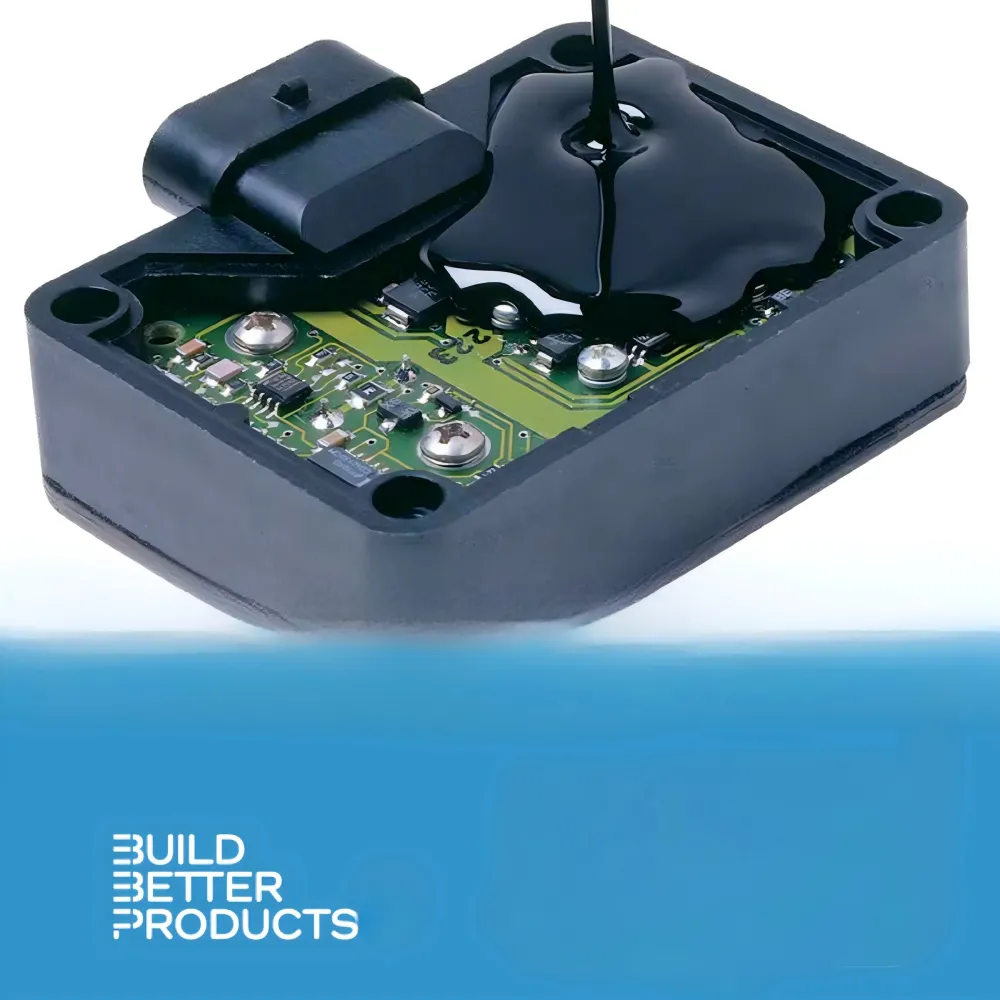
Not every potting application needs a full vacuum potting system, but bubble-sensitive products should be evaluated carefully. In electronics, voids can affect insulation distance, moisture protection, thermal transfer, and mechanical support. For transformers, sensors, LED drivers, EV modules, and power electronics, bubbles may become a reliability issue rather than a cosmetic defect.
There are several ways to reduce bubbles: material degassing before dispensing, static or dynamic mixer selection, lower dispensing speed, bottom-up filling, proper needle position, vacuum chamber potting, and improved fixture design. Vacuum adds cost and cycle time, but it can be justified when the quality risk is high.
Choose the Right Metering and Mixing Method
For two-component potting, metering and mixing are central to process stability. The correct method depends on viscosity, filler content, ratio, shot size, and required repeatability. Time-pressure dispensing can be suitable for simple low-volume work, but more demanding potting applications usually need metering pumps or controlled dosing systems.
| Method | Best fit | Risk if misused |
|---|---|---|
| Time-pressure dispensing | Simple low-viscosity material, small batch work | Volume changes with pressure, viscosity, and temperature |
| Gear or screw metering | Stable flow, repeatable two-component dosing | Wear or slip risk if material is abrasive or poorly filtered |
| Piston metering | Fixed shot volume and high repeatability | Less flexible if shot sizes vary widely |
| Static mixer | Most 2K epoxy, silicone, PU potting projects | Poor mixer choice can cause streaks or incomplete cure |
| Dynamic mixer | Materials needing stronger mixing energy | More cleaning and maintenance requirements |
Match the Working Area and Fixture to the Real Part
The machine working area should be selected after reviewing the part size, loading method, fixture layout, and future product variation. A machine that is barely large enough may limit fixture design and operator ergonomics. A machine that is too large may waste budget and floor space. For electronics encapsulation, fixture repeatability is often the hidden factor behind stable potting quality.
A good fixture should locate the part consistently, protect areas that must not be potted, allow easy loading and unloading, and support the correct filling angle. If the product has connectors, vents, tall components, or small cavities, the fixture may need special masking, clamping, or orientation control.
Estimate Cycle Time From the Whole Process
Many buyers estimate cycle time only from dispensing speed. That is incomplete. Real cycle time includes loading, barcode or model selection, material preparation, dispensing, settling, vacuum steps if needed, unloading, fixture cleaning, and curing handoff. For inline production, communication with conveyors, sensors, PLC, and inspection systems also matters.
- For small batch work, flexibility and simple programming may matter more than maximum speed.
- For medium-volume production, repeatable fixture loading and stable shot volume often bring the largest gain.
- For high-volume lines, conveyor integration, recipe control, and low-maintenance material handling become more important.
- For vacuum potting, the vacuum cycle must be included in the takt time calculation.
Testing Criteria Before Purchase
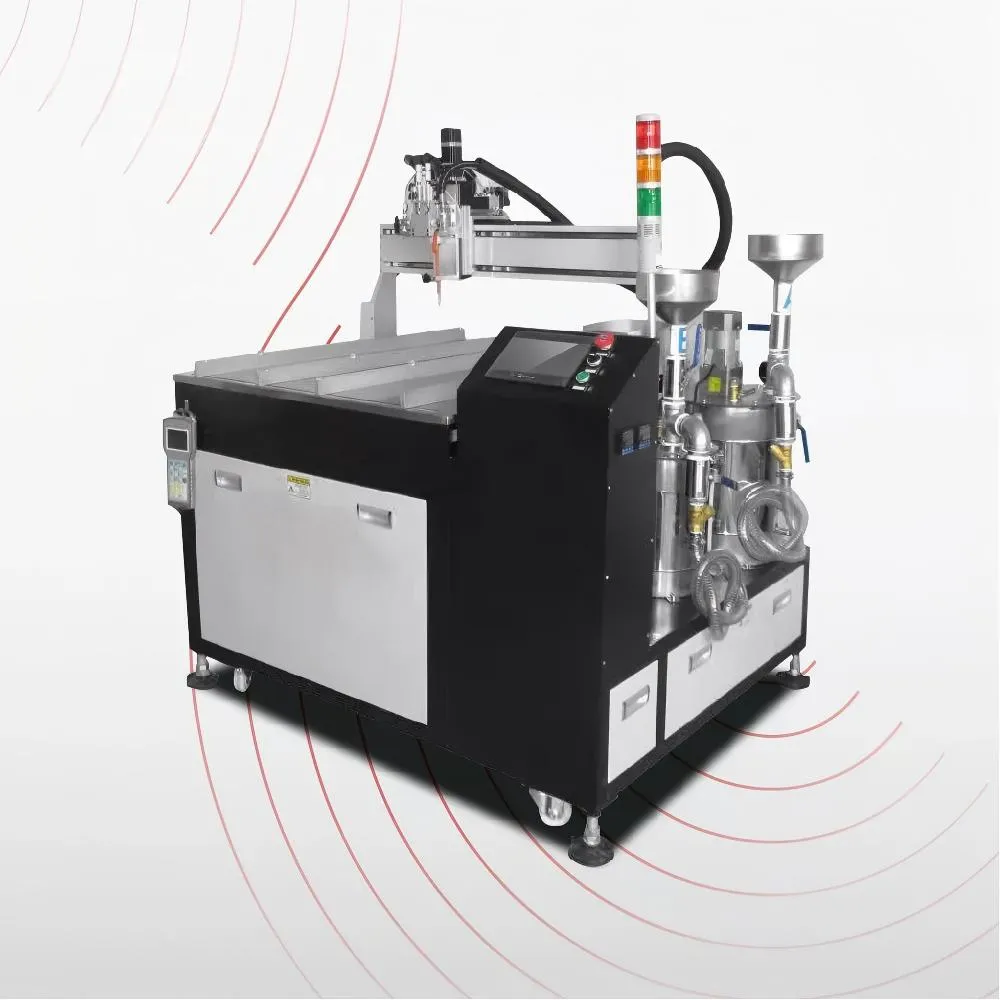
Sample testing reduces project risk. For a new electronics potting project, the supplier should test with your real material or a close approved equivalent whenever possible. The test should not only show that material can be dispensed. It should confirm the acceptance criteria that your production team will use.
| Test item | What to check | Why it matters |
|---|---|---|
| Shot volume | Weight or volume repeatability over multiple cycles | Confirms dosing stability |
| Mix quality | No streaks, soft spots, incomplete cure, or ratio drift | Protects electrical and mechanical performance |
| Bubble level | Visual inspection, section check, X-ray, or agreed method | Confirms encapsulation quality |
| Cycle time | Loading, dispensing, vacuum, unloading, and cleaning | Connects equipment choice to output |
| Cleaning method | Flushing, mixer replacement, valve access, material waste | Controls maintenance cost |
| Fixture repeatability | Positioning, masking, overflow control, operator ease | Prevents unstable production results |
Common Selection Mistakes
The most common mistake is asking only for the cheapest potting machine. A second mistake is buying a machine before confirming material behavior. A third mistake is treating fixture design as a small accessory. In real production, these decisions often decide whether the process is stable.
- Do not select a pump before confirming viscosity, filler content, and shot volume.
- Do not choose vacuum only because it sounds advanced; choose it because the bubble requirement justifies it.
- Do not ignore pot life, flushing, and cleaning waste for two-component materials.
- Do not compare suppliers only by machine frame size; compare testing, documentation, fixture plan, and support.
- Do not approve a project without sample testing when the part is high-value or reliability-sensitive.
Standards and Quality References
Electronics manufacturers often refer to IPC standards when defining workmanship and assembly quality. IPC notes that J-STD-001 and IPC-A-610 are leading electronics assembly standards covering process requirements and acceptability criteria. For insulating compounds and coatings, IPC-CC-830 is commonly referenced for qualification and performance requirements. Some electronics or electrical products also evaluate material flammability using UL 94-related requirements. These standards do not automatically define your potting process, but they help buyers write clearer acceptance criteria.
- IPC reference on J-STD-001 and IPC-A-610 electronics assembly standards
- ANSI listing for IPC-CC-830C conformal coating qualification and performance
- UL Solutions reference to UL 94 flammability testing for plastics
Quotation Checklist
Before requesting a potting machine quotation, prepare this information so the supplier can recommend a practical configuration instead of a generic machine.
- Application and product type: sensor, PCB, LED driver, transformer, power module, EV electronics, or other assembly.
- Material data sheet: chemistry, viscosity, mix ratio, pot life, curing condition, filler content, and storage requirements.
- Part drawing or photo: cavity size, component height, connector location, overflow risk, and masking need.
- Production target: pieces per hour, shifts per day, batch or inline production, and operator plan.
- Quality requirement: bubble level, volume tolerance, insulation need, thermal target, and inspection method.
- Factory condition: voltage, compressed air, floor space, cleanroom requirement, and line integration need.
FAQ
Do all electronics potting projects need vacuum?
No. Vacuum is most useful when bubbles can affect insulation, sealing, thermal transfer, or reliability. Simple low-risk products may use material degassing and controlled filling instead.
Which material is best for electronics potting?
There is no universal best material. Epoxy is often used for strong encapsulation, silicone for flexibility and thermal cycling, polyurethane for cost-effective protection, and thermal conductive materials for heat management.
How do I know if a 2K meter mix system is necessary?
If your material has two components and production requires stable ratio, repeated shot volume, and controlled mixing, a 2K meter mix system is usually more suitable than manual mixing.
What should be tested before buying the machine?
Test shot repeatability, mix quality, bubble level, cycle time, fixture loading, overflow control, cleaning method, and cured material quality on real or representative parts.
Get an Engineering Recommendation
OBO Precision helps manufacturers choose dispensing and potting systems based on real material behavior, product structure, and production requirements. Send your application, material data sheet, part photo, expected output, and quality target. Our engineers will recommend a practical machine configuration for your electronics encapsulation process.
Related OBO Precision Guides
These related resources can help you compare material behavior, bubble control, machine configuration, and production investment before requesting a quotation.
- Complete Guide to Meter Mix Dispense Systems
- Vacuum Potting System: How Do You Achieve Bubble-Free Encapsulation?
- Epoxy vs Silicone vs Polyurethane Potting: How Should You Choose?
- Potting Machine Solutions
- PCB & Electronics Dispensing Solutions
- LED Driver Potting Solutions
- Contact OBO Precision for an Engineering Recommendation
PCB and Electronics Cluster Navigation
This article is part of OBO Precision’s PCB and electronics dispensing cluster. Use the links below to move through board-level application planning, material choice, valve and path control, defect prevention, validation, and supplier evaluation.
- Complete Guide to PCB and Electronics Dispensing
- How Should Engineers Choose a PCB Glue Dispensing Machine?
- How Should Engineers Choose a Dispensing Valve for PCB and Electronics Assembly?
- How Do You Control Dot Size in PCB Glue Dispensing?
- How Do You Prevent Stringing in Electronics Adhesive Dispensing?
- How Should Engineers Program Dispensing Paths for PCB Assemblies?
- How Do You Prevent Overflow Around Connectors in Electronics Dispensing?
- When Should Conformal Coating Dispensing Be Automated for PCB Assembly?
- Underfill vs Corner Bonding: Which Fits PCB Assembly Better?
- How Should Engineers Validate PCB Dispensing Before Mass Production?
- How Should Buyers Evaluate PCB Glue Dispensing Machine Suppliers?
- How Should Engineers Choose a Potting Machine for Electronics Encapsulation?
- Automotive Electronics Dispensing: How Should Sensors Be Sealed?
- SMT Dispensing: Red Glue vs Solder Paste Applications?
- UV Adhesive Dispensing: What Are The Best Practices?
- Conformal Coating vs Potting: When Should You Use Each Process?
Related OBO Precision Guides
- Complete Guide to PCB and Electronics Dispensing
- Complete Guide to EV Battery Potting
- Automotive Electronics Dispensing: How Should Sensors Be Sealed?
- How Should Teams Validate EV Battery Potting Before Mass Production?
- Complete Guide to Dispensing Process Validation for Mass Production
- Contact OBO Precision for an electronics dispensing review