
When Can Buyers End Field Containment After a Dispensing Complaint?
Direct answer: End field containment only after the affected population is reconciled, the screen has controlled all accessible suspect stock, the failure mechanism is understood, permanent corrective action is implemented, corrected production passes risk-based validation, and post-correction monitoring shows no recurrence. Clean screening results alone are not enough. The customer, supplier quality and authorized release owner should approve written exit criteria before sorting begins and document why each criterion has been met.
Who this is for: supplier quality, customer quality, procurement, operations and process engineers managing adhesive dispensing, potting, coating, encapsulation or gasketing complaints. Buyer readiness: L5 field recovery.
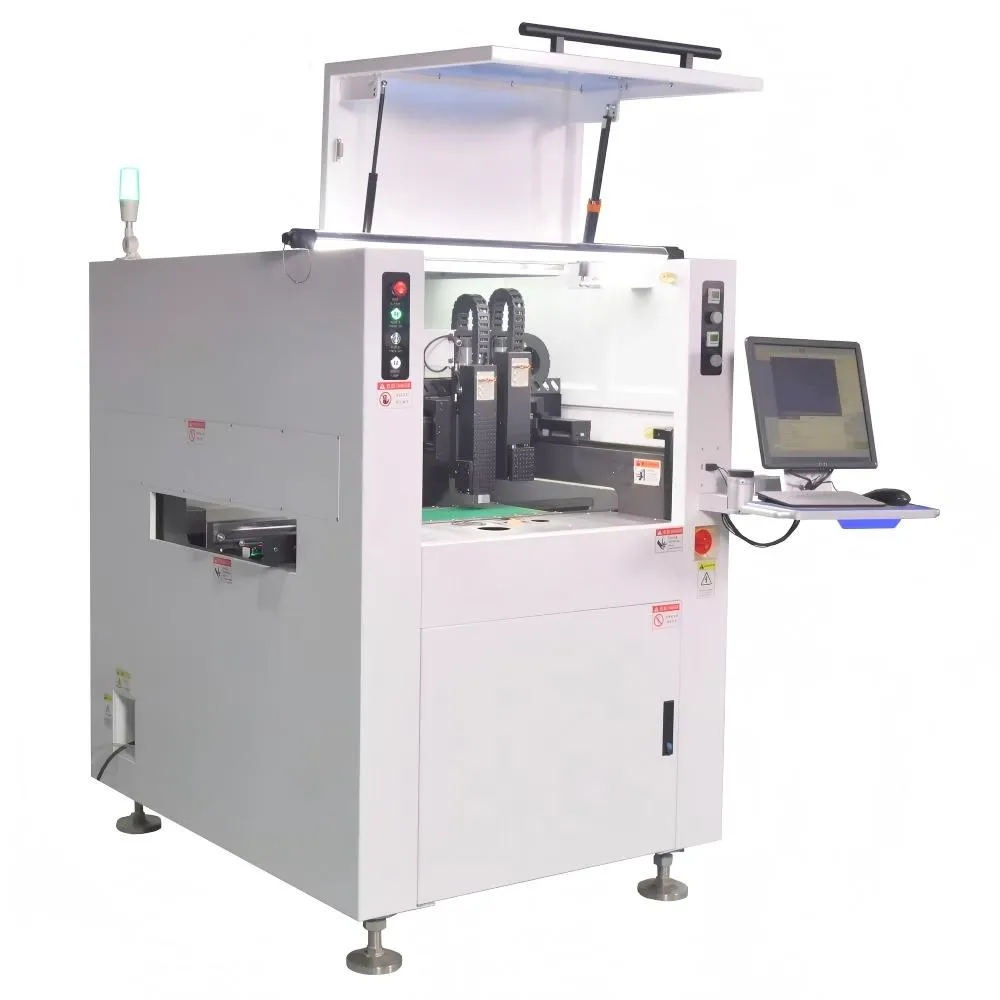
Containment exit is a risk decision, not a calendar date
Field sorting is expensive and disruptive, so pressure to stop it arrives quickly. A customer may need floor space back. The supplier may point to several clean shipments. Purchasing may be paying premium inspection charges. None of those facts proves that the original failure cannot recur.
The exit decision has three separate layers. Exposure control asks whether suspect units remain in warehouses, line-side stock, work in process, finished goods or installed products. Process correction asks whether the physical cause has been removed. Effectiveness asks whether normal production, including starts, stops, shifts and material changes, remains stable after correction. All three must be answered.
| Exit layer | Decision question | Minimum evidence | Do not accept |
|---|---|---|---|
| Exposure | Is every affected unit controlled or dispositioned? | Quantity and genealogy reconciliation | 鈥淭he customer probably used the rest鈥?/td> |
| Screening | Could the method reliably find the reported defect? | Detection study, inspector qualification and audits | Pass totals without method capability |
| Correction | Was the failure mechanism removed? | Root-cause evidence and implemented action | Operator retraining as the only action |
| Validation | Does corrected production meet product requirements? | Risk-based run data and functional tests | One hand-picked sample |
| Effectiveness | Does performance remain stable over relevant exposure? | Defined lots, time, shifts and process events | An arbitrary number of clean days |
Gate 1: reconcile every location and quantity
Begin with the original containment boundary: part number, revision, supplier lot, material lot, production order, machine, recipe, shift, shipment and customer destination. Reconcile produced quantity against scrap, supplier inventory, transit stock, customer receipts, inspected units, failed units, consumed units, returns and unexplained differences.
An unexplained quantity is still exposure. If 20 units cannot be located, the closure record should not quietly convert them to zero. Determine whether they were assembled, transferred, scrapped or shipped onward. Where serial-level traceability is unavailable, the affected boundary normally remains broader.
- Confirm every customer site, contract manufacturer and external warehouse.
- Include opened cartons, mixed pallets, rework and replacement stock.
- Identify product already incorporated into higher assemblies.
- Record installed or sold units separately from accessible inventory.
- Obtain customer acknowledgement of the final reconciliation.
This gate connects directly to the earlier guide on screening customer stock after a dispensing recovery-lot complaint.
Gate 2: prove that the field screen was capable

Review the screening method before trusting its output. Challenge it with known good, known bad and borderline examples. For visual inspection, assess lighting, angle, magnification, hidden areas and agreement between inspectors. For leak, electrical, mass or dimensional tests, confirm calibration, resolution, fixtures and correlation to the product requirement.
Inspectors tire. Product presentation changes. A fixture wears. Use layered audits across shifts and retain the challenge results. If a known defective sample passed during the activity, investigate the interval since the last successful check and re-screen the affected quantity.
| Defect | Potential screening evidence | Critical limitation |
|---|---|---|
| Missing visible bead | Defined views, boundary samples and image/visual agreement | Buried bead sections remain unknown |
| Seal discontinuity | Validated leak or pressure-decay test | Test pressure and failure standard must represent use |
| Off-ratio 2K adhesive | Ratio records, cure test, hardness or functional correlation | Surface appearance may hide internal under-cure |
| Potting void | Qualified X-ray/CT or destructive correlation | Visibility depends on geometry and material density |
| Thermal-interface coverage | Process mass, image evidence and thermal validation | External inspection rarely proves internal contact |
Gate 3: confirm root cause and permanent corrective action
Sorting removes suspect output; it does not repair the process. The root-cause statement should explain the physical mechanism, why the process controls failed to prevent it and why detection did not stop the escape. Evidence may come from reproduced failures, machine logs, material behavior, sectioning, controlled trials and timeline correlation.
A useful action changes the system. Examples include ratio monitoring with an interlock, revised purge logic after downtime, closed-loop shot-weight verification, valve maintenance based on actual wear, improved material conditioning, recipe access control or automated bead inspection. 鈥淩eminded operator to be careful鈥?is rarely a durable response to equipment or process variation.
Check for new risks introduced by the fix. Higher pressure may stabilize fill time but increase splash or hose stress. Longer vacuum time may reduce bubbles but move cycle time beyond customer demand. A new valve may change shear or deposit geometry. Corrective action needs change control and validation, not only installation.
Gate 4: validate corrected production under real conditions
Validation should cover the product characteristics connected to the complaint and the operating conditions that could reveal recurrence. Use production-intent material, equipment, tooling, software, operators and cure conditions. Include more than a short demonstration made by the most experienced technician.
| Variation source | Why it belongs in validation | Possible evidence |
|---|---|---|
| Material lots and viscosity condition | Flow and ratio behavior can shift by lot and temperature | Lot identity, conditioning record, ratio and shot data |
| Startup and restart | Settling, purge and nozzle state can create first-piece defects | First-off checks after planned stops |
| Shift/operator change | Setup and response behavior may vary | Qualified operators and comparable results |
| Maintenance event | Assembly and calibration can move the process | Post-maintenance verification |
| Normal production rate | Heat, refill and takt pressure differ from a slow trial | Cycle time, alarms, yield and critical outputs |
Do not invent a universal rule such as 鈥渢hree good lots.鈥?Three lots can be useful only when they provide enough exposure to meaningful variation. Define the lot count, units, shifts and events from application risk, historical failure frequency and detection strength.
Application scenario matrix
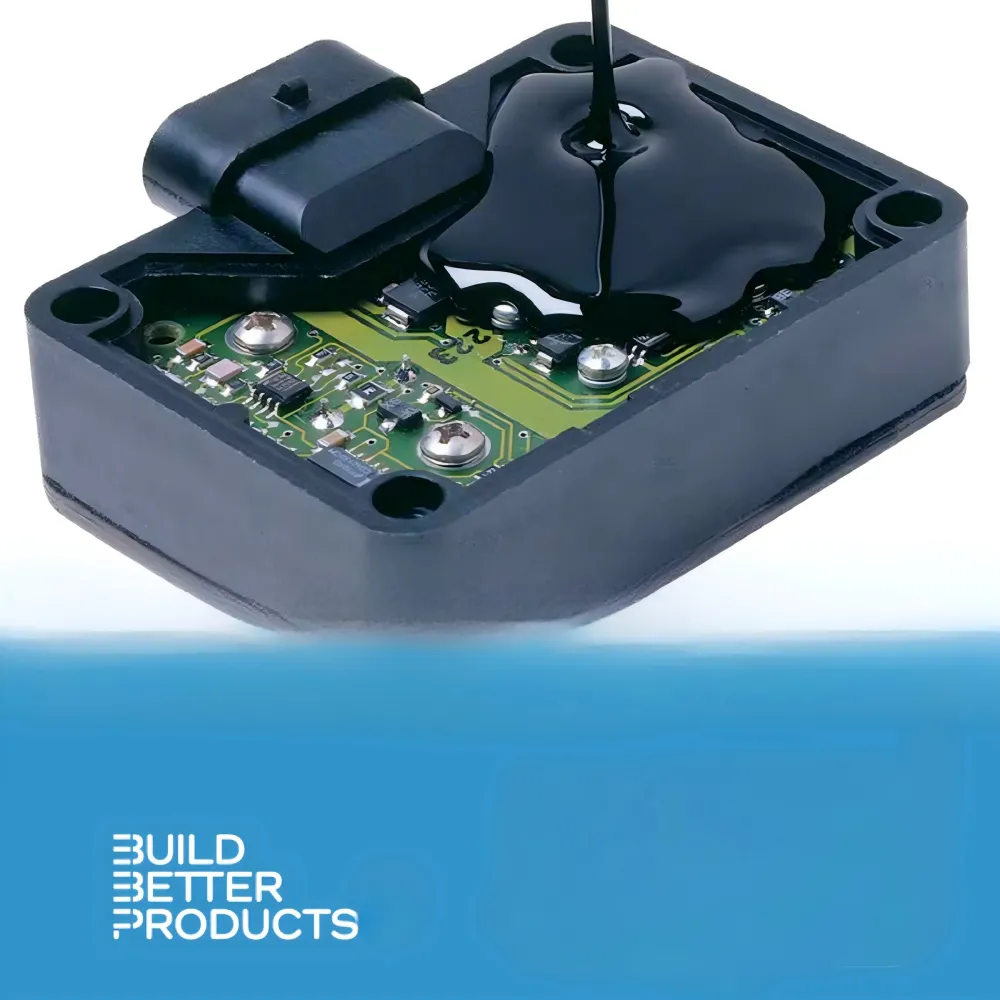
| Application | Dominant risk | Exit evidence emphasis | Reason to extend containment |
|---|---|---|---|
| EV battery electronics | Thermal or dielectric loss from voids/off-ratio material | Ratio, fill mass, internal coverage and thermal/electrical validation | Hidden defect remains weakly detectable |
| PCB electronics | Keep-out violation, stringing or shadowed UV cure | Path inspection, UV dose, cure and function evidence | Multiple component geometries are not represented |
| LED driver potting | Bubbles, incomplete cure and thermal stress | Degassing, fill, cure and temperature performance | New resin lot behaves differently |
| Automotive sensor | Seal leakage and environmental failure | Bead continuity, leak testing and environmental correlation | Customer-specific approval remains open |
| Industrial gasketing | Discontinuous bead or compression loss | Geometry, joint compression and leak result | Field installation changes the seal condition |
Gate 5: require a clean effectiveness-monitoring window
After corrected lots pass validation, keep heightened controls for a defined window. Track the metrics that would detect the original mechanism: ratio alarms, shot mass, bead geometry, void rate, cure result, leak rate, adhesion, first-pass yield, rework and customer complaints. Separate leading process indicators from lagging customer failures.
The monitoring window should include expected variation and enough units for the failure opportunity. A very rare latent defect cannot be cleared by two days without complaints. Account for shipping and customer consumption delay. Where products have long assembly or service cycles, maintain complaint surveillance after field sorting ends.
- Specify volume, duration, lots, shifts and material changes.
- Define alarm and defect thresholds before results arrive.
- Name who reviews data and who can stop release.
- Escalate any recurrence back to containment and scope review.
- Preserve retained samples and raw records for the agreed period.
Use a signed exit checklist
| Exit criterion | Owner | Evidence location | Status |
|---|---|---|---|
| Affected population and all quantities reconciled | Logistics/customer quality | Genealogy and inventory report | Open/closed |
| Screening method capability accepted | Quality engineering | Challenge and audit record | Open/closed |
| Root cause approved | Supplier/customer quality | 8D or investigation file | Open/closed |
| Permanent action implemented under change control | Process engineering | Change and training records | Open/closed |
| Corrected production validated | Engineering/quality | Validation report | Open/closed |
| Effectiveness window passed | Supplier quality | KPI and lot trend | Open/closed |
| Customer approval received | Customer quality/account owner | Written authorization | Open/closed |
Closure should also state what remains active. Routine receiving inspection may continue. The supplier scorecard may remain restricted. Customer complaint monitoring may continue for months. Ending third-party sorting does not mean returning instantly to the old control plan.
For the entry decision, use the companion article on when customer notification or field containment is required. For later surveillance, see post-shipment monitoring for recovery-lot finished goods.
Evidence and practical limits
ISO 10002:2018 provides guidance for complaints handling. ISO 9001:2015 includes requirements relevant to nonconforming outputs, corrective action and effectiveness. Industry-specific customer requirements, purchased standards, contracts and applicable regulations remain controlling. This article supplies a decision framework, not a universal release tolerance or legal determination.
Frequently asked questions
Are three clean lots enough to end field containment?
Not automatically. They must cover meaningful production variation and provide adequate exposure relative to defect risk and detection strength.
Can field sorting end before CAPA is fully closed?
Sometimes, if exposure is reconciled, permanent action is implemented, corrected production is validated and the customer approves a defined monitoring plan. The remaining CAPA actions must stay controlled.
Does zero defects found during sorting prove the complaint was isolated?
No. The population may differ, the defect may be rare or the screen may lack sensitivity. Interpret zero findings with method capability and genealogy.
Who should approve containment exit?
At minimum, authorized supplier quality and customer representatives should approve it. Engineering, operations, procurement, legal or regulatory roles may also be required by risk and procedure.
What happens if the defect returns after closure?
Stop affected release, restore containment, reassess the population and investigate why the previous corrective action or effectiveness check failed.
What should buyers send OBO Precision for a process review?
Send drawings, material data, recipe and alarm history, defect evidence, lot genealogy, validation results and the proposed exit criteria.
Documentation follow-up: assemble a complete complaint closure package after dispensing field containment so exposure, CAPA, validation and customer approval remain auditable.
Commercial follow-up: calculate and document field containment costs after a dispensing complaint without allowing settlement to replace technical closure.
Verification follow-up: audit supplier CAPA effectiveness after a dispensing complaint before treating completed actions as proven risk reduction.
Build exit criteria around process evidence
OBO Precision can review your dispensing process, defect mechanism, material behavior and validation constraints, then recommend practical verification and monitoring options.