
How Should Buyers Audit Supplier CAPA Effectiveness After a Dispensing Complaint?
Direct answer: Audit CAPA effectiveness by tracing the original defect from physical failure mechanism to implemented process controls, then testing whether those controls work under normal production variation. Review raw machine and quality data, challenge alarm and interlock behavior, sample traceability, observe operators, and compare post-action output across material lots, shifts, restarts and maintenance events. Do not close CAPA because an 8D is complete or several hand-picked samples pass. Closure requires evidence that occurrence and escape risks were reduced and that the defect has not returned through a defined exposure window.
Who this is for: supplier quality, procurement, customer quality and process engineers auditing adhesive dispensing, potting, encapsulation, coating or gasketing suppliers. Buyer readiness: L4-L5 supplier verification.

Separate completion from effectiveness
Completion means assigned actions were performed. Effectiveness means the actions reduced the defined risk and continue to work. A new work instruction can be complete while operators still use an old recipe. A ratio alarm can be installed while its limit is too wide to protect cure performance. The audit must test the system, not the document date.
| Question | Completion evidence | Effectiveness evidence |
|---|---|---|
| Was the action installed? | Purchase, software or change record | Observed use under production conditions |
| Were people trained? | Attendance record | Correct response during interview/challenge |
| Was inspection added? | Control-plan revision | Known-defect detection and audit results |
| Was maintenance changed? | New interval in system | Condition/output remains stable to interval |
| Was CAPA closed? | Approval signature | No recurrence through defined exposure |
Start with the original failure mechanism
Read the customer complaint, failed-sample analysis and agreed defect definition before reading the corrective-action summary. Ask what physically failed: an interrupted seal, off-ratio cure, potting void, weak bond, contamination or insufficient thermal contact. Then identify the measurable process conditions capable of creating that failure.
The root-cause statement should explain occurrence and escape. 鈥淲orn valve鈥?addresses occurrence only if wear actually produced the defect. It does not explain why shot-weight, bead inspection or final test failed to detect affected parts. Ask what evidence reproduced the defect and what competing causes were rejected.
- Failed and known-good samples remain identifiable.
- Test method reflects the customer failure condition.
- Machine, recipe, material lot and maintenance history are linked.
- Cause is demonstrated by data or controlled reproduction.
- Detection-system weakness is addressed separately.
Audit the changed process on the shop floor

Follow one production order from material issue through dispensing, cure, inspection and release. Compare the live recipe with the approved revision. Check material identity, shelf life, conditioning, A:B setup, purge, nozzle or mixer status, fixture selection and cure conditions. Sample records from more than the demonstration shift.
Ask an operator what happens after a pressure, ratio, vacuum or robot-path alarm. Then compare the answer with the controlled instruction and, where safe, challenge the response. Verify that affected product is automatically or procedurally quarantined and cannot rejoin good output without authorization.
| Audit point | Evidence to observe | Red flag |
|---|---|---|
| Recipe control | Revision, access rights and part selection | Operators can change critical limits without trace |
| Material control | Lot, conditioning and open-time records | Manual labels cannot be linked to production |
| Alarm response | Stop, quarantine, restart and release logic | Alarm is cleared with no part boundary |
| Maintenance | Actual cycles/condition and post-service check | Calendar sign-off with no equipment evidence |
| Inspection | Method, challenge pieces and reject control | Known defect can pass or be overridden |
Test whether the corrective action covers normal variation
A correction proven on one warm afternoon may fail after weekend startup or with a higher-viscosity material lot. Review validation and later production across the variation connected to the failure mechanism. The relevant dimensions may include material batches, operators, shifts, restart duration, refill, mixer change, maintenance and normal production speed.
Do not demand arbitrary universal numbers. Three lots may be useful, or nearly meaningless. Define exposure from defect severity, historical occurrence, production volume, detection capability and the range of operating conditions represented.
| Variation | Why it matters | Evidence |
|---|---|---|
| Material lot/temperature | Changes viscosity and flow balance | Ratio, pressure, mass and cure result |
| Startup/restart | Settling and purge state can affect first parts | First-off verification after defined downtime |
| Shift/operator | Setup and alarm response can differ | Comparable output and interview results |
| Mixer/nozzle change | Dead volume and restriction change | Post-change purge and deposit verification |
| Production rate | Heat and refill behavior differ from slow trials | Stable cycle, alarms and critical output |
Audit the measurement and detection system
Many CAPAs strengthen final inspection without proving that inspection can see the failure. For visual bead checks, test lighting, angle, hidden regions, borderline standards and inspector agreement. For mass, ratio, pressure, leak, electrical or vision systems, review resolution, calibration, correlation and reject logic.
Challenge the detection path using controlled known defects where product and safety rules permit. Confirm that a reject cannot be silently reset and mixed back into accepted stock. Review false rejects too: an unstable inspection system creates workarounds, and workarounds eventually weaken containment.
Application scenario matrix
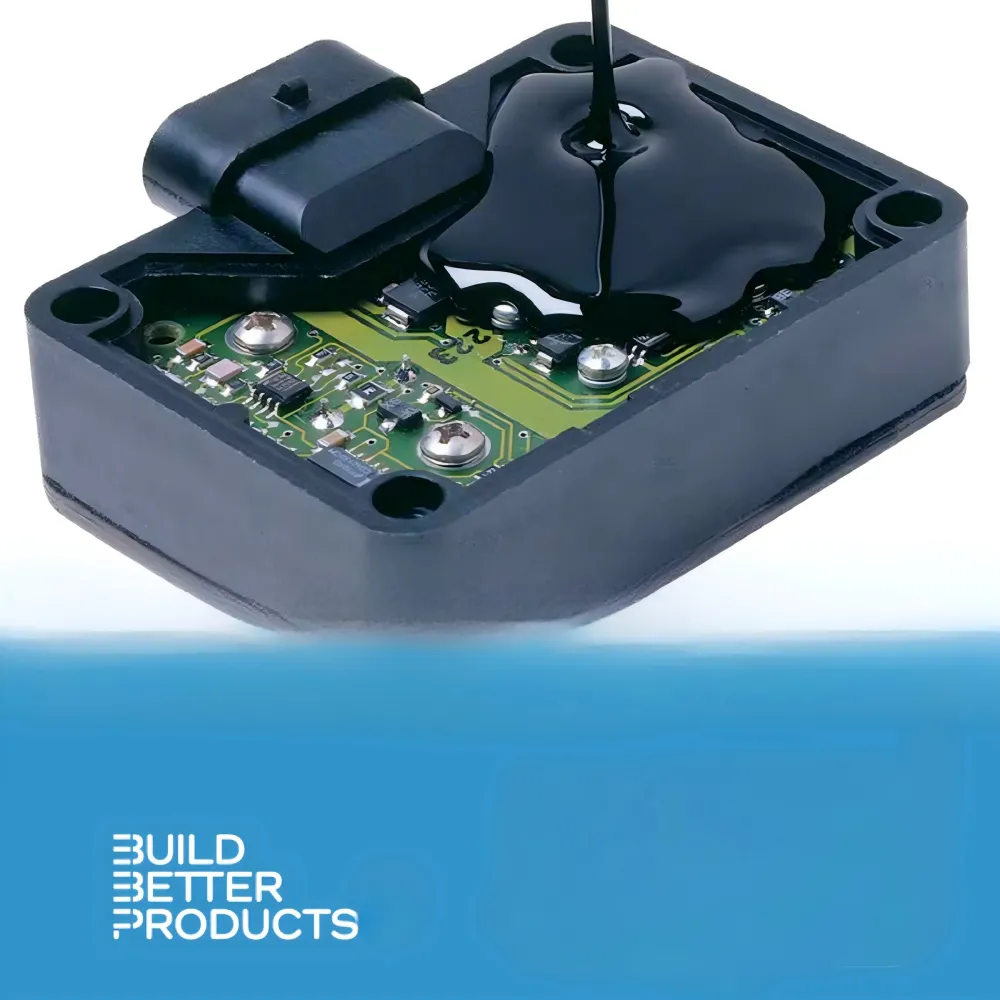
| Application | Typical complaint | CAPA audit focus | Effectiveness measure |
|---|---|---|---|
| EV battery electronics | Thermal void or off-ratio potting | Ratio, degassing, fill path and internal coverage | Void/thermal trend plus process alarms |
| PCB electronics | Stringing or keep-out contamination | Valve cutoff, path, dispense height and vision | Defect rate across product geometries |
| LED driver potting | Bubble or incomplete cure | Material conditioning, vacuum and cure profile | Cure, insulation and material-lot trend |
| Automotive sensor | Seal discontinuity | Bead continuity, surface preparation and leak test | Leak result through shifts and restarts |
| Industrial bonding | Poor adhesion | Cleaning, open time, mix and joint control | Destructive strength and failure mode |
Sample records backward and forward
Backward sampling starts from a finished serial and traces material, recipe, machine, operator, alarms, inspection and release. Forward sampling starts from a material lot, alarm or maintenance event and finds every affected part and shipment. Use both directions. A traceability system may look complete in one direction while failing in the other.
Include ordinary days, not only the CAPA validation report. Select records around weekends, operator changes, maintenance and the edge of specification. Check electronic timestamps and revision history where data integrity matters.
Define effectiveness criteria before reviewing results
Write pass, fail and escalation rules in advance. Track leading process indicators and lagging product outcomes. A useful plan may include no recurrence of the original defect, stable critical variables, no related alarm trend, complete traceability and no unauthorized process change through a defined volume or time.
- State production volume, lots, shifts and monitoring duration.
- Account for shipping and customer-use delay.
- Keep severe events outside weighted averages.
- Reopen CAPA when the defect or failure mechanism returns.
- Extend monitoring when exposure is too small or unrepresentative.
The complaint closure package should contain this evidence. Use the separate guide for field containment exit criteria, because ending sorting and proving long-term CAPA effectiveness are related but not identical decisions.
Score findings by risk, not document count
| Finding level | Example | Buyer response |
|---|---|---|
| Critical | Known defect escapes, data altered or affected stock released | Containment, escalation and possible volume restriction |
| Major | Root cause unproven, validation incomplete or control bypassable | CAPA remains open; corrective deadline and verification |
| Minor | Isolated record weakness without product impact | Correct and sample effectiveness |
| Observation | Improvement that reduces future ambiguity | Track without misclassifying as nonconformity |
A supplier can have every requested form and still fail the audit if the process does not control the mechanism. Conversely, do not inflate minor formatting differences when evidence and controls are strong.
Evidence sources and limits
ISO 9001:2015 includes requirements relevant to corrective action and evaluating effectiveness. ISO 10002:2018 provides complaints-handling guidance. Apply purchased standards, customer-specific requirements, contracts and applicable regulations. This framework does not create universal tolerances or replace a qualified product audit.
Frequently asked questions
Can a remote audit verify CAPA effectiveness?
It can review data and interviews, but physical controls, material flow and override behavior may require live video or an on-site visit.
How many lots should the audit sample?
Use risk, volume, variation and failure frequency. Avoid an arbitrary count that misses shifts, material lots or restarts.
Should the buyer witness alarm challenges?
For high-risk controls, yes where safe and practical. Otherwise review controlled challenge evidence and audit trails.
Can CAPA close while customer monitoring continues?
Sometimes, if effectiveness is sufficiently demonstrated and residual surveillance has clear owners and escalation rules.
What if the supplier refuses raw data?
Apply contractual access and confidentiality rules. Missing critical evidence should remain a confidence gap, not be treated as a pass.
What should buyers send OBO Precision?
Send the defect definition, material data, recipe, alarm history, CAPA actions, validation results and remaining audit questions.
Prevention follow-up: update the supplier quality agreement after a dispensing complaint so CAPA lessons become auditable production, notification and evidence requirements.
Traceability verification: run a practical dispensing supplier traceability drill after a complaint to test backward genealogy, forward containment and quantity reconciliation.
Audit the process, not only the paperwork
OBO Precision can review dispensing controls, failure evidence, material behavior and validation limits to support a practical verification plan.