
Cycle time in automated dispensing is not just robot speed. Factories often underestimate the real takt because they ignore loading losses, valve response, cure buffering, inspection, purge, and product-handling constraints.
- Question answered: How do you calculate cycle time for an automatic dispensing line?
- Best for: process engineers, industrial automation teams, factory managers, and buyers comparing line concepts before purchase.
- Direct answer: Cycle time should be calculated from every real step in the sequence, including loading, motion, dispense time, settle time, vision or inspection delay, unload time, and the losses caused by purge, changeover, and maintenance.
- Buyer readiness: L3 Selecting to L4 RFQ Ready
- Next step: Prepare part takt target, number of dispense points, path length, bead size, loading method, and inspection requirement before asking for a cycle-time estimate.
Industrial Context and Buyer Readiness
This article connects cycle-time search intent to the production variables that matter when buyers compare automation proposals.
| Context | Details |
|---|---|
| Topic cluster | Process Optimization Cluster; Dispensing Equipment Cluster; Procurement Decision Content |
| Buyer readiness level | L3 Selecting to L4 RFQ Ready |
| Application scenario | PCB dispensing, gasketing, potting, adhesive bonding, multi-station inline automation |
| Material scope | epoxy, silicone, polyurethane, UV adhesive, conductive adhesive |
| Process scope | motion programming, bead dispensing, dotting, loading, unloading, inspection, buffering |
| Equipment scope | dispensing robot, inline conveyor, valve, vision system, curing module, fixture |
| Defect or risk focus | unrealistic takt claims, bottlenecks, line imbalance, hidden downtime, and underperforming throughput |
| Production goal | credible throughput estimates, balanced line design, and predictable ROI |
Entity Map for This Topic
| Entity group | Details |
|---|---|
| Material entities | epoxy, silicone, UV adhesive, PU sealant |
| Process entities | motion, dispensing, loading, inspection, purge, changeover |
| Equipment entities | dispensing line, robot, valve, conveyor, vision system, cure station |
| Industry entities | electronics, automotive, EV, LED, industrial assembly |
| Defect entities | bottleneck, missed takt, idle time, excessive changeover, throughput loss |
| Measurement entities | cycle time, takt time, path length, valve open time, load time, uptime |
Contents
- Direct answer
- Why this matters
- Application scenario matrix
- Engineering review points
- Decision layer
- Checklist
- FAQ
How Do You Calculate Cycle Time for an Automatic Dispensing Line?
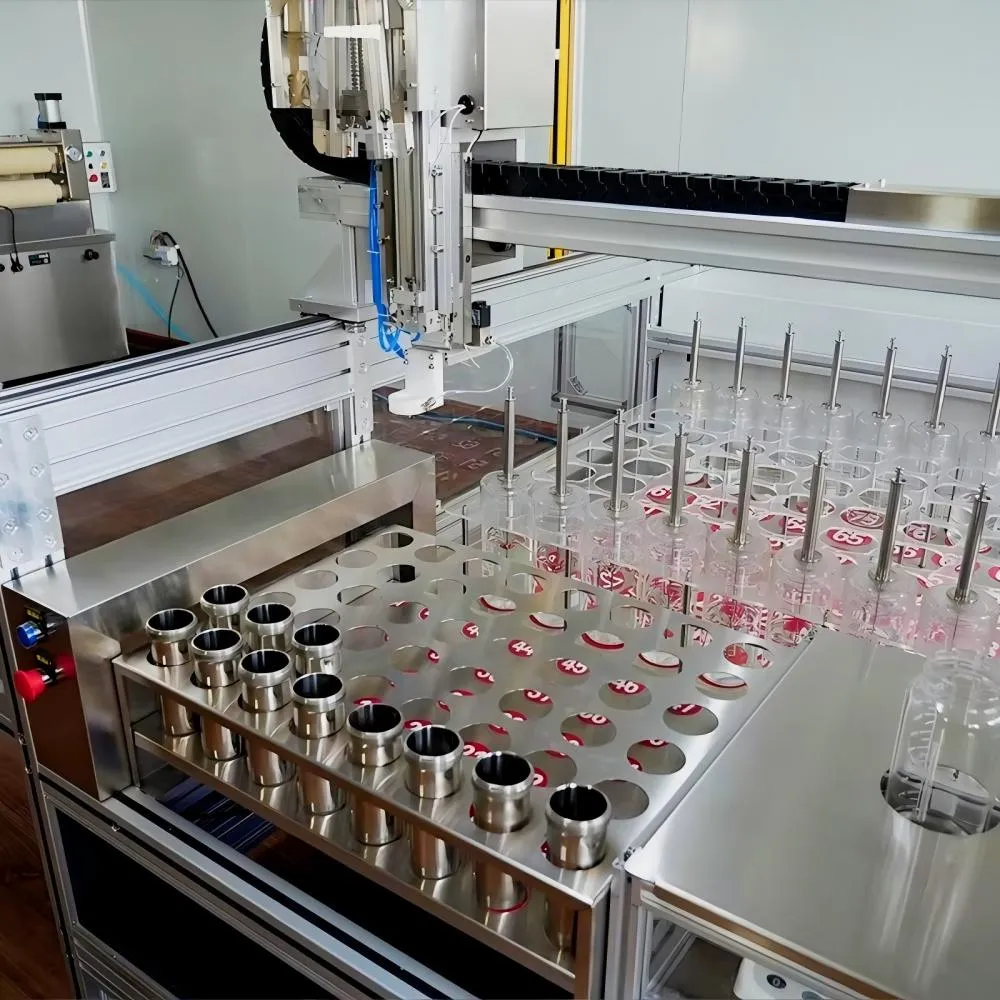
A realistic cycle-time model separates direct process time from unavoidable production losses. Direct time includes robot motion, dispense action, settle delay, loading, unloading, and inspection. Loss time includes purge, cleaning, minor stops, material refill, and operator interaction.
Suppliers who quote only robot travel speed may produce impressive numbers that collapse during actual production. Buyers should ask for a full cycle breakdown and the assumptions behind it.
Why This Topic Matters in Real Production
Cycle time determines line capacity, labor allocation, machine quantity, and return on investment.
A small error in takt estimate can make a line miss customer demand or create avoidable idle assets.
In B2B equipment buying, one of the best signals of engineering credibility is whether the supplier can explain exactly where every second of the cycle is spent.
The Main Elements That Build Real Cycle Time
| Element | What it includes | Common underestimate | Why it matters |
|---|---|---|---|
| Loading and unloading | part placement and removal | assumed as zero or operator-free | manual interaction often controls the real takt |
| Robot motion | travel between points and approach distance | quoted from max speed only | path complexity matters more than catalog speed |
| Dispense action | valve open time, line speed, dot count | counted without start-stop behavior | small delays add up across many points |
| Inspection | vision alignment or operator check | ignored in proposals | inline inspection can dominate small-part cycles |
| Purge and cleaning | startup, pause, and maintenance losses | excluded from takt model | real production loses capacity here |
| Buffering and cure hold | settle or cure-related waiting | treated as separate from line flow | buffer design affects actual output |
A cycle-time claim is only useful when the buyer can see the assumptions behind each element of the model.
Application Scenario Matrix
| Application | Main takt driver | Typical mistake | What to model first |
|---|---|---|---|
| Dot dispensing on PCB | point count and vision time | ignoring alignment delay | dot count and inspection sequence |
| FIPG bead dispensing | path length and bead speed | using max robot speed as tact | bead length and stable flow speed |
| Potting cells | fill time and operator load time | forgetting buffer and cure handling | shot volume and product handling sequence |
| Inline sealing | conveyor synchronization | ignoring upstream and downstream balance | station handoff timing |
| Multi-head production | load balancing between heads | assuming perfect parallel output | part distribution and head utilization |
Cycle time should be modeled from the actual application pattern, not from a generic machine brochure.
Engineering Review Points
A disciplined cycle study should include direct time, auxiliary time, and loss assumptions.
- Count every dot, bead segment, or fill action in the process.
- Measure or estimate real motion path length and approach height rather than only machine travel range.
- Add valve response, settle delay, or suck-back behavior where the material requires it.
- Include loading, unloading, and part orientation time even if the final line will be semi-automatic.
- Add purge, refill, and planned maintenance allowances to estimate sustainable throughput rather than peak throughput.
- Compare single-part tact with effective hourly output after uptime loss.
That approach gives buyers a much more useful basis for comparing manual, semi-automatic, and fully automatic dispensing options.
Quantification Rules Engineers Should Watch
Useful cycle-time modeling depends on a few key production numbers.
- number of dots or total bead length per part
- dispensing speed at stable material flow
- robot travel distance between features
- load and unload time per part
- inspection or vision alignment time
- planned purge and refill frequency
- target uptime and OEE assumption
Those numbers should appear in the equipment proposal if the supplier wants the buyer to trust the throughput claim.
Decision Layer: Material, Process, Equipment, or Procurement?
| If you see this | Most likely layer | Why | Next step |
|---|---|---|---|
| Robot speed looks high but throughput is still low | Process design | Load or inspection steps dominate | Review the whole sequence, not only motion specs |
| Takt fails when product mix changes | Procurement and flexibility | The line was designed for one ideal part only | Review changeover assumptions |
| Production goal requires very high output | Equipment architecture | One station may not be enough | Compare multi-head or parallel-cell options |
| Cycle looks fine in trial but not in mass production | Loss modeling | Purge and downtime were ignored | Model sustainable output, not peak speed |
| Operator interaction keeps stopping the line | Line balance | Automation level is mismatched to takt target | Review fixture and handling strategy |
Cycle-time modeling is also a buying decision tool, because it reveals whether a proposed machine architecture can actually support the target output.
Checklist Before Asking for a Cycle-Time Estimate
| Checklist item | Why it matters |
|---|---|
| Provide the target parts per hour | Takt should be judged against real production need |
| Provide the number of dispense points or bead length | The process pattern defines direct time |
| Provide part handling method | Loading losses often dominate real takt |
| Provide inspection requirement | Vision and verification are easy to underestimate |
| Provide product mix or changeover need | Flexible lines need different cycle assumptions |
| Provide material type and speed limits | Stable bead speed depends on material behavior |
| Ask for sustainable throughput, not only peak cycle time | Real ROI depends on practical output |
With those inputs, suppliers can quote a line concept that matches factory reality instead of presenting a best-case takt that never holds on the floor.
Related OBO Precision Guides
- Manual vs Automated Dispensing: What Is The ROI?
- Desktop Glue Dispenser vs Inline Dispensing System: Which One Fits Your Production?
- When Is a Dispensing Robot Better Than a Manual Glue Dispenser?
- Contact OBO Precision for an engineering review
Frequently Asked Questions
Is robot maximum speed enough to calculate dispensing line cycle time?
No. Real cycle time also depends on part loading, bead speed, valve response, inspection, purge, and planned downtime.
Should cure time be included in cycle time?
If cure creates a buffer or handling delay that limits line flow, it should be included in the practical throughput model.
Why do supplier cycle claims often look too optimistic?
Because some proposals show peak motion capability rather than sustainable production throughput with losses included.
What is the difference between cycle time and takt time?
Cycle time is how long one process sequence takes. Takt time is the rate needed to meet demand. A line must beat the takt with enough margin to be practical.
Need Help Estimating Throughput for a Dispensing Line?
If you want a more credible cycle-time model for your product, send the dispense pattern, target output, and handling method through our contact page for an engineering review. Contact OBO Precision.
References