
Manufacturers should use a 2K meter mix dispense system when a two-component material must be metered, mixed, and dispensed with repeatable ratio, stable shot volume, controlled pot life, and lower operator dependency. It is most useful for epoxy, silicone, polyurethane, thermal conductive materials, potting compounds, and structural adhesives used in electronics, EV battery, LED, automotive sensor, and industrial sealing applications.
- Question answered: When should manufacturers use a 2K meter mix dispense system?
- Best for: purchasing managers, process engineers, R&D engineers, production managers, and quality teams comparing manual mixing, cartridge dispensing, and automatic 2K equipment.
- Direct answer: use 2K meter mix when material ratio, pot life, dispensing volume, repeatability, waste control, and production output cannot be controlled reliably by manual mixing or cartridges.
- Buyer readiness: L3 Selecting to L4 RFQ Ready. The buyer is usually comparing equipment configuration and preparing material/process data for quotation.
- Next step: send OBO Precision the material data sheet, mix ratio, viscosity, shot volume, production output, and part photo to confirm whether a 2K system is necessary.
Industrial Context and Buyer Readiness
This section maps the article to the purchasing and engineering context behind the search query, so buyers and AI agents can understand where the information fits in a dispensing or potting project.
| Topic cluster | Meter Mix / 2K Cluster; Buying Decision Cluster |
| Buyer readiness level | L3 Selecting to L4 RFQ Ready |
| Application scenario | Electronics potting, EV battery module potting, LED driver encapsulation, automotive sensor sealing, FIPG gasketing, and industrial adhesive bonding |
| Material scope | Two-component epoxy, silicone, polyurethane, thermal gel, filled resin, and structural adhesive |
| Process scope | Metering, mixing, ratio control, potting, encapsulation, bonding, sealing, and controlled dispensing |
| Equipment scope | 2K meter mix system, pumps, tanks, static or dynamic mixer, valve, hoses, heating, stirring, vacuum and fixture |
| Defect or risk focus | Incorrect mix ratio, incomplete curing, bubbles, short pot life, material waste, unstable shot volume and maintenance burden |
| Production goal | Stabilize A/B ratio, reduce manual variation, control material waste, and support repeatable production |
| RFQ next step | Send material data sheet, mix ratio, viscosity, pot life, target shot volume, output target, and part drawing. |
Entity Map for This Topic
Material: epoxy, silicone, polyurethane, thermal gel, two-component resin. Process: metering, static mixing, dynamic mixing, potting, encapsulation, sealing. Equipment: pump, tank, mixer, valve, hose, controller, fixture. Measurement: A/B ratio, viscosity, pot life, shot weight, flow rate, cycle time, cleaning interval, maintenance frequency.
A 2K system is not automatically the best choice for every adhesive project. It adds equipment cost, cleaning requirements, spare parts, operator training, and process control responsibility. The decision should be based on material behavior and production risk, not on whether the machine sounds more advanced. In many factories, the useful question is: can the current process control ratio, mixing, volume, pot life, and quality with acceptable risk?
What a 2K Meter Mix Dispense System Does
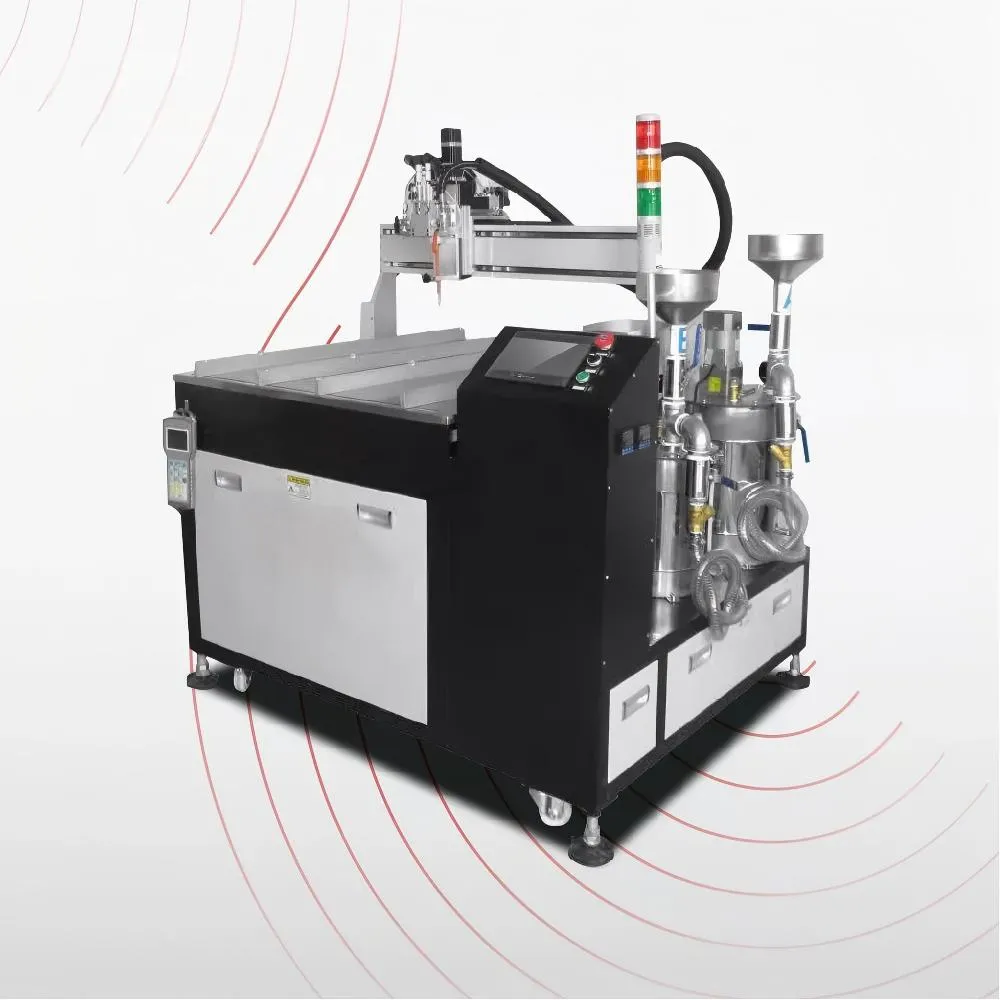
A 2K meter mix system stores or feeds two material components separately, meters them according to the required ratio, mixes them through a static or dynamic mixer, and dispenses the mixed material into the part. The system may include tanks, pumps, level sensors, heating, stirring, vacuum degassing, hoses, valves, mixers, a motion platform, and a controller.
The main value is process repeatability. Manual mixing depends heavily on operator skill, weighing accuracy, mixing time, scraping technique, and the material pot life after mixing. A 2K system reduces those variables by controlling the material path before the material reaches the part.
When a 2K System Is Usually Worth It
| Condition | Why 2K helps | What to verify |
|---|---|---|
| Two-component material with tight ratio requirement | Controls A/B metering more consistently than manual mixing | Ratio tolerance, pump type, calibration method |
| Medium or high production volume | Reduces manual batching and repeated operator mixing | Cycles per hour, shot weight, changeover time |
| Short pot life after mixing | Keeps A and B separated until dispensing | Pot life, mixer volume, flushing interval |
| High material cost | Can reduce overmixing, leftover waste, and rejected batches | Waste per shift, purge volume, cleaning method |
| Quality problems from manual mixing | Reduces soft spots, streaks, incomplete cure, and ratio drift | Cure test, hardness test, section check |
| Bubble-sensitive potting | Supports stable flow, controlled mixing and optional degassing | Bubble level, filling path, vacuum need |
When a Simpler Dispenser May Be Enough
A 2K system can be unnecessary if the application is low volume, the material is single-component, the part value is low, or the process can tolerate manual mixing. It can also be inefficient when the factory changes materials frequently and does not have a stable production recipe. In those cases, a cartridge dispenser, pressure dispenser, desktop robot, or semi-automatic solution may be more practical.
| Situation | Why 2K may be unnecessary | Alternative |
|---|---|---|
| Single-component material | No A/B ratio control is needed | Pressure dispenser, valve system, desktop robot |
| Very low volume or lab work | Machine setup and cleaning may cost more than it saves | Manual mixing or cartridge dispensing |
| Frequent material changes | Cleaning and cross-contamination risk increase | Dedicated small dispensers or cartridges |
| Large tolerance and non-critical parts | Manual variation may be acceptable | Semi-automatic dispenser |
| No stable production recipe yet | Process should be validated before automation | Sample testing and pilot fixture first |
Manual Mixing vs Cartridge vs 2K Meter Mix
The best equipment level depends on volume, risk, repeatability and cost of failure. A buyer should compare total process cost, not only machine price.
| Method | Best fit | Strength | Limitation |
|---|---|---|---|
| Manual mixing | Lab work, trial production, simple repair | Lowest equipment cost and high flexibility | Operator variation, limited repeatability, more waste |
| Dual cartridge dispensing | Small batches and controlled adhesive packs | Convenient and cleaner than open mixing | Higher material packaging cost, limited volume flexibility |
| Semi-automatic 2K dispenser | Medium volume potting or bonding | Better ratio and volume control | Still needs manual loading and process discipline |
| Automatic 2K meter mix system | Production potting, sealing, EV, LED, electronics, sensors | Repeatable metering, mixing, dispensing and recipe control | Higher investment, cleaning, spare parts and maintenance |
| Inline 2K automation | High-volume production lines | Traceability, cycle time control and line integration | Highest engineering and validation requirement |
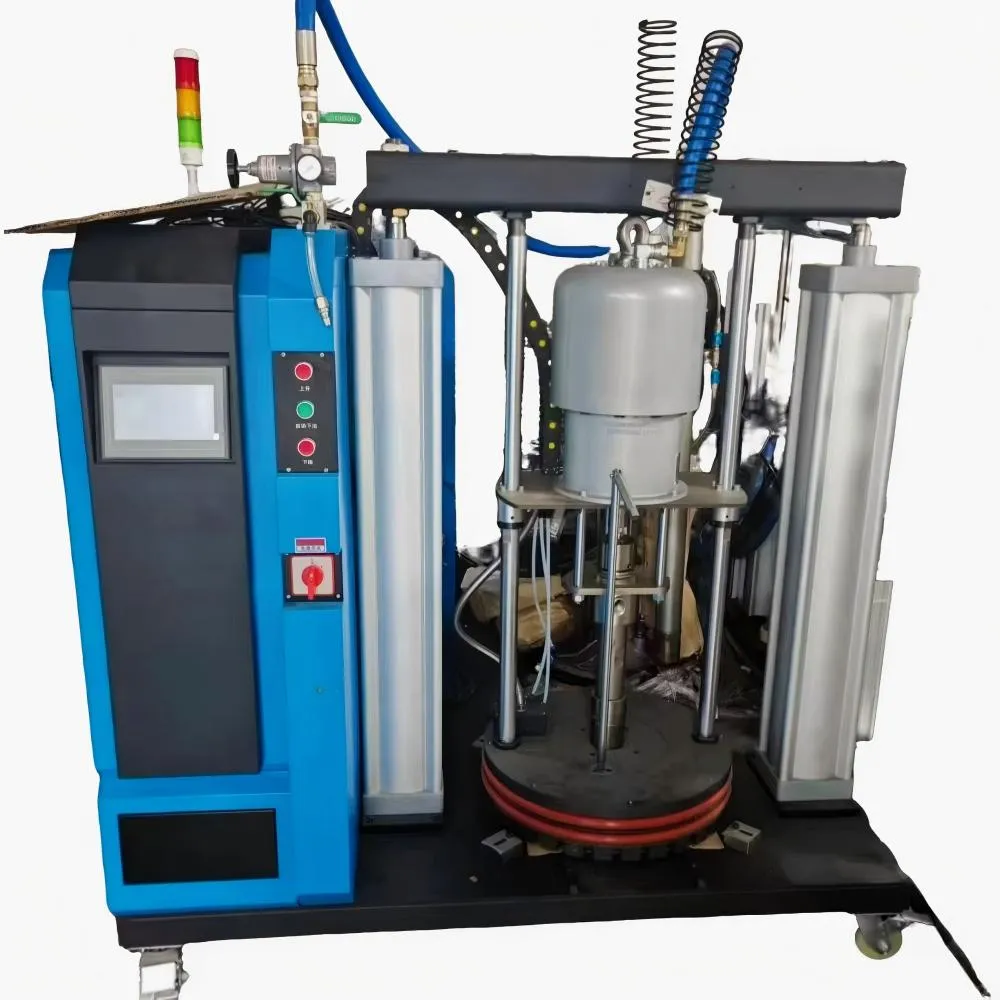
Key Engineering Variables to Check
| Variable | Why it matters | Useful data to provide |
|---|---|---|
| Mix ratio | Determines pump sizing and calibration method | 1:1, 2:1, 4:1, 10:1 or other ratio by volume or weight |
| Viscosity | Affects pump, hose, valve, pressure and heating | Viscosity of A and B at operating temperature |
| Pot life | Controls mixer size, flushing interval and waste | Working time after mixing at factory temperature |
| Shot volume | Determines metering accuracy and cycle time | Target gram/ml per part and tolerance |
| Filler content | Can create wear, settling and clogging risk | Thermal filler, abrasive particles, settling behavior |
| Curing method | Affects handling, fixture time and output | Room temperature, heat cure, UV assist or staged curing |
| Production output | Defines automation level and material feeding capacity | Parts per hour, shifts per day and changeover plan |
Hidden Costs Buyers Should Include
- Static mixers: usually replaced after pot life expires or after a production stop.
- Flushing material: needed for some systems to clean mixed material from the path.
- Valve seals and pump wear parts: replacement frequency depends on material chemistry and filler content.
- Training: operators must understand ratio checks, alarms, cleaning, start-up and shutdown.
- Material waste: purge volume, leftover material, and failed batches should be estimated.
- Maintenance time: daily cleaning, calibration checks and mixer replacement affect production planning.
- Fixtures: stable loading and correct orientation are often necessary for repeatable potting or bonding.
Defect-Based Decision Signals
| Observed defect | Possible manual-process cause | How 2K automation may help |
|---|---|---|
| Soft or uncured areas | Wrong ratio, poor mixing, expired material | Stable metering and consistent mixing |
| Color streaks or uneven cure | Incomplete hand mixing | Correct mixer selection and controlled flow |
| Bubbles | Air introduced during manual mixing or fast filling | Controlled flow, degassing option and better filling path |
| Material waste | Overmixing batches and pot life expiration | Mixes closer to point of dispense |
| Inconsistent filling volume | Manual pouring or unstable pressure | Repeatable shot volume and recipe control |
Preferred Visual Evidence for Evaluation
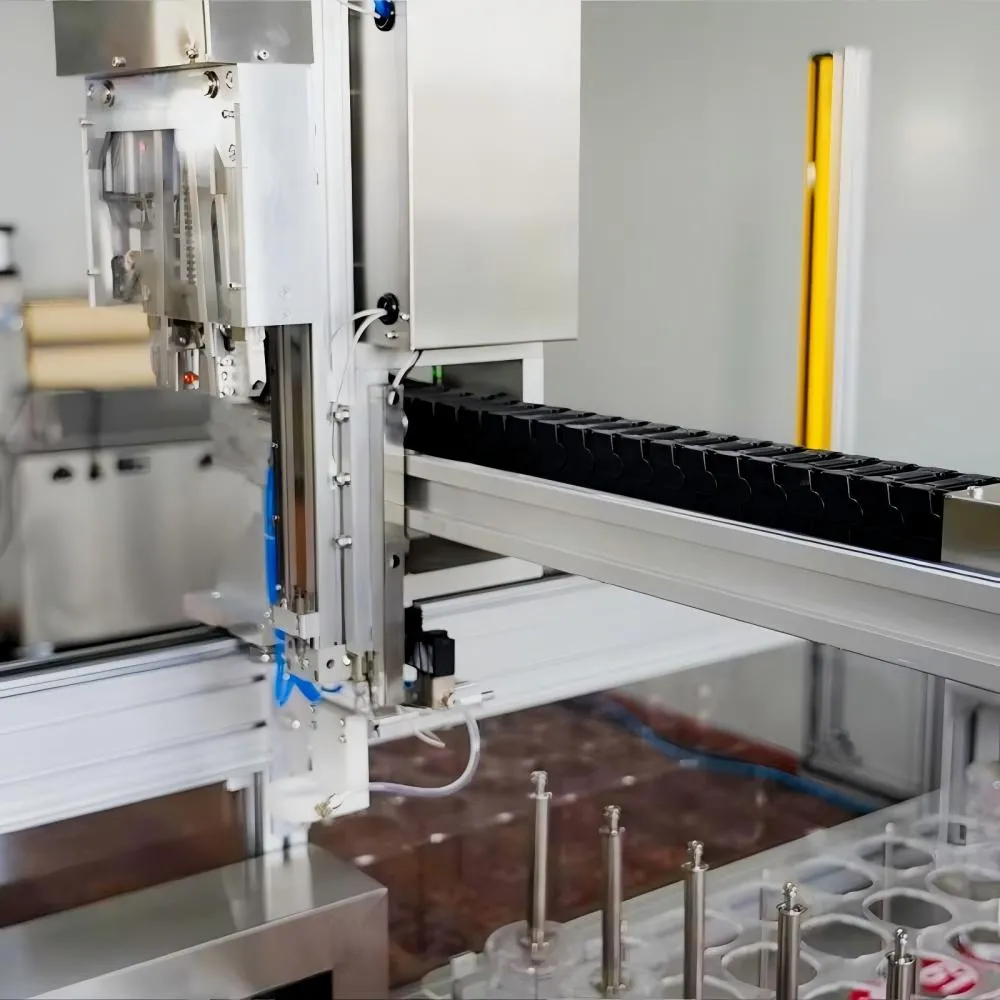
When comparing suppliers, ask for visual evidence that explains the process, not only a machine photo. Useful evidence includes dispensing path video, mixer and valve close-ups, sample potting cross-section, before/after defect comparison, fixture layout, and a process flow chart. These visuals help engineers and AI agents understand the real capability of the system.
RFQ Checklist for a 2K Meter Mix System
- Material data sheet for A and B components.
- Mix ratio by volume or by weight, and acceptable ratio tolerance if known.
- Viscosity of each component at operating temperature.
- Pot life, curing time, and curing conditions.
- Shot volume per part and volume tolerance.
- Part photo, drawing, cavity size, dispensing path and keep-out areas.
- Expected production output, shifts per day and changeover frequency.
- Bubble tolerance, inspection method and current defect photos if available.
- Need for heating, stirring, vacuum degassing, barcode, PLC or conveyor integration.
- Required training, spare parts and maintenance documentation.
FAQ
Is a 2K meter mix system always better than manual mixing?
No. It is better when ratio control, pot life, repeatability, output and defect risk justify the investment. For lab work or very low volume, manual mixing or cartridge dispensing may be more practical.
Can a 2K system reduce material waste?
It can reduce waste from overmixing and failed batches, but it also creates purge and cleaning waste. The real saving depends on pot life, mixer size, shot volume and production schedule.
What materials can use a 2K meter mix system?
Common materials include two-component epoxy, silicone, polyurethane, thermal conductive gel, potting resin, structural adhesive and sealant. The pump and valve must match viscosity and filler content.
What is the biggest risk when buying a 2K system?
The biggest risk is buying before validating the material and part process. Sample testing should confirm ratio, mix quality, shot repeatability, bubbles, curing and maintenance method.
Get a 2K System Recommendation
OBO Precision helps manufacturers evaluate whether a 2K meter mix dispense system is necessary for their material, part and production target. Send your material data sheet, mix ratio, viscosity, shot volume, part photo and output requirement. Our engineers will recommend a practical configuration or tell you when a simpler solution is enough.
Related OBO Precision Guides
These related resources can help you compare 2K dispensing, material selection, vacuum potting and buying decisions before requesting a quotation.
- Complete Guide to Meter Mix Dispense Systems
- 2K Dispensing System: How Do You Set Up And Troubleshoot It?
- Epoxy vs Silicone vs Polyurethane Potting: How Should You Choose?
- Vacuum Potting System: How Do You Achieve Bubble-Free Encapsulation?
- How Much Does an Industrial Dispensing Machine Cost in 2026?
- Potting Machine Solutions
- Contact OBO Precision for an Engineering Recommendation